24 Creative LED Light Decorating Ideas For Your Home

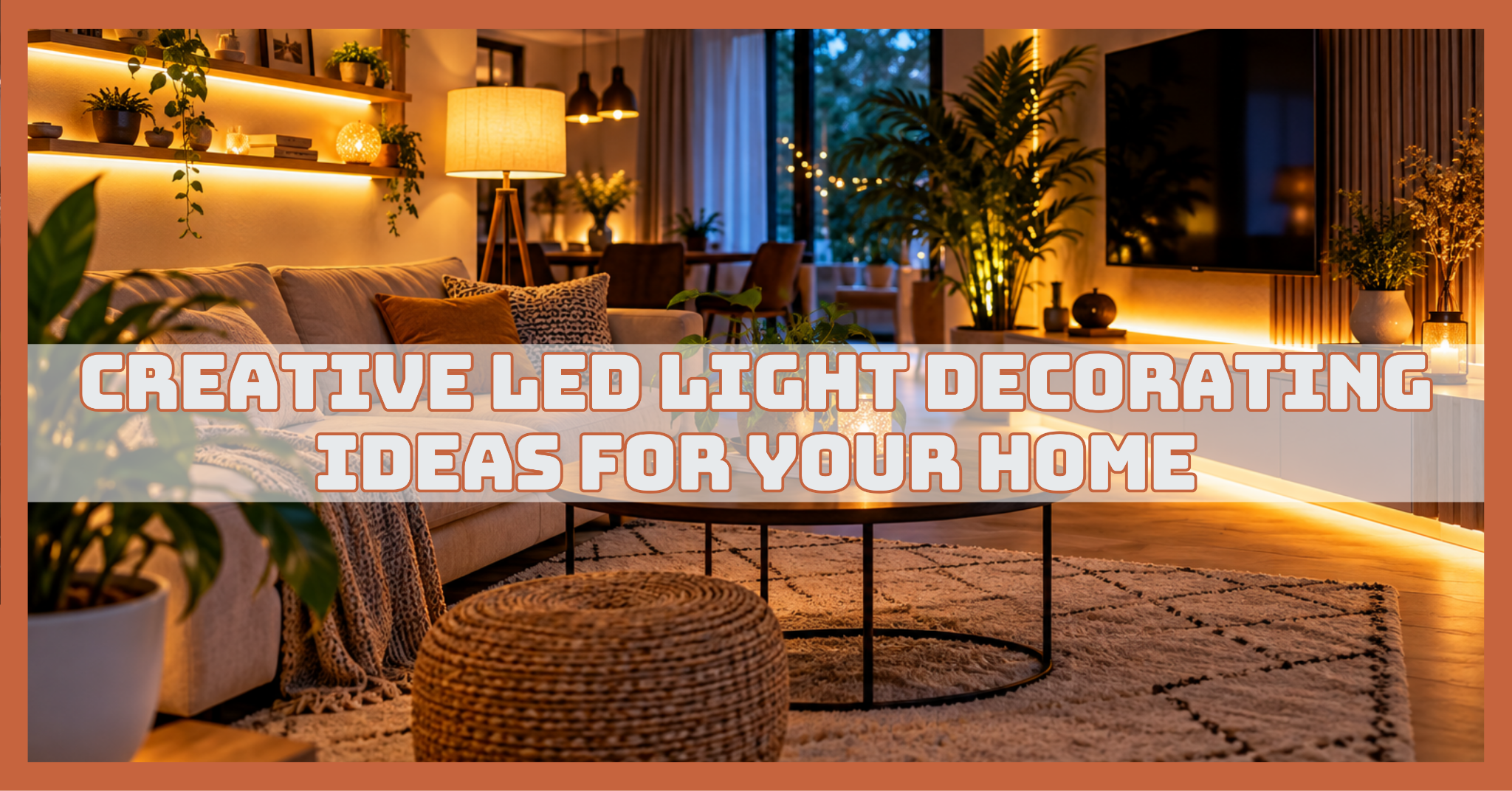
LED Light Decorating Ideas can transform ordinary areas of your home with colour, warmth, and creative illumination. From subtle accent lighting to eye-catching displays, LEDs offer plenty of ways to personalize a space.
LED lights are available in many styles, colours, brightness levels, and colour temperatures. Their compact size also makes them useful for areas where traditional lighting fixtures may be difficult or impractical to install.
You can use LEDs beneath kitchen cabinets, behind furniture, around mirrors, along shelving, or as part of a feature wall. They can provide practical task lighting while also highlighting architectural details and decorative elements.
Many LED lighting options are energy-efficient and long-lasting, while dimmable and colour-changing designs provide additional flexibility. Choosing the right type and placement can help you create an effect that complements the room rather than overwhelming it.
In this guide, we’ll explore creative ways to decorate your home with LED lights. You’ll also learn which LED types are most useful for decorating and practical considerations when choosing them.
What Are LED Lights?
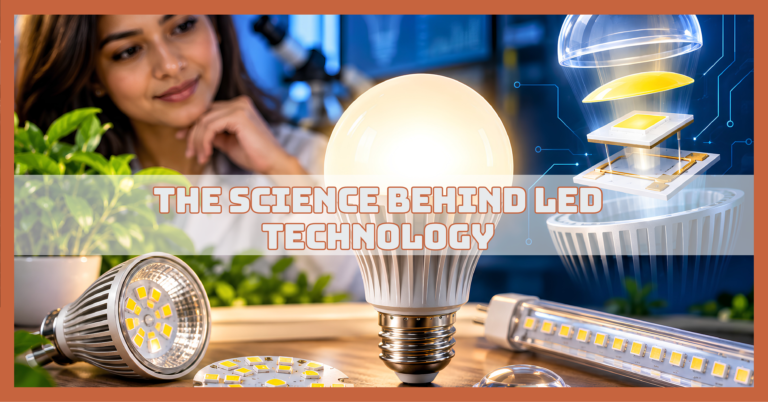
LED stands for light-emitting diode. LEDs are solid-state lighting devices that use semiconductor materials to convert electrical energy into light.
Unlike incandescent bulbs, which produce light by heating a filament, LEDs create light through a process called electroluminescence. This allows them to produce light efficiently without relying on a heated filament.
LEDs are known for their energy efficiency, long lifespan, and durability. They also produce less radiant heat than incandescent bulbs, although LED products still require proper heat management.
LED lights are available in many colours, brightness levels, colour temperatures, shapes, and sizes. This variety makes them particularly versatile for decorative, accent, task, and general lighting throughout the home.
Readers interested in learning more can explore these interesting facts about LED lights, including their development, efficiency, and everyday applications.
Types Of LED Lights For Home Decorating
LED lights come in many styles, shapes, and sizes, but some suit home decorating better than others. The right choice depends on where you plan to use the lights and the effect you want to create.
Some LEDs provide practical lighting for kitchens, bathrooms, and work areas, while others are designed primarily for accent or decorative lighting. LED strips, panels, bulbs, and small recessed lights can all serve very different purposes around the home.
Colour temperature is another factor to consider when choosing LEDs for decorating. Warm white lighting can create a comfortable atmosphere, while cooler white light is often useful in areas that need brighter task lighting.
Dimmable and colour-changing LEDs provide additional flexibility. They let you change the brightness or colour to suit different activities, occasions, or moods without replacing the lights.
The following LED types are particularly useful for home decorating. Understanding their basic differences can make it easier to choose the right lighting for each decorating idea later in this guide.
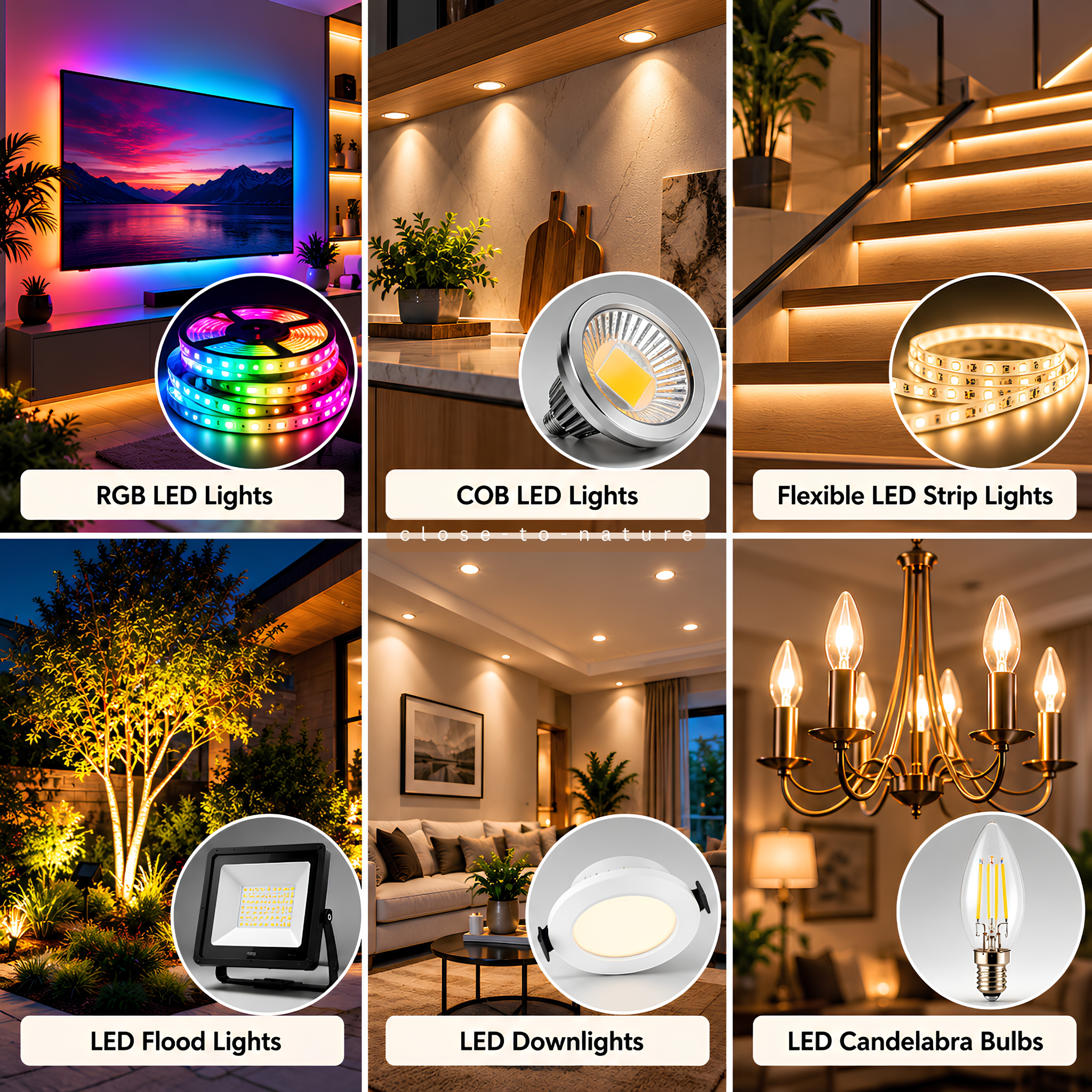
1. RGB LED Lights
RGB stands for red, green, and blue. RGB LED lights combine these three colours at different intensities to produce a wide range of colours and lighting effects.
They are especially useful for decorative and accent lighting because you can often change the colour to suit the room, occasion, or atmosphere. Many RGB lights also offer adjustable brightness and preset lighting effects.
RGB LEDs are commonly available as LED strip lights, bulbs, and smart lighting products. They work particularly well behind televisions, beneath furniture, along shelving, or around feature walls where the light itself becomes part of the décor.
2. COB LED Lights
COB stands for Chip on Board. COB LED lights contain multiple LED chips mounted closely together on a single module, producing a concentrated, relatively uniform light source.
Their bright, focused illumination makes COB LEDs useful for recessed downlights, spotlights, and accent lighting. They can help highlight artwork, architectural details, countertops, or other features you want to draw attention to.
COB lighting is available in different brightness levels and colour temperatures, making it adaptable to various rooms and decorating styles.
Choosing the appropriate brightness and beam angle can help create focused illumination without overpowering the surrounding space.
3. Flexible LED Strip Lights
Flexible LED strip lights consist of small LEDs mounted along a thin, flexible circuit board. Many strips can be cut at designated points, making it easier to customize their length for different decorating projects.
Their flexibility makes them particularly useful in places where conventional light fixtures are difficult to install. You can position them beneath cabinets, behind televisions, around mirrors, along shelving, or under furniture to create subtle accent lighting.
LED strips are available in single colours, different white colour temperatures, and colour-changing RGB versions. Some are also dimmable or compatible with smart controls, letting you adjust the lighting for different activities and occasions.
When choosing LED strips, consider the installation location and select a product rated for those conditions. Areas exposed to moisture, such as bathrooms or outdoor spaces, require appropriately rated lighting.
4. LED Flood Lights
LED flood lights produce a broad beam of light that can illuminate a relatively large outdoor area. They are commonly used around entrances, patios, driveways, gardens, and other exterior spaces.
For decorative lighting, flood lights can highlight trees, garden features, stonework, or architectural details after dark. Careful positioning can create depth and draw attention to selected features rather than flooding the entire area with brightness.
Outdoor LED flood lights are available in different brightness levels, beam angles, and colour temperatures. Choose fixtures rated for outdoor use and suitable for the moisture and weather exposure at their intended location.
5. LED Downlights
LED downlights are ceiling-mounted fixtures that direct light downward into a room. They are often recessed into the ceiling, creating a clean, streamlined appearance that works well with many decorating styles.
They can provide general lighting throughout a room or be positioned to illuminate specific areas. In kitchens, for example, downlights can brighten work surfaces, while in living rooms they can help highlight artwork, furniture, or architectural features.
LED downlights are available in different brightness levels, beam angles, and colour temperatures. Dimmable options add flexibility, letting you adjust the light for different activities or times of day.
6. LED Candelabra Bulbs
LED candelabra bulbs are small bulbs designed to fit fixtures with smaller candelabra-style bases. Their narrow shape makes them particularly well suited to chandeliers, wall sconces, pendant lights, and other decorative fixtures.
Many designs mimic traditional candle-shaped bulbs while offering the energy efficiency and long lifespan of LED lighting. Clear, frosted, and decorative filament-style versions make it easier to match the bulb to the fixture and decorating style.
LED candelabra bulbs are also available in different colour temperatures and brightness levels. Dimmable versions can create a softer atmosphere in dining rooms, bedrooms, and living spaces when paired with compatible fixtures and dimmer switches.
24 LED Light Decorating Ideas
LED lights can do much more than simply brighten a room. With thoughtful placement, they can highlight architectural features, add depth to dark corners, draw attention to favourite décor, or create a more comfortable atmosphere.
Different areas of the home call for different lighting approaches. A kitchen may benefit from practical under-cabinet lighting, while a bedroom or living room may suit softer accent lighting better.
LED strips are especially versatile because they can fit behind furniture, beneath shelves, around mirrors, and in other areas where conventional fixtures may be difficult to place. Downlights, decorative bulbs, and other LED fixtures provide even more options.
Colour temperature, brightness, and placement all influence the finished effect. Rather than adding LEDs everywhere, consider which features you want to highlight and how the lighting will complement the room day and night.
The following 24 LED light decorating ideas offer practical inspiration for kitchens, bedrooms, living areas, and outdoor spaces. Some require only a simple lighting addition, while others can become a noticeable part of the room’s overall design.
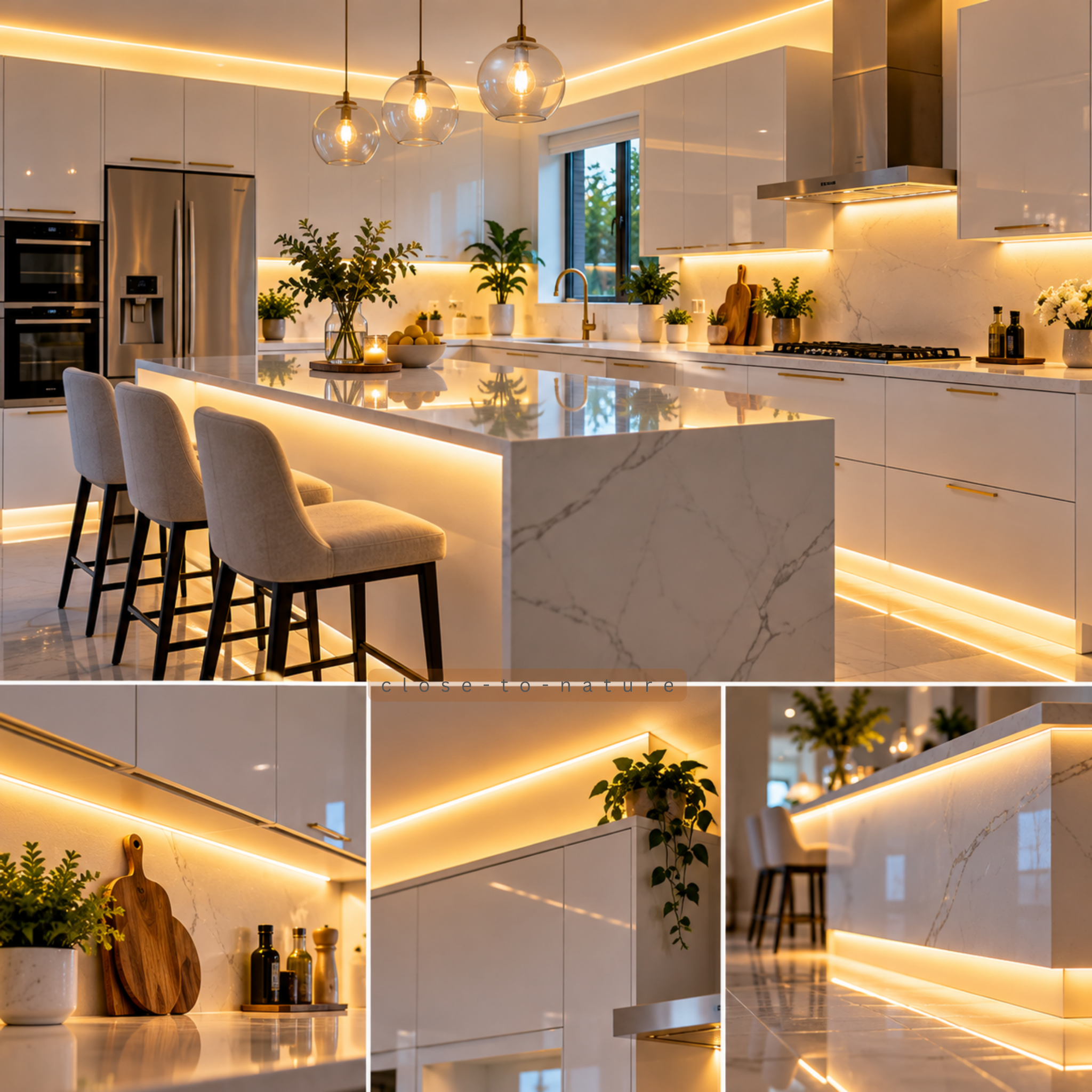
1. Kitchen Accent Lighting
LED strip lights installed beneath kitchen cabinets can provide both decorative and practical illumination. They add a soft layer of light while highlighting countertops, backsplashes, and other finishes throughout the kitchen.
For a warm and comfortable atmosphere, consider LED strips with a warm white colour temperature around 2700K to 3000K. A more neutral white can work well when the lighting also illuminates food preparation areas.
Positioning the strips toward the front of the cabinets can help distribute light more evenly across the countertop. Using a diffuser or aluminum channel can also create a smoother line of light and reduce the appearance of individual LED points.
Dimmable LED strips provide additional flexibility throughout the day. Brighter settings can provide useful task lighting while cooking, while lower settings can create softer accent lighting during meals or in the evening.
For kitchens, choose LED strips and components suited to the installation location, especially near sinks or other areas where moisture may be present. A carefully planned installation can make the lighting look like an intentional part of the kitchen rather than an added accessory.
2. Dining Room Chandeliers
LED chandeliers can combine decorative lighting with a striking focal point. They are available in styles ranging from traditional and elegant to modern and minimalist.
The chandelier size should suit both the dining table and the room. A fixture that is too large can dominate the space, while one that is too small may look out of proportion.
Warm white LEDs can create a welcoming atmosphere around the dining table. They also complement wood, warm metals, and many traditional dining-room finishes.
Dimmable LED chandeliers offer more flexibility for different occasions. Brighter light may suit family meals, while softer lighting can create a relaxed atmosphere when entertaining.
Consider the chandelier’s height and position before installation. Centring it above the dining table can help define the eating area and create a balanced look.
3. Outdoor Lighting
Outdoor LED lighting can make patios, decks, and gardens more inviting after dark. It can also highlight landscaping and architectural features around your home.
Use pathway lights to illuminate walkways, steps, and entrances. Accent lighting can draw attention to trees, garden beds, water features, or decorative stonework.
LED flood lights can illuminate larger areas or highlight selected landscape features. Smaller spotlights and wall lights work well when you need more focused illumination.
String lights or LED strips can add softer decorative lighting to patios and covered seating areas. Different brightness levels can help create the right atmosphere for relaxing or entertaining.
Solar-powered LEDs offer another option for areas where running electrical wiring may be inconvenient. You can explore how LED lighting works with solar-powered applications when planning outdoor illumination.
Always choose LED fixtures specifically rated for their outdoor location and expected weather exposure. Areas exposed to rain or moisture require suitable outdoor-rated products.
Careful placement can create layers of light without making the garden overly bright. Combining pathway, accent, and ambient lighting usually creates a more balanced effect.
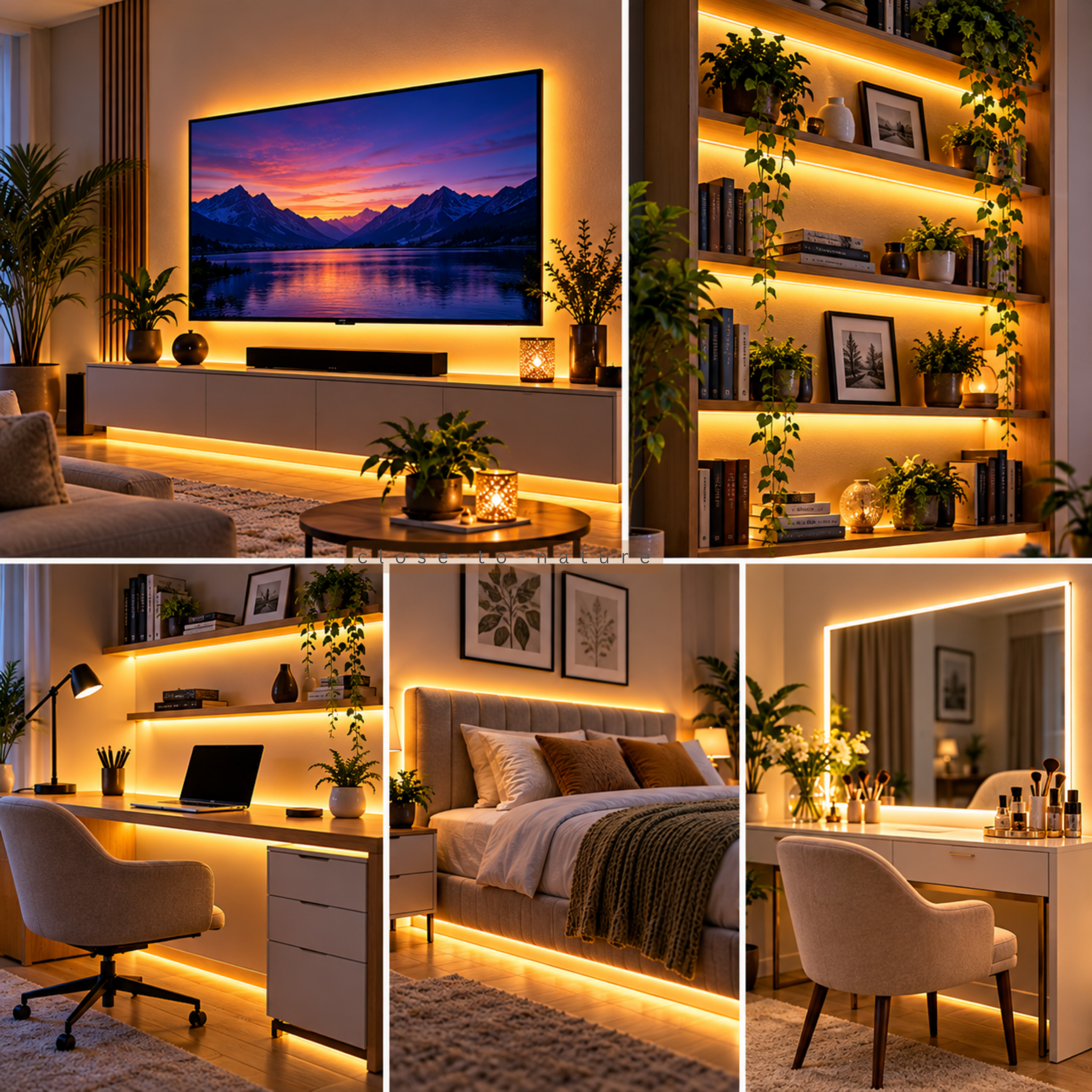
4. Behind The Headboard
LED strip lights behind a headboard can create a soft glow around the bed. The hidden light adds depth without requiring another visible fixture.
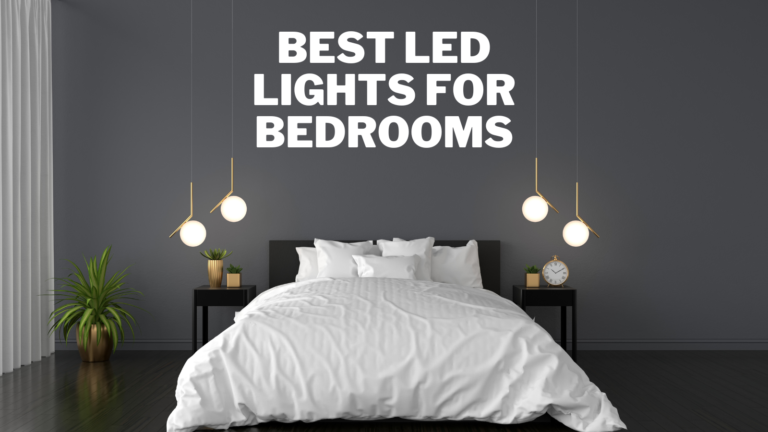
Warm white LEDs work particularly well for bedroom LED lighting. They can create a comfortable atmosphere without making the bedroom feel overly bright.
Place the strips where the headboard will conceal the individual LEDs from view. This allows the light to reflect softly onto the wall rather than shine directly toward the bed.
Dimmable strips offer even more control over the finished effect. You can keep them brighter when needed and dim them when you want a softer atmosphere.
5. Under The Bed
LED strip lights installed beneath the bed can create a soft floating effect. The hidden placement provides subtle accent lighting without adding another visible fixture.
Warm white lighting works particularly well for a calm bedroom atmosphere. Choose a low brightness level so the light remains subtle rather than illuminating the entire room.
Install the strips far enough beneath the bed frame that the individual LEDs remain hidden. This allows the light to spread across the floor and creates a softer, more even glow.
Dimmable or motion-activated LED strips can add practical light when you get up at night. Keep the light directed toward the floor to avoid unnecessary brightness around the bed.
6. Ceiling Cove Lighting
LED strip lights can be hidden along the edges of a ceiling to create soft, indirect illumination. The light reflects across the ceiling instead of shining directly into the room.
This technique works especially well with recessed ceilings, moulding, or architectural ledges. It can add depth and make the ceiling itself part of the room’s design.
Ceiling cove lighting also shows how LED lighting can be integrated into architectural design. The lighting becomes part of the structure rather than a separate decorative fixture.
Warm white LEDs can create a comfortable atmosphere in bedrooms and living rooms. Neutral white lighting can provide a cleaner, more contemporary appearance.
Dimmable LED strips give you greater control over the effect. Keep them brighter when you need extra light, and dim them for subtle accent lighting.
7. Behind The TV
LED strip lights placed behind a television can create a soft glow on the surrounding wall. This adds visual interest without placing another visible light fixture near the screen.
Choose a colour that complements the room and your existing décor. Warm white or neutral white can create a subtle effect, while RGB strips offer more colourful options.
Position the strips behind the outer edges of the television so the light spreads evenly across the wall. Keeping the individual LEDs hidden creates a cleaner, more polished look.
Dimmable or smart LED strips make it easy to adjust the brightness and colour. This keeps the lighting subtle while still adding atmosphere to the room.
8. Around The Furniture
LED strip lights can add subtle accent lighting to furniture throughout the home. They work particularly well behind cabinets, bookcases, desks, entertainment units, and dressing tables.
Placing the strips behind furniture creates a soft glow on the surrounding wall. This can add depth to the room while keeping the light source itself hidden.
You can also install LED strips beneath shelves or cabinets to highlight decorative objects. Warm white lighting creates a softer effect, while RGB strips can add colour to modern spaces.
Around a dressing table or mirror, LEDs can provide both decorative and practical illumination. Position the lights evenly to create a balanced appearance without making them overly bright.
Choose strips with secure mounting and keep cables neatly concealed where possible. A tidy installation helps the lighting look like part of the furniture, not an add-on.
9. Surface-Mounted Wall Lighting
Surface-mounted LED wall lights attach directly to the wall rather than being recessed. They can provide practical illumination while also becoming part of the room’s décor.
Slim LED fixtures work well in hallways, bedrooms, living rooms, and other areas where recessed lighting may not be practical. Designs range from simple linear lights to decorative geometric fixtures.
Some wall lights direct illumination upward or downward to create patterns across the wall. This can highlight textured surfaces, artwork, or architectural details without lighting the entire room.
Choose the brightness and colour temperature to suit the space. Warm white light can create a softer atmosphere, while neutral white works well where clearer illumination is needed.
10. Decorative Wall Lighting
LED strip lights can turn a plain wall into a decorative feature. They can outline shapes, frame artwork, or create simple geometric patterns across the wall.
RGB and RGBW strips provide plenty of flexibility for colourful designs. You can change the colours to complement your décor, seasons, or special occasions.
Different colours and lighting effects are possible because of the technology behind LED lighting. Placing the strips behind wall panels or decorative features can also create a softer, reflected glow.
Plan the pattern before attaching the strips to the wall. Make sure the mounting method suits the surface, especially painted walls or wallpaper.
11. Bedroom Closet
LED strip lights can brighten dark areas inside a bedroom closet. They can make clothing, shoes, and accessories easier to see without requiring a large overhead fixture.
Install strips beneath shelves, along hanging rails, or around the closet’s inside edges. Keeping the LEDs concealed can create a cleaner appearance while providing useful illumination.
Warm or neutral white LEDs work well when you want to see clothing colours clearly. Colour-changing strips can add a decorative touch to open wardrobes or walk-in closets.
Motion-activated LEDs are another practical option for closet lighting. Depending on the system, they can switch on when the door opens or when you enter the space.
Keep strips, cables, and power supplies securely positioned away from clothing and other stored items. Always follow the manufacturer’s installation instructions.
Sustainable Business Ideas For Nature Lovers
🌿 Whether you love gardening, caring for animals, or exploring eco-friendly living,
you can turn your nature-inspired interests into meaningful online income.
Discover simple, sustainable business ideas that let you share your love for nature while supporting a greener lifestyle. 👇
12. Illuminate Staircases
LED strip lights can add practical and decorative illumination along a staircase. They can be installed beneath individual steps, along the wall, or underneath the handrail.
Concealing the light source creates a clean, subtle effect. The reflected light can define each step while adding depth to an otherwise overlooked area.
Warm white LEDs work well with wood and traditional interiors. Neutral white lighting can complement modern staircases with glass, metal, or lighter finishes.
Consider motion-activated LEDs for stairways that are used at night. Choose fixtures and installation methods suitable for the location, and keep wiring securely out of walking areas.
13. Highlight Artwork With LED Lighting
LED lighting can draw attention to favourite artwork, photographs, or decorative wall displays. A small spotlight or directional LED can create a focal point without lighting the entire wall.
Position the light to illuminate the artwork evenly without creating distracting glare. Adjustable fixtures make it easier to direct the light exactly where it is needed.
Warm white LEDs can complement traditional artwork and warmer colours. Neutral white lighting may work better with contemporary pieces and cooler tones.
Keep the fixture itself subtle so the artwork remains the main attraction. The goal is to enhance the display rather than make the light the first thing you notice.
14. Brighten Dark Corners
LED lighting can bring attention to dark corners that might otherwise disappear into the background. A small floor lamp, spotlight, or concealed LED strip can make the area feel more intentional.
Try adding LEDs beneath a cabinet, behind a tall plant, or along a small shelving unit. Reflected light can add depth without bright overhead lighting.
Warm white LEDs can create a softer glow in living rooms and bedrooms. Colour-changing LEDs offer a more decorative effect when you want the corner to stand out.
Keep the light source partially concealed where possible. This creates a gentle wash of light rather than drawing attention to individual bulbs or strips.
15. Highlight A Fireplace Or Mantel
LED lighting can draw attention to a fireplace or mantel and make it a stronger focal point. Soft accent lighting works especially well around decorative displays, artwork, or architectural details.
LED strips can be concealed beneath the mantel or behind nearby shelving. Keeping the individual LEDs hidden creates a softer glow across the surrounding wall.
Warm white LEDs complement wood, brick, and stone particularly well. They can also add warmth to seasonal displays without competing with the decorations themselves.
For a more contemporary fireplace, subtle neutral white lighting can emphasize clean lines and textured surfaces. Dimmable LEDs make it easy to adjust the brightness for different occasions.
Keep LED strips and electrical components away from areas exposed to excessive heat. Follow the lighting manufacturer’s placement requirements and any instructions provided with the fireplace.
16. Reflect Light Around A White Kitchen
LED strip lights can soften an all-white kitchen by adding another layer of light. White, glossy surfaces can reflect the light and spread it around the space.
Try placing LED strips beneath countertops, above upper cabinets, or along architectural details. Concealing the strips allows the reflected glow to become the decorative feature.
Warm white LEDs can add warmth to an otherwise cool colour scheme. Neutral white lighting can maintain a crisp, contemporary appearance.
For longer installations, an aluminum LED channel can help support the strip and manage heat. It can also hold a diffuser that creates a smoother line of light.
17. Illuminate A Vanity Mirror
LED lighting around a vanity mirror can create an attractive focal point in a bathroom or dressing area. It can also provide useful illumination for everyday grooming.
LED strips can be placed around the edge or behind the mirror for a softer effect. Another option is a mirror with integrated LEDs for a clean, streamlined appearance.
For more even illumination, position the lights around the sides of the mirror rather than relying only on light from above. This can reduce harsh shadows across the face.
Choose a colour temperature that provides clear, comfortable light while complementing the room. Dimmable LEDs offer additional flexibility for brighter tasks or softer accent lighting.
In bathrooms, use lighting and electrical components suitable for the location and moisture exposure. Follow the manufacturer’s installation instructions and applicable electrical requirements.
18. Create Mood Lighting With Colour-Changing LEDs
Colour-changing LED lights can transform a room’s atmosphere without changing the décor. RGB and RGBW lights offer a wide range of colours for different occasions and settings.
Use softer colours for subtle accent lighting or brighter colours when you want the lighting to become part of the display. They work particularly well behind furniture, along shelves, or around entertainment areas.
Many colour-changing LEDs can be controlled with a remote, app, or compatible smart-home system. Some also allow you to adjust brightness and save favourite lighting settings.
Choose colours that complement the room rather than compete with it. A restrained use of coloured light can create a more polished effect than filling the entire space with one intense colour.
19. Brighten A Child’s Bedroom
LED lighting can add colour and personality to a child’s bedroom. Thoughtful lighting can also complement the design and atmosphere of a nursery or child’s room without taking up valuable floor space.
You can place LED strips behind a headboard, beneath shelves, or around a display area. Colour-changing lights can make the room more playful and allow the look to change easily.
Decorative LED wall lights are another option for children’s rooms. Stars, clouds, animals, and other shapes can provide a fun focal point without relying on bright overhead lighting.
Dimmable LEDs make it easier to adjust the brightness for different activities. Brighter light may be useful for playing or reading, while softer lighting can create a calmer atmosphere later in the day.
Keep cords, small components, and power supplies securely positioned where children cannot reach or pull them. Choose products appropriate for the child’s age and follow the manufacturer’s installation instructions.
20. Add An LED Reading Light
A small LED reading light can provide focused illumination beside a bed or favourite chair. It also adds another layer of lighting without brightening the entire room.
Wall-mounted or headboard-mounted LED lights work particularly well beside a bed. Adjustable designs allow you to direct the light toward your book rather than across the room.
Choose a warm or neutral white light that feels comfortable for reading. A dimmable fixture provides extra flexibility when you want less light later in the evening.
For a reading chair, a slim LED floor or wall light can become part of the décor. Position it close enough to illuminate the page without creating distracting glare.
21. Make A Statement Wall
LED lighting can turn a plain wall into a striking focal point. It works especially well with textured panels, wood slats, stone, or other three-dimensional wall finishes.
You can place concealed LED strips behind or between decorative panels. The light emphasizes texture and creates shadows that add depth to the wall.
Warm white LEDs can complement wood and natural finishes. Neutral white or colour-changing LEDs can create a more contemporary appearance.
Plan the lighting before installing the wall treatment whenever possible. This makes it easier to conceal strips, wiring, and power supplies for a clean finished look.
Dimmable LEDs can also change the character of the feature wall throughout the day. Brighter lighting highlights the texture, while lower settings create a softer evening effect.
22. Light Up Shelving
LED strip lights can turn ordinary shelving into an attractive display. They work well for highlighting books, photographs, plants, artwork, and favourite decorative pieces.
Install the strips beneath each shelf to cast light onto the items below. Another option is to place them along the back edge for a softer glow against the wall.
Warm white LEDs can complement wood shelving and traditional décor. Neutral white lighting often works well with glass, metal, or contemporary shelving.
Keeping the individual LEDs hidden creates a cleaner finished appearance. Diffusers can also soften the light and reduce visible points along the strip.
Dimmable LEDs allow the shelving to provide brighter display lighting or subtle evening illumination. This can make built-in shelves and bookcases part of the room’s overall lighting design.
23. Highlight Indoor Plants With LED Lighting
LED lighting can turn a collection of indoor plants into an attractive evening display. Small spotlights or concealed LED strips can highlight leaves, containers, and plant shelves after natural light fades.
Place accent lighting behind or beneath larger plants to create interesting shadows on nearby walls. This works particularly well with plants that have large or distinctive foliage.
Warm white LEDs can create a soft, natural-looking glow around a plant display. Keep decorative accent lights positioned so they enhance the plants without overwhelming the surrounding room.
Decorative LEDs should not replace proper plant lighting. Plants that need supplemental light require suitable LED grow lights designed to support plant growth.
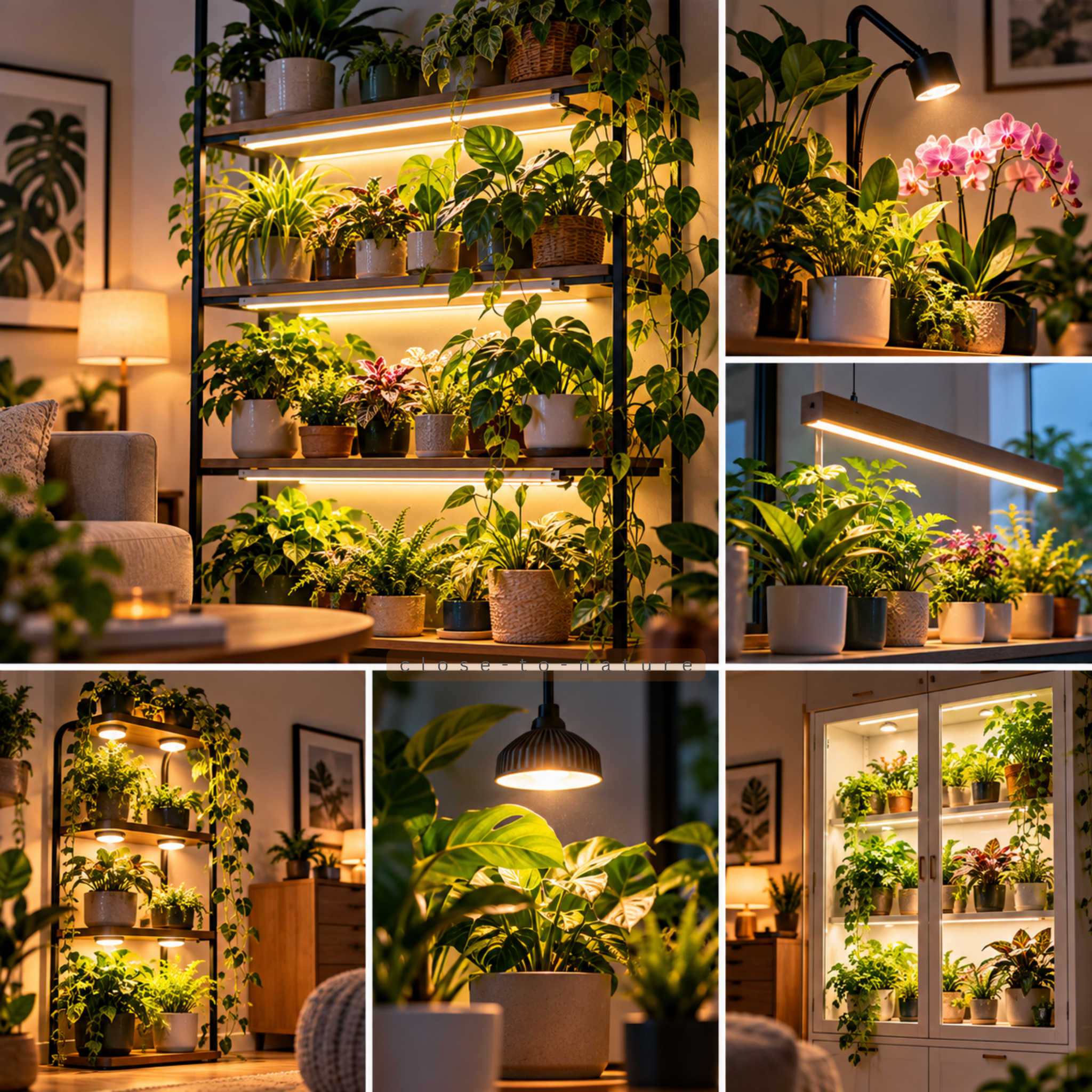
24. Illuminate Indoor Plants With LED Grow Lights
LED grow lights can become part of your décor while providing supplemental light for indoor plants. Slim bars, small spotlights, and pendant-style grow lights can blend naturally into plant displays.
Plant shelves are particularly well suited to integrated grow lights. You can position the fixtures above the plants while keeping them relatively unobtrusive.
A group of plants with thoughtfully positioned lighting can also become an attractive focal point. This works well in corners or rooms with limited natural light.
White and full-spectrum grow lights can blend more naturally with home décor than purple-toned options. The style of the fixture also matters when the light remains visible.
Grow lights can be especially useful for plants with specific light requirements. Understanding indoor orchid plant care can help you determine when supplemental lighting may be beneficial.
Choose grow lights designed specifically for plants rather than ordinary decorative LEDs. Follow the manufacturer’s recommendations for placement, distance from the foliage, and daily lighting duration.
Frequently Asked Questions
Q1: How Do I Choose The Right LED Lights For A Room?
Consider how you use the room and the atmosphere you want to create. Brightness, colour temperature, fixture style, and placement all affect the finished result.
Warm white LEDs often suit bedrooms and living areas, while neutral white can work well in kitchens and task areas. Dimmable lights provide more flexibility.
Q2: Are LED Strip Lights Good For Home Decorating?
Yes. LED strip lights work well beneath cabinets, behind furniture, around shelving, and in other areas where traditional fixtures may be difficult to place.
Choose strips suitable for the installation location. Bathrooms and outdoor areas require products appropriately rated for moisture and weather exposure.
Q3: What Colour LED Lights Are Best For Home Décor?
The best colour depends on the room and the effect you want to create. Warm white can create a softer atmosphere, while neutral white provides a cleaner appearance.
RGB and RGBW LEDs offer colourful options for accent lighting. Choosing colours that complement the existing décor usually creates a more balanced result.
Q4: Can LED Lights Be Used In Bedrooms?
Yes. LEDs can provide general, task, and decorative lighting in bedrooms. Strip lights behind a headboard or beneath the bed can create subtle accent lighting.
Dimmable LEDs are particularly useful because you can adjust the brightness when needed. Avoid placing bright, exposed LEDs where they shine directly toward the bed.
Q5: Can LED Lights Be Used Outdoors?
Yes, but the LED fixture must be suitable for its intended outdoor location. Consider exposure to rain, moisture, temperature changes, and other conditions.
Check the manufacturer’s specifications before installation. You can use outdoor-rated LEDs for pathways, patios, gardens, entrances, and landscape features.
Q6: Are LED Grow Lights Suitable For Indoor Plants?
LED grow lights can provide supplemental light when indoor plants do not receive enough suitable natural light. Different plants may require different light intensities and daily exposure.
Choose a grow light designed for plants and follow the manufacturer’s placement recommendations. Decorative LED lights should not automatically be treated as substitutes for proper grow lights.
Conclusion
These LED light decorating ideas show how versatile lighting can transform different areas of your home. Small changes can highlight favourite features, brighten overlooked spaces, and add warmth or colour.
LED strips can create subtle accent lighting beneath cabinets, behind furniture, or along shelving. Chandeliers, downlights, wall lights, and other fixtures can become decorative features in their own right.
The best results come from choosing lighting that suits both the room and its purpose. Consider brightness, colour temperature, placement, and the conditions where the LEDs will be installed.
From kitchens and bedrooms to outdoor spaces and indoor plant displays, LEDs provide plenty of creative possibilities. Thoughtful placement can help the lighting complement your décor without overwhelming it.
I trust you enjoyed this article on the 24 Creative LED Light Decorating Ideas For Your Home. Please stay tuned for more inspiring guides, helpful tips, and ideas to help you live closer to nature every day.
Take care!
— JeannetteZ🌿
💬 Your Opinion Is Important To Me
Do you have thoughts, ideas, or questions? I’d love to hear from you. Please leave your comments below or email me directly at Jeannette@Close-To-Nature.org.
📚 More Nature-Inspired Reads
Explore more ways to connect with nature, nurture your pets, and live in harmony with the world around you 🌿