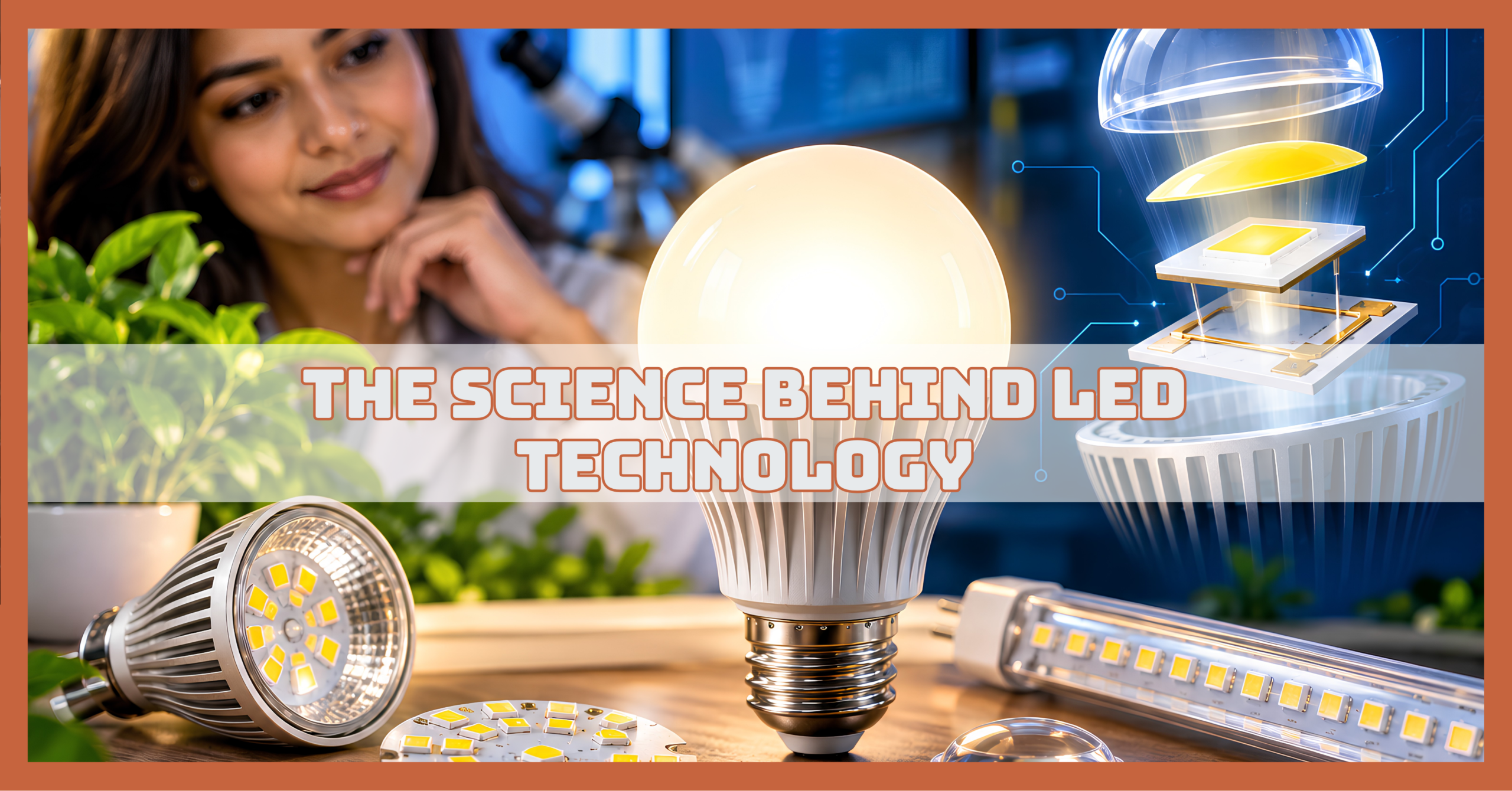
The Science Behind LED Technology

The science behind LED technology helps explain why LED lights are energy-efficient, long-lasting, and widely used today. Unlike traditional incandescent bulbs, LEDs produce light without relying on a heated filament.
Tiny components called light-emitting diodes use semiconductor materials to convert electrical energy into light. As electricity moves through the semiconductor, it releases energy as light through a process called electroluminescence.
This efficient process is one reason LEDs have transformed modern lighting. They use less electricity than traditional incandescent bulbs and can provide illumination for much longer before needing replacement.
LEDs are now used in homes, offices, vehicles, electronics, streetlights, and many other applications. Their small size also makes them suitable for everything from tiny indicator lights to large lighting systems.
Understanding how LED technology works reveals why it offers so many practical advantages. This article explores how LEDs produce light, what influences their colour and efficiency, and the science behind their performance.
Benefits Of LED Technology
LED technology offers several advantages over many traditional lighting options. Its energy efficiency and long lifespan have made it useful for residential, commercial, industrial, and outdoor lighting.
LEDs convert more electrical energy into light than heat. This can reduce electricity consumption while also limiting the amount of heat produced by the lighting itself.
LED lighting is also durable, versatile, and available in many colours, brightness levels, shapes, and sizes. These qualities make it suitable for everything from small electronic displays to large lighting systems.
Other advantages include directional lighting, rapid switching, and flexible design possibilities. Here are some of the main benefits of LED technology:
1. Energy Efficiency
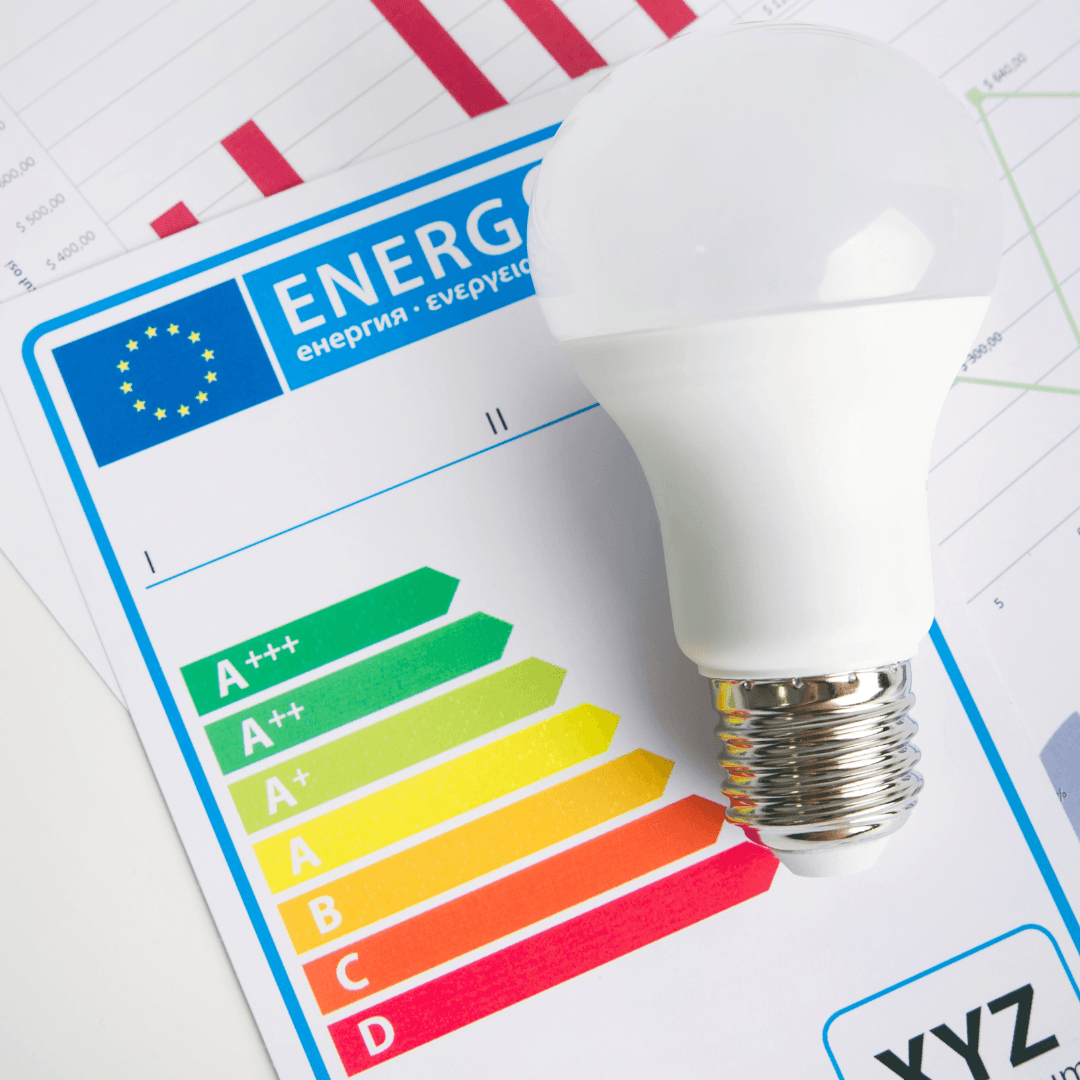
One of the most significant benefits of LED technology is its high energy efficiency. LEDs use less electricity than traditional lighting options, such as incandescent and fluorescent lights.
Lower energy consumption can reduce electricity costs and the energy required for lighting. This efficiency also makes LEDs practical for solar-powered lighting applications and other systems where conserving electricity matters most.
2. Long Lifespan
LEDs typically last much longer than traditional incandescent and fluorescent lighting. Their solid-state design allows them to operate for many hours before their light output noticeably declines.
A longer lifespan means fewer replacements are needed over time. This can reduce maintenance requirements and the waste associated with manufacturing, packaging, and disposing of replacement lights.
3. Environmental Benefits
LED technology can offer environmental benefits through lower energy consumption and a longer lifespan. Using less electricity can reduce the environmental impact associated with producing energy for lighting.
LEDs also contain no mercury, unlike fluorescent and compact fluorescent lamps. Their longer lifespan can also mean fewer replacements and less lighting waste over time.
4. Durability
LED lighting is generally more resistant to shock, vibration, and frequent switching than traditional incandescent and fluorescent lighting. LEDs use solid-state components rather than fragile filaments.
This durability makes LED technology suitable for many applications, including outdoor lighting, transportation, and home office lighting, as well as environments where lights may experience frequent movement or vibration.
5. Instant On/Off
LEDs provide full illumination almost immediately after being switched on, without requiring a warm-up period. This differs from some fluorescent and other traditional lighting technologies that may take time to reach full brightness.
Instant illumination is useful in areas where lights are frequently switched on and off, such as hallways, bathrooms, stairways, and outdoor spaces. LEDs also generally handle frequent switching well without significantly shortening their lifespan.
6. Directional Lighting
LEDs naturally emit light in a specific direction, making it easier to direct illumination where it is needed. This can reduce wasted light and improve efficiency in applications such as task lighting, recessed lighting, and outdoor fixtures.
Well-designed LED fixtures can also help limit unwanted light spilling into surrounding areas or the night sky. Proper shielding and placement are still important for reducing light pollution and its effects on wildlife and the environment.
7. Design Flexibility
The small size of LEDs gives designers considerable flexibility when creating lighting systems. LEDs can be incorporated into compact fixtures, strips, panels, recessed lighting, decorative features, and many other designs.
LEDs are also available in different colours, brightness levels, and colour temperatures. These options make it easier to create lighting that serves a practical purpose while complementing a space’s design and atmosphere.
8. Colour Options
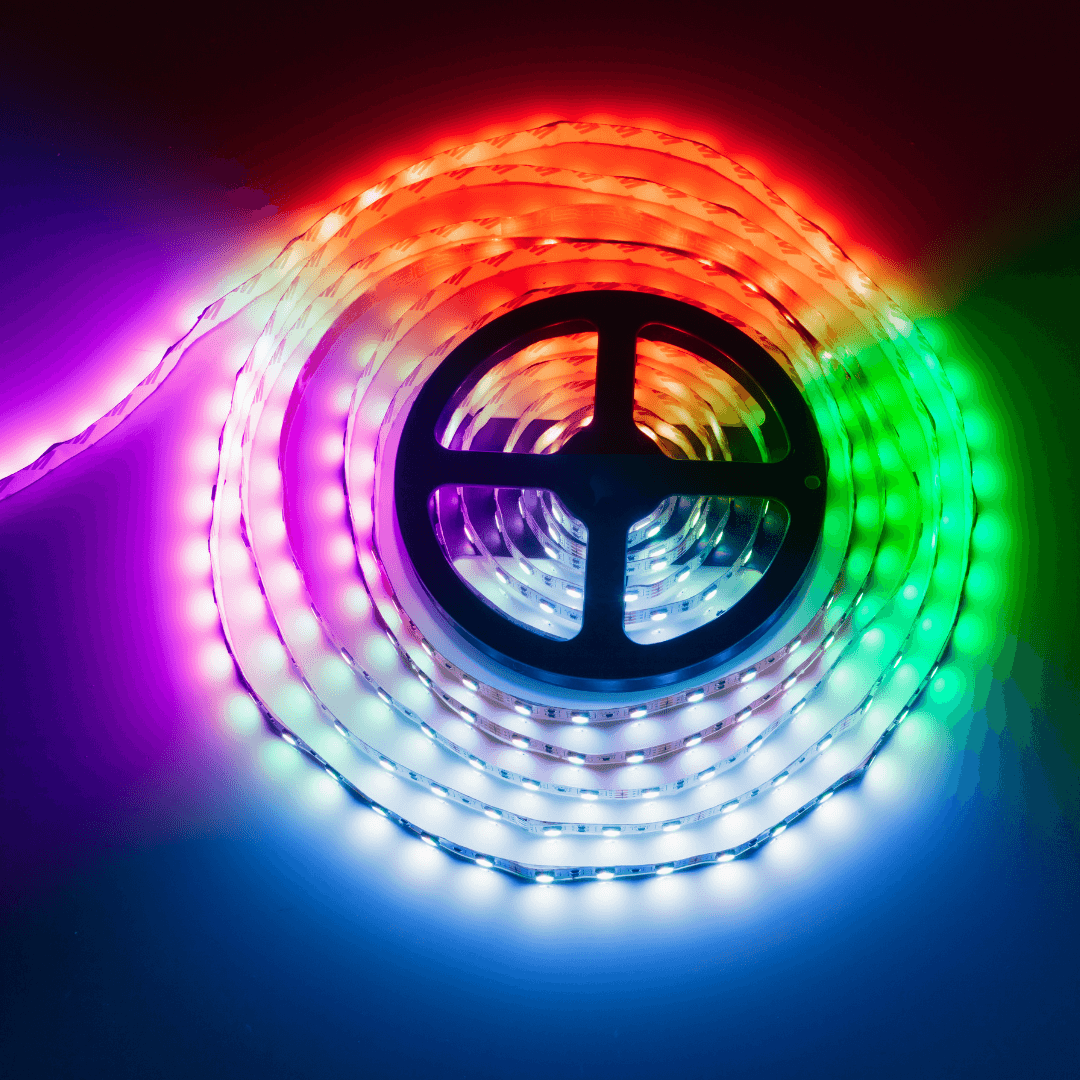
LEDs are available in a wide range of colours, including white light with different colour temperatures. Warm white can create a softer atmosphere, while cooler white light can provide a brighter, more energizing appearance.
Some LED systems can also change colours or adjust colour temperature throughout the day. This flexibility lets you adapt lighting to different activities, settings, and design preferences.
9. Low Heat Output
LEDs produce less heat than traditional incandescent lighting because they convert more electrical energy into light rather than waste it as heat. They typically manage the heat they do generate through heat sinks and other thermal controls.
Lower heat output can also reduce the amount of additional heat introduced into indoor spaces. In buildings with extensive lighting, this may help reduce the cooling demand during warmer weather.
10. Dimming And Control
Many LED lighting systems can be dimmed or adjusted to provide different brightness levels. Compatible controls can make it easier to adapt lighting for activities such as reading, working, relaxing, or entertaining.
LEDs can also be integrated with timers, sensors, and smart lighting systems. These controls can improve convenience while helping reduce unnecessary energy use when full lighting is not required.
Together, these benefits have made LED technology suitable for residential, commercial, industrial, automotive, and outdoor lighting. Its combination of efficiency, durability, flexibility, and control has changed how lighting is designed and used.
As LED technology continues to develop, improvements in efficiency, performance, and lighting controls may further expand its applications. These advances can support efforts to reduce energy consumption while providing effective lighting for a wide range of needs.
Sustainable Business Ideas For Nature Lovers
🌿 Whether you love gardening, caring for animals, or exploring eco-friendly living,
you can turn your nature-inspired interests into meaningful online income.
Discover simple, sustainable business ideas that let you share your love for nature while supporting a greener lifestyle. 👇
The Science Behind LED Technology
The science behind LED technology centres on how semiconductor materials convert electrical energy into light. This process differs significantly from the way traditional incandescent and fluorescent lighting produces illumination.
Inside an LED, electrical current passes through a semiconductor material. As electrons move, they release energy as photons, creating visible light through a process called electroluminescence.
The semiconductor materials influence characteristics such as the colour and efficiency of the light produced. LED design also involves electrical components and heat management to maintain reliable performance.
These principles help explain why LEDs can provide efficient, long-lasting, and versatile lighting. Let’s take a closer look at the science and components that make LED technology work.
1. How LEDs Work
LEDs produce light through a process called electroluminescence. When an electric current passes through a semiconductor, electrons interact with positively charged areas known as holes, releasing energy as photons of light.
LED semiconductors are made from materials chosen for their electrical and light-producing properties. Different semiconductor materials and compositions allow manufacturers to control characteristics such as the colour of the light.
The energy difference within the semiconductor, known as the band gap, determines the energy of the photons released. This is why different semiconductor materials can produce different wavelengths and colours of light.
White LEDs are commonly made by combining a blue LED with a phosphor coating that converts some of the blue light into other wavelengths. The combined wavelengths appear as white light to the human eye.
LEDs are also efficient because they convert a relatively large portion of electrical energy into light rather than radiant heat. However, LEDs still generate heat, which must be managed to protect the components and maintain performance.
This combination of semiconductor materials, electron movement, and energy conversion forms the basic science behind how LEDs work.

2. The Role Of Semiconductors
Semiconductors are essential to LED technology because they control how electrical energy is converted into light. Their properties determine characteristics such as an LED’s colour and efficiency.
Gallium nitride (GaN) and indium gallium nitride (InGaN) are important semiconductor materials used in modern LEDs. GaN-based technology is widely used to produce blue light, which also plays an important role in creating white LEDs.
InGaN can produce wavelengths ranging from violet and blue to green, depending on its composition. Other semiconductor materials produce colours such as red, orange, and yellow.
A semiconductor’s band gap determines the energy released as photons and therefore influences the wavelength and colour of the emitted light. Adjusting the semiconductor composition allows manufacturers to produce LEDs with specific light characteristics.
Advances in semiconductor materials have steadily improved LED efficiency, brightness, and colour performance. These developments have helped expand LED technology into applications ranging from household and outdoor lighting to displays, electronics, and vehicles.
3. How LEDs Convert Energy Into Light
LED energy efficiency largely depends on how they convert electrical energy into visible light. Through electroluminescence, electrons and electron holes interact within the semiconductor, releasing energy as photons.
This process differs from incandescent bulbs, which produce light by heating a filament until it glows. Much of the electrical energy an incandescent bulb uses is released as heat rather than visible light.
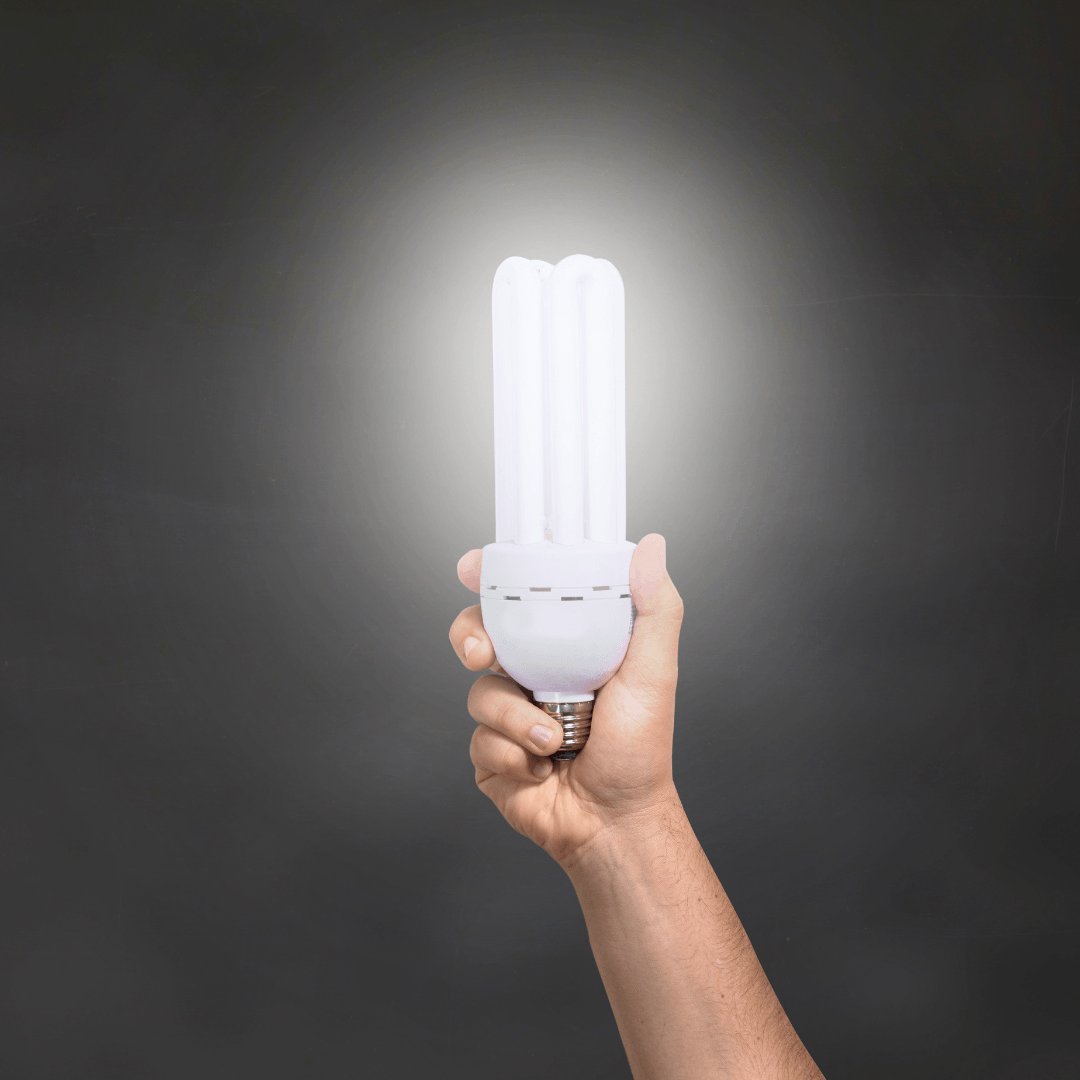
Fluorescent lighting works differently again. An electric current excites mercury vapour, producing ultraviolet radiation that causes a phosphor coating inside the lamp to emit visible light.
LEDs produce light without heating a filament or relying on the same process used by fluorescent lamps. This direct conversion of electrical energy into light helps explain LED technology’s efficiency.
4. Colour Mixing And Tunability
LED technology allows considerable control over light colour and colour temperature. This flexibility makes LEDs useful for applications ranging from decorative and architectural lighting to workplaces, displays, and entertainment venues.
Red, green, and blue LEDs can be combined through additive colour mixing to create a wide range of colours. By adjusting the intensity of each colour, an LED system can produce different hues without requiring separate coloured filters.
LEDs can also produce different shades of white light. Warm white LEDs generally have lower colour temperatures, while cool white LEDs have higher colour temperatures and a noticeably different appearance.
Tunable-white LED systems take this flexibility further by allowing the colour temperature to change. Lighting can therefore be adjusted for different activities, times of day, or preferences within the same space.
Some tunable lighting systems are also designed to change throughout the day in ways that resemble variations in natural daylight. This approach is increasingly used when designers consider how the timing, intensity, and colour of indoor light interact with human circadian rhythms.
Colour mixing and tunability therefore give LED technology an important advantage over many traditional lighting systems. The same technology can provide functional illumination, decorative colour, or adjustable white light depending on how it is designed and controlled.
5. Compact LED Design
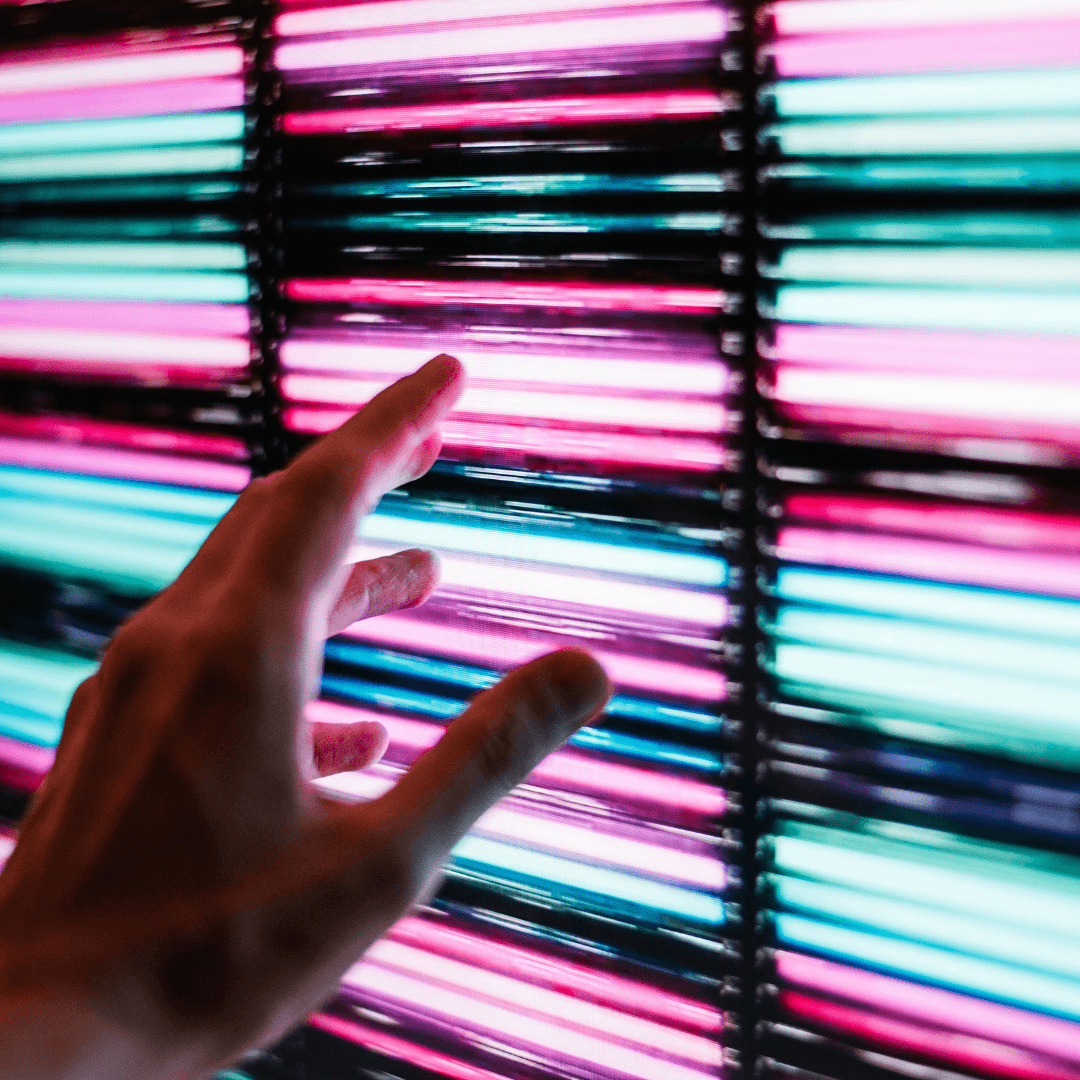
LEDs’ compact size gives designers more freedom than many traditional light sources. Designers can arrange individual LEDs in different shapes and configurations or incorporate them into fixtures where larger bulbs would be impractical.
LEDs can also be used in strips, panels, recessed fixtures, displays, and integrated architectural lighting. Their small size allows light to become part of a design rather than requiring a conventional bulb and fixture.
Compact LEDs can be positioned precisely within fixtures and architectural features. This makes them useful where space is limited or where lighting needs to be integrated discreetly into a larger design.
Their small size has expanded the use of LEDs in homes, workplaces, vehicles, outdoor spaces, architecture, and decorative lighting.
6. Thermal Management In LEDs
LEDs are efficient, but they still generate heat during operation. Managing this heat is important because excessive temperatures can reduce light output, affect colour consistency, and shorten the lifespan of LED components.
Many LED fixtures use heat sinks to move heat away from the semiconductor junction. These components are commonly made from thermally conductive materials that transfer heat to a larger surface, where it can dissipate into the surrounding air.
Effective thermal management helps LEDs maintain consistent performance and protects their internal components from excessive heat. It becomes particularly important in high-power lighting systems that operate for long periods.
Fixture design, airflow, and materials can all influence how effectively heat is managed. Proper heat dissipation therefore plays an important role in the efficiency, reliability, and longevity of LED lighting.
7. Quantum Dots
Quantum dots are nanoscale semiconductor crystals with unique optical properties. When excited by light or electrical energy, they can emit specific colours depending largely on their size and composition.
This ability gives manufacturers precise control over the wavelengths of light produced. Quantum dots can therefore expand the range of colours available and improve colour reproduction in certain LED-based technologies.
Quantum dots are particularly well known for their use in displays. In some televisions and monitors, blue LED light excites quantum dots that produce highly controlled red and green light, creating a wider and more accurate range of colours.
Researchers are also developing quantum-dot technology for lighting applications. Its ability to control light at very small scales shows how advances in semiconductor science continue to expand LED capabilities.
8. LED Drivers And Control Systems
LEDs require controlled electrical power to operate safely and consistently. An LED driver regulates the electricity supplied to the LEDs, helping maintain stable light output while protecting them from excessive current.
Some LED systems use constant-current drivers, while others use constant-voltage power supplies. The appropriate type depends on the LED product and how the lighting system is designed.
LED drivers can also support dimming and other lighting controls. Two common approaches are pulse-width modulation (PWM), which rapidly switches the LED on and off, and current-based dimming, which adjusts the supplied current.
Not every LED lamp or fixture is compatible with every dimmer. Using compatible LEDs, drivers, and controls helps prevent problems such as flickering, limited dimming ranges, or unstable performance.
Modern LED controls can also work with timers, occupancy sensors, daylight sensors, and smart lighting systems. These technologies let lighting respond to different conditions while reducing unnecessary energy use.
9. Blue Light Considerations
LED lighting can contain blue wavelengths, particularly when the light has a higher colour temperature. However, the amount and intensity of blue light vary considerably among LED products and lighting conditions.
The term blue light hazard refers specifically to the potential for retinal injury from sufficiently intense optical radiation. For ordinary white-light LED lighting, recognized exposure limits are generally not exceeded during normal use. CIE
Blue-rich light can also influence the body’s circadian system. Exposure to brighter or blue-enriched light during the evening may affect the natural sleep-wake cycle, which is why the timing and intensity of light can matter as well as its colour. AAO
Warmer-coloured LEDs contain less blue light than cooler-coloured LEDs. Dimming lights and choosing an appropriate colour temperature can therefore help create more comfortable lighting for different times of day.
Research into how light affects vision, sleep, and other biological processes continues to develop. Good LED lighting design considers brightness, colour temperature, timing, glare, and the intended use of the space rather than treating blue light alone as the problem.
Conclusion
The science behind LED technology explains how small semiconductor devices can convert electrical energy into light efficiently. Electroluminescence, semiconductor materials, and controlled electron movement form the foundation of how LEDs work.
Advances in semiconductor design have also made it possible to produce different colours, colour temperatures, and brightness levels. These capabilities have expanded LED use far beyond basic household lighting.
Heat management, LED drivers, dimming controls, and other technologies also influence how well an LED system performs. Together, these components help provide efficient, reliable, and adaptable lighting for many applications.
LED technology is now used in homes, workplaces, vehicles, outdoor spaces, electronics, displays, and architectural lighting. Its compact size and design flexibility continue to create new possibilities for lighting and electronic systems.
As LED technology continues to develop, improvements in materials, efficiency, controls, and light quality are likely to broaden its applications further.
Understanding the science behind LEDs makes it easier to see why this technology has become such an important part of modern lighting.
I trust you enjoyed this article on the Science Behind LED Technology. Please stay tuned for more inspiring guides, helpful tips, and ideas to help you live closer to nature every day.
Take care!
— JeannetteZ🌿
💬 Your Opinion Is Important To Me
Do you have thoughts, ideas, or questions? I’d love to hear from you. Please leave your comments below or email me directly at Jeannette@Close-To-Nature.org.
📚 More Nature-Inspired Reads
Explore more ways to connect with nature, nurture your pets, and live in harmony with the world around you 🌿