8 Essential Pet Bird Care Tips For Happy, Healthy Birds

These pet bird care tips can help you create a healthy, comfortable, and engaging environment for your feathered companion. Birds are highly social animals, and many species enjoy regular interaction and mental stimulation.
Proper care includes providing suitable housing, nutritious food, fresh water, and opportunities for exercise and enrichment. Regular attention to your bird’s behaviour and health can also help you notice when something may be wrong.
Different bird species have very different needs, personalities, and lifespans. Some may share your home for many years, making it especially important to understand the commitment before bringing a pet bird into your family.
Learning about the particular species you are considering can help you decide whether its needs fit your home and lifestyle. This guide explores popular pet bird species and practical care tips to help you provide a safe and enriching environment.
Varieties Of Pet Birds
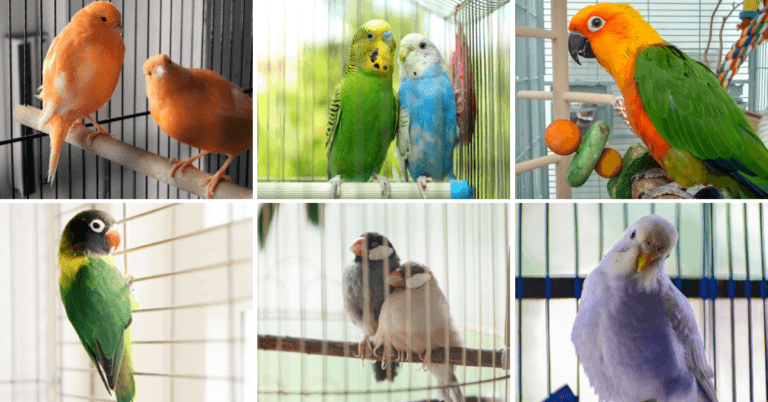
Pet birds come in many sizes, personalities, and activity levels. Parrots are popular companions, but other birds such as canaries, finches, and doves can also make rewarding pets.
Research is essential before choosing a pet bird because their care requirements vary considerably. Consider diet, housing, social needs, noise levels, lifespan, and daily interaction before bringing a bird home.
Some smaller birds may require less direct human interaction than highly social parrots. However, they still need appropriate housing, enrichment, nutrition, and opportunities to express their natural behaviours.
Larger parrots can require considerably more time, space, attention, and specialized care. Some species may also live for several decades, making them a significant long-term commitment.
Birds are intelligent animals with physical, social, and behavioural needs you should understand before choosing one as a companion. Here are some popular pet bird species and important characteristics to consider.
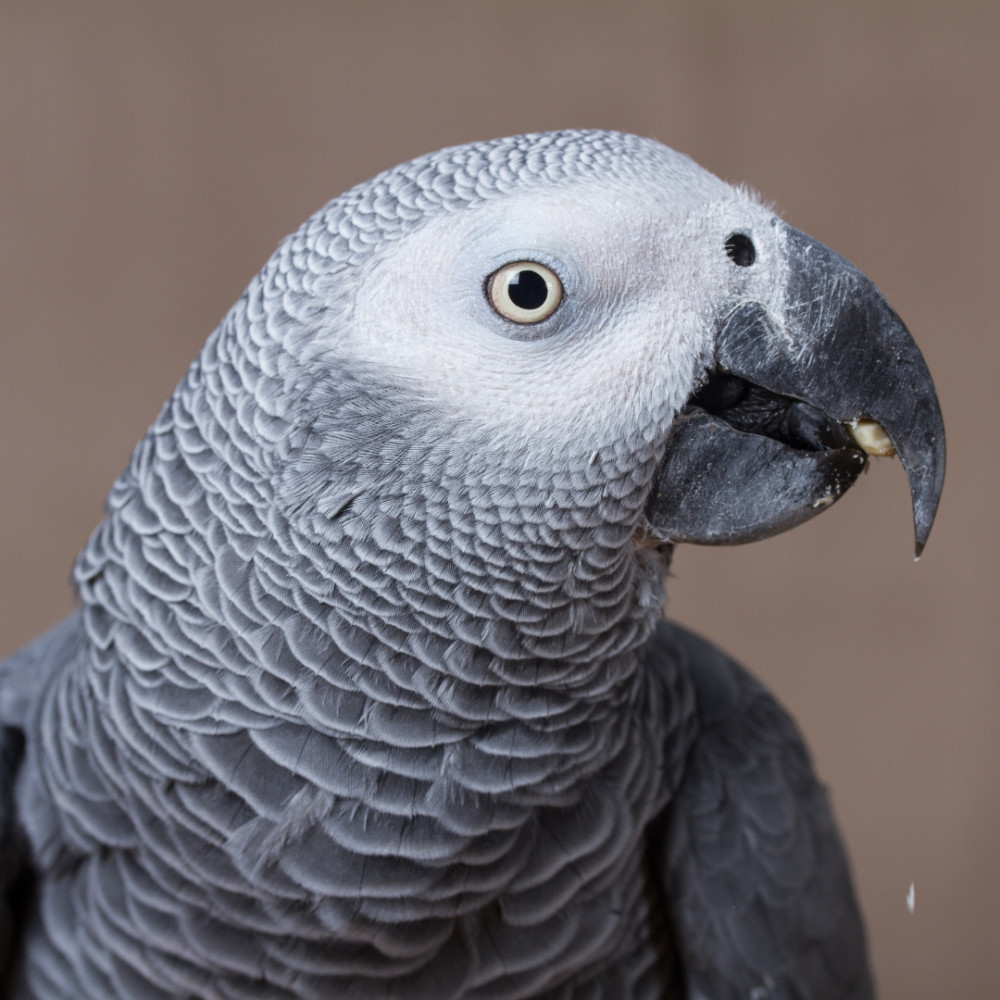
1. African Grey Parrots
African grey parrots are highly intelligent birds known for their remarkable ability to learn words, sounds, and other forms of communication. They can also develop impressive problem-solving skills and learn complex behaviours.
Two commonly recognized types are the Congo African grey and the Timneh African grey. Congo greys are generally larger with bright red tails, while Timneh greys are smaller and typically have darker plumage and maroon-coloured tails.
These parrots are highly social and need regular interaction, mental stimulation, and enrichment. Without enough activity and attention, their intelligence can make boredom particularly challenging.
African greys can also live a long time, making them a significant commitment. With appropriate care and social interaction, they can develop strong relationships with the people who share their homes.
2. Amazon Parrots
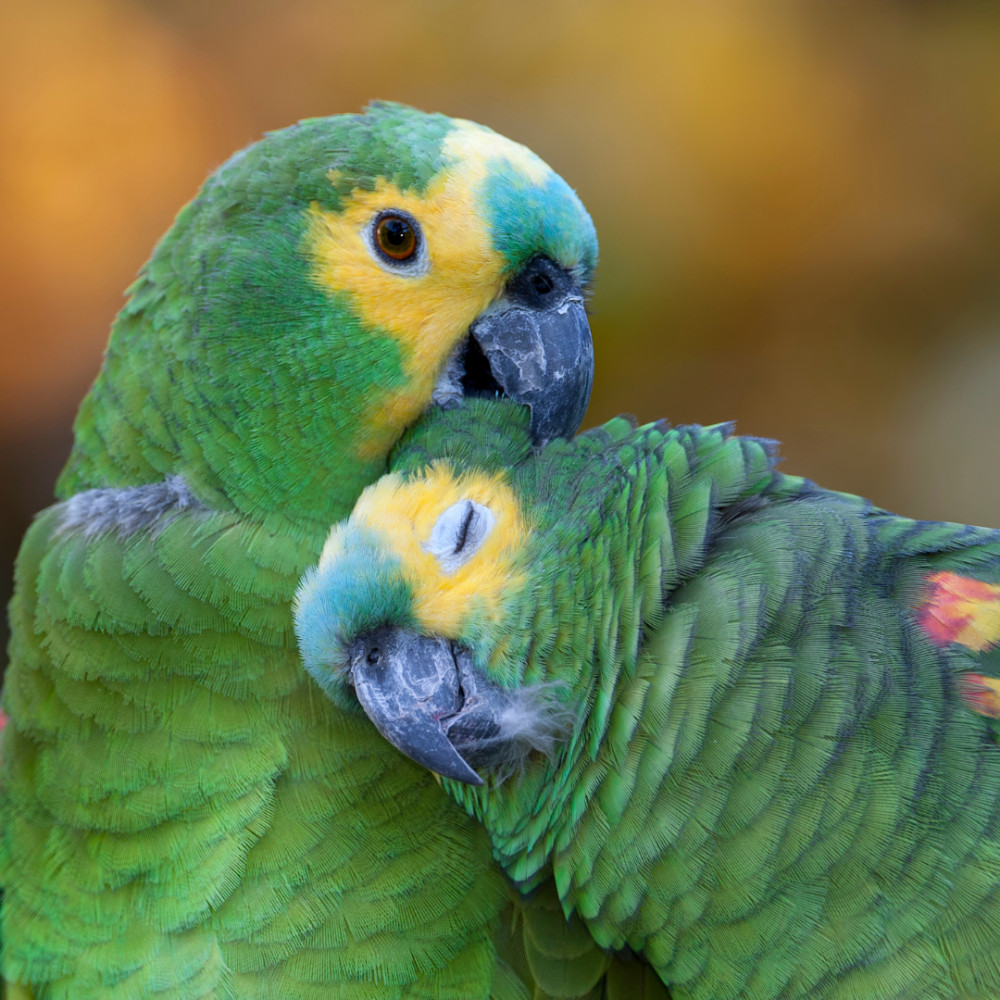
Amazon parrots are medium-sized to large parrots known for their outgoing personalities, intelligence, and strong vocal abilities. Many species can learn to imitate words, household sounds, and even parts of songs.
These highly social birds often enjoy interacting with people and participating in household activities. Their energetic personalities mean they need regular attention, opportunities to play, and plenty of mental stimulation.
Amazon parrots also require enough space to move, climb, and exercise. Toys, foraging activities, and regular social interaction can help prevent boredom and encourage natural behaviours.
They are long-lived birds, with many living for several decades when provided with appropriate care. Their lifespan and social needs make choosing an Amazon parrot a significant long-term commitment.
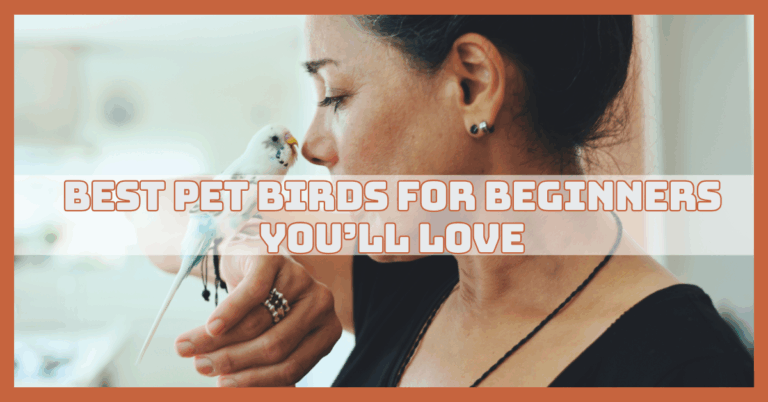
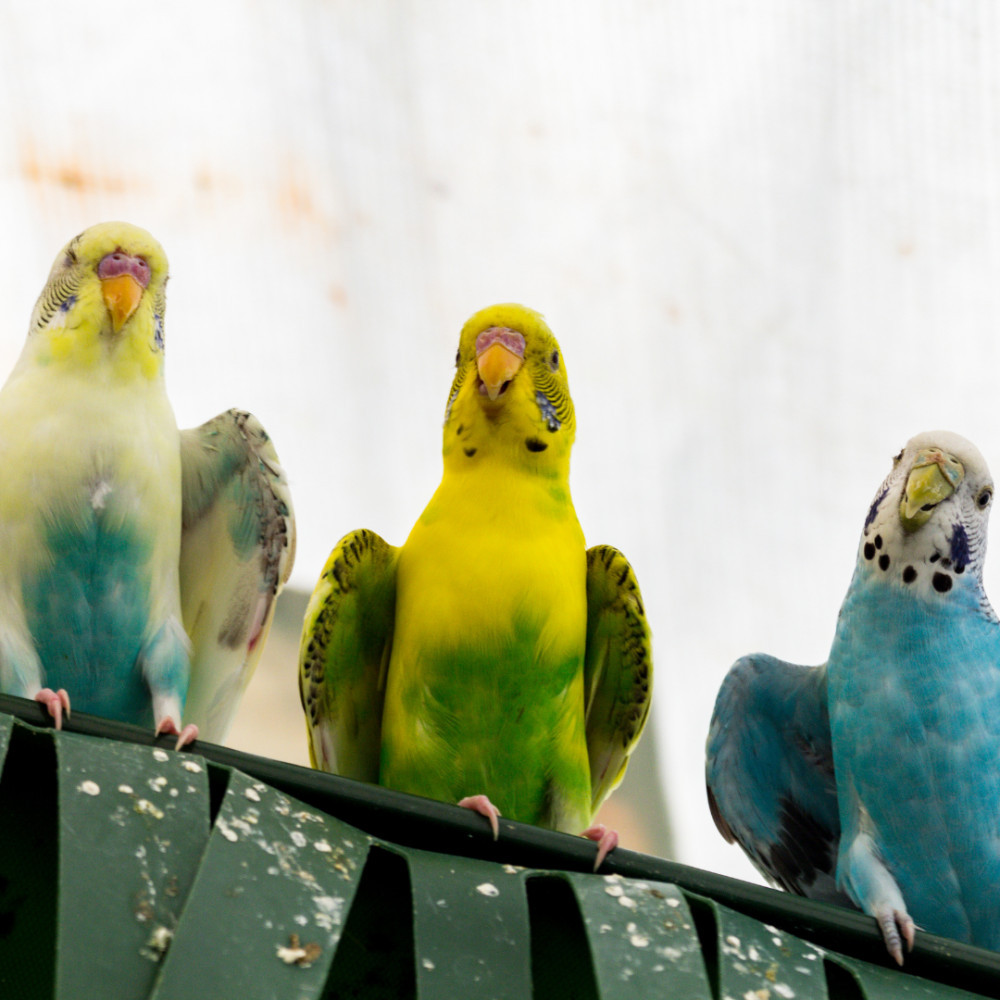
3. Budgerigars (Budgies)
Budgerigars, commonly called budgies or parakeets, are small, intelligent parrots known for their social and curious personalities. Their smaller size means they generally require less living space than larger parrot species.
Budgies can learn to imitate words and other sounds, and some individuals develop surprisingly large vocabularies. Regular interaction and gentle training can provide valuable mental stimulation while helping them become comfortable around people.
These active little birds also need opportunities to fly, climb, explore, and play. A suitable enclosure, varied enrichment, social interaction, and a balanced diet are all important parts of their care.
Budgies come in a remarkable variety of colours and patterns. With appropriate care, many live for several years, although lifespan varies considerably between individual birds.

4. Canaries
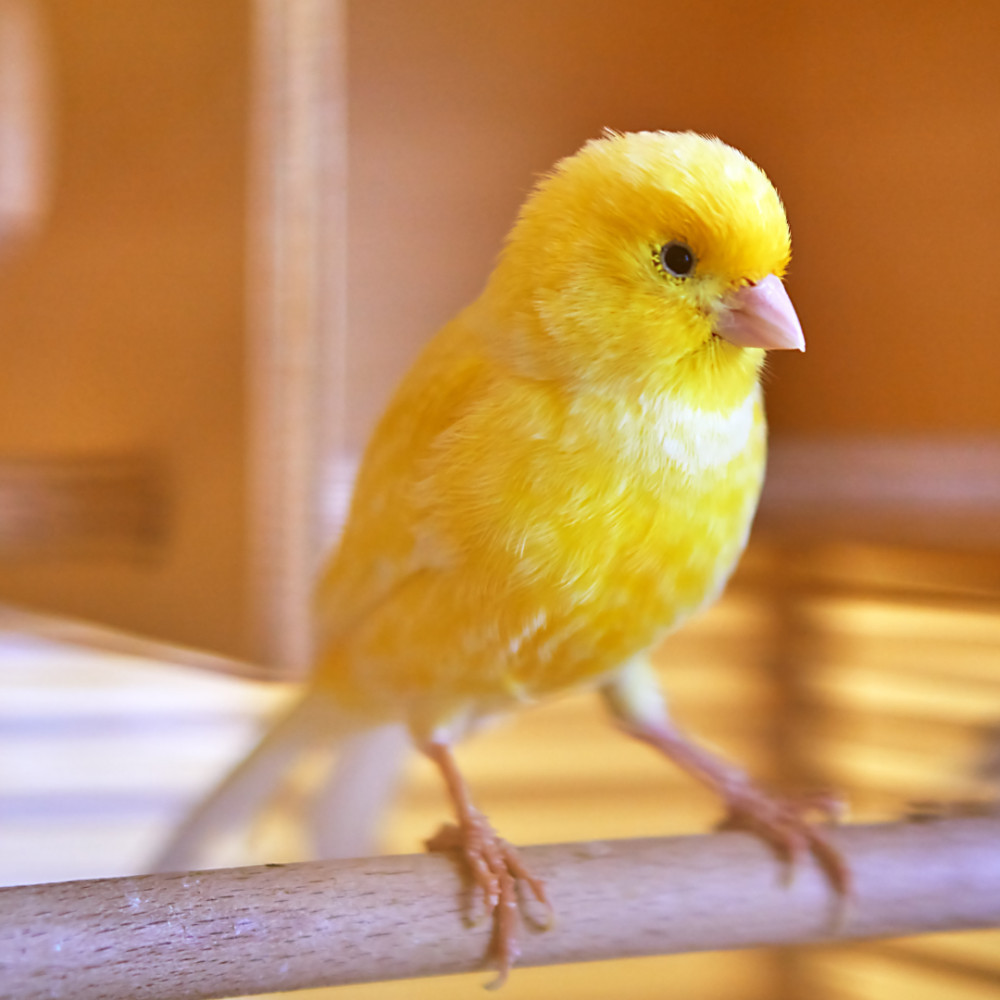
Canaries have been kept and selectively bred for hundreds of years, resulting in wide varieties with different colours, feather types, body shapes, and songs. They are particularly well known for the beautiful singing ability of males.
Unlike highly social parrots, canaries generally do not require constant handling or direct interaction with people. Many are happiest in a comfortable environment where they can fly, explore, bathe, and display their natural behaviours.
Their enclosure should provide enough horizontal space for movement along with suitable perches and enrichment. A balanced diet, fresh water, appropriate lighting, and regular health checks are also important.
Canaries can be appealing companions for people who enjoy watching and listening to birds rather than handling them often. With appropriate care, they may share the home for many years.
5. Cockatiels
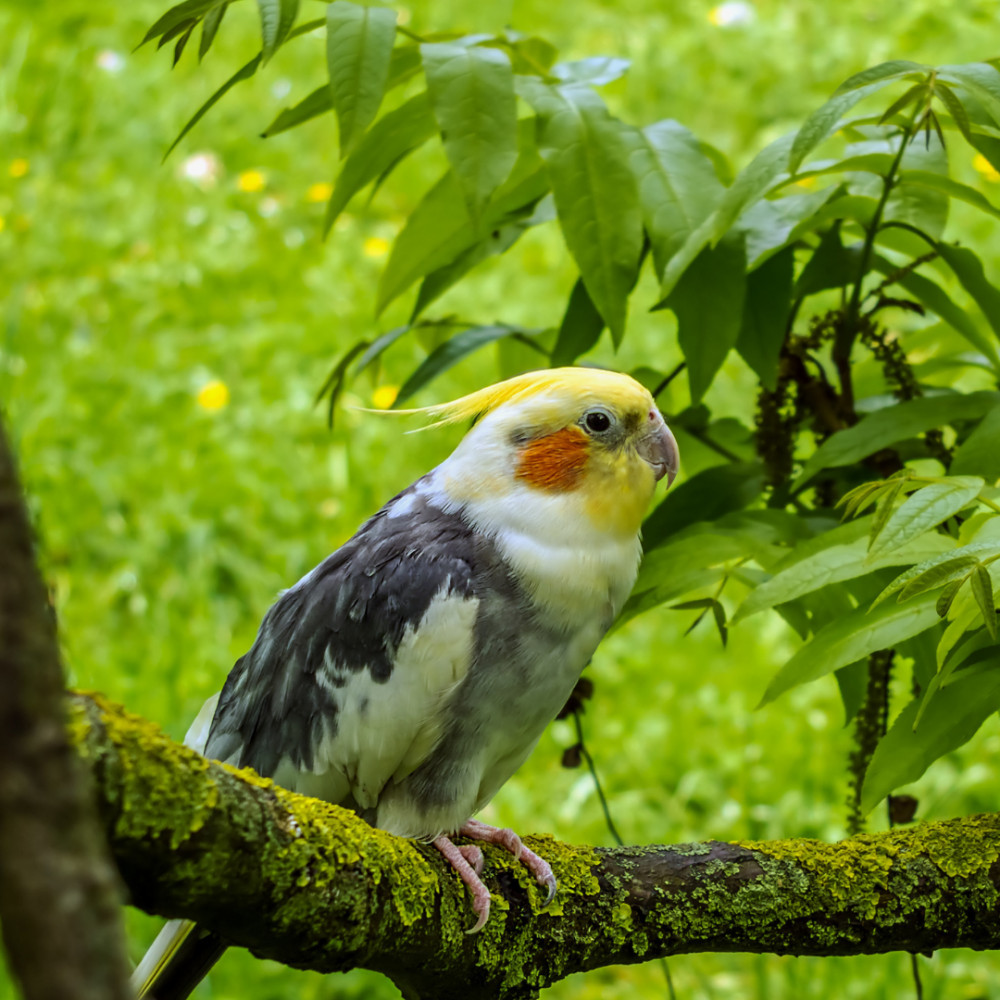
Cockatiels are small members of the cockatoo family, known for their distinctive head crests and expressive personalities. Many enjoy social interaction and can develop strong relationships with the people who care for them.
They are generally better known for whistling and imitating sounds than for developing extensive vocabularies. Some learn simple tunes, household sounds, and a few words or phrases.
Cockatiels are active birds that need opportunities to fly, climb, play, and explore. Regular interaction and varied enrichment can help provide the mental and physical stimulation they need.
Selective breeding has produced cockatiels with several different colour and feather patterns. They can also live for many years, making their care a significant long-term commitment.
6. Cockatoos
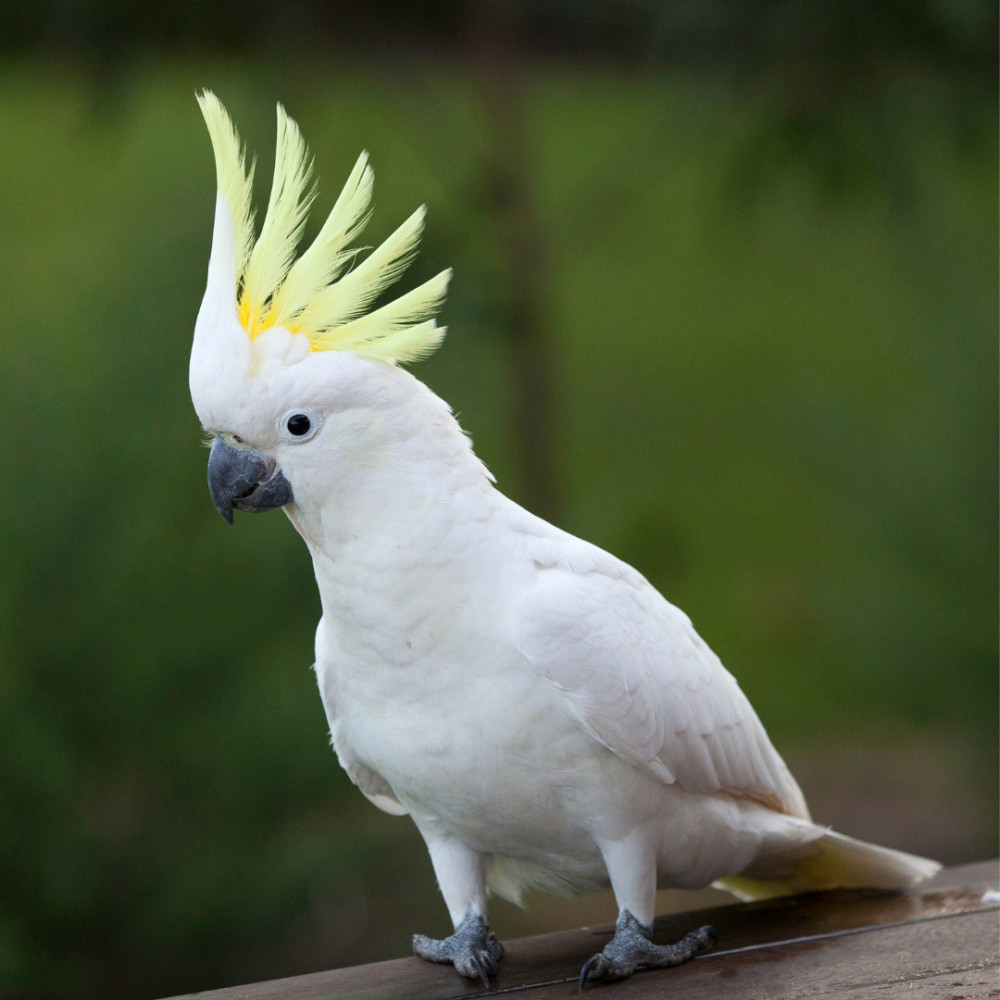
Cockatoos are highly intelligent, social parrots known for their distinctive crests and expressive personalities. Many form strong relationships with their caregivers and seek frequent interaction.
More than 20 species of cockatoos vary widely in size and appearance. Their movable crests are particularly expressive and may be raised when the bird is excited, curious, alarmed, or communicating.
These parrots can also be extremely loud and require considerable mental stimulation, social interaction, and opportunities for exercise. Their powerful beaks and natural chewing behaviour mean they need suitable toys and other safe materials to keep them occupied.
Cockatoos are among the more demanding pet birds and may not suit every household. Consider their social needs, noise levels, space requirements, and potentially long lifespans before bringing one home.
With appropriate care, some species can live for several decades. Choosing a cockatoo therefore means being prepared for a substantial long-term commitment.
7. Conures
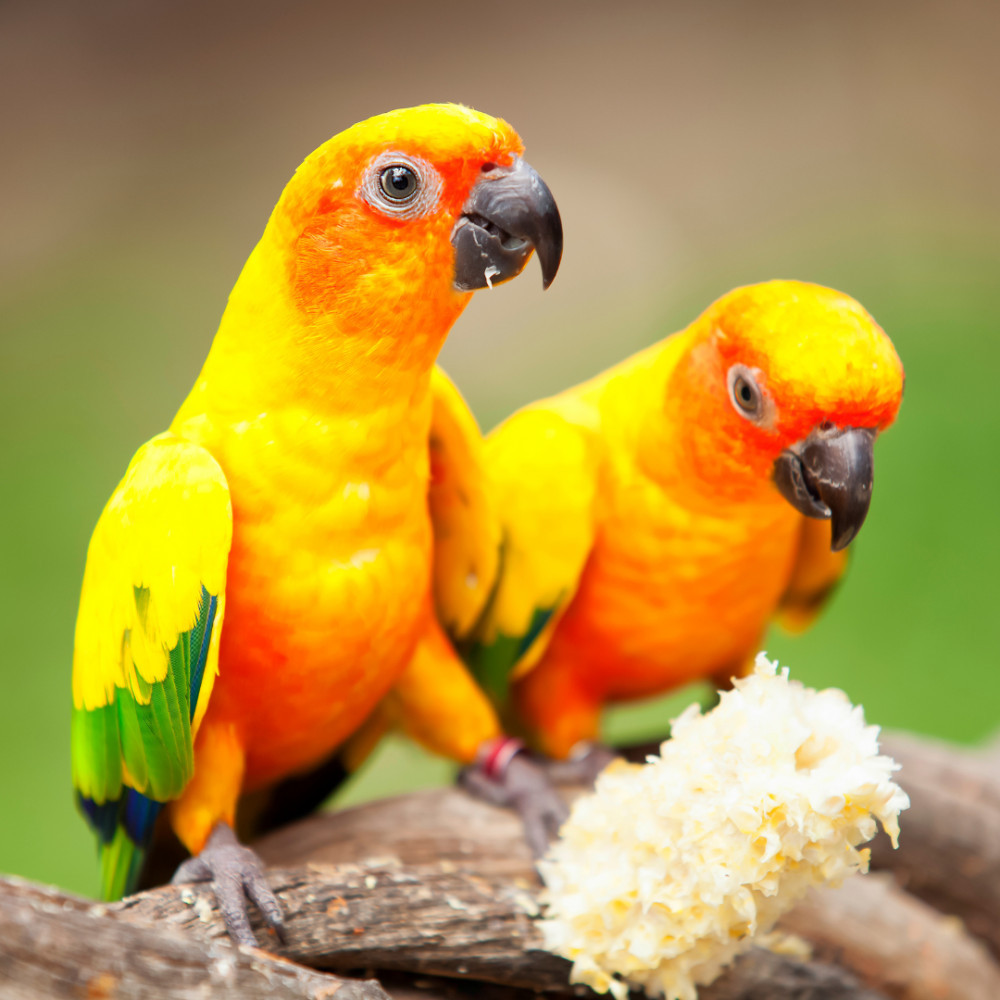
Conures are small to medium-sized parrots known for their playful, curious, and energetic personalities. Many species also have colourful plumage that ranges from bright greens and yellows to reds, oranges, and blues.
These social birds often enjoy spending time with people and participating in household activities. Individual personalities vary, however, and their comfort with handling or different family members depends greatly on socialization and experience.
Conures are intelligent and active, so they need regular interaction and plenty of opportunities to climb, explore, chew, and play. Toys and foraging activities can help provide the mental stimulation they require.
They can also be surprisingly loud for their size, particularly when excited or seeking attention. Noise levels vary by species, so this is an important consideration when choosing a conure.
With appropriate care, many conures can live for several decades. Their lifespan, social needs, and energetic nature make them another significant long-term commitment.
8. Doves
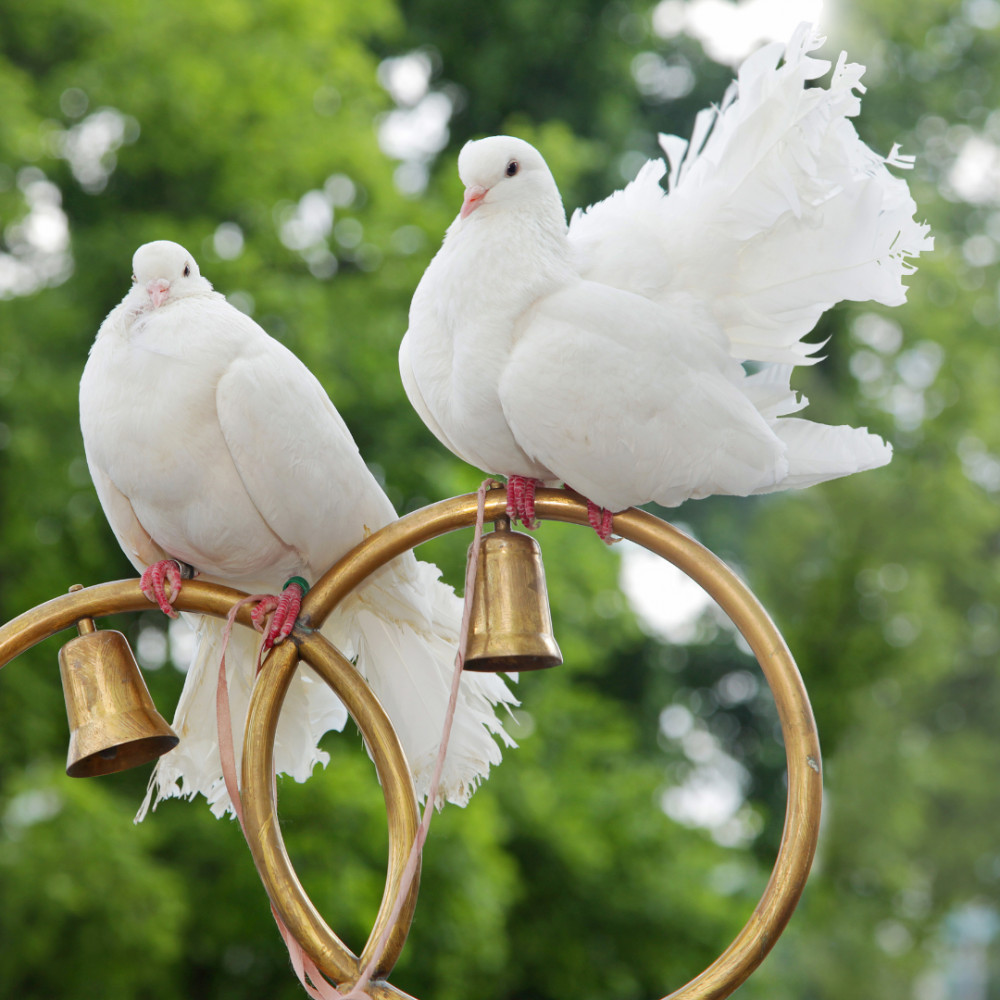
Doves can be gentle, appealing companion birds for people who prefer a quieter bird than many parrot species. They are generally known for their calm behaviour and distinctive soft cooing.
With patient, gentle interaction, pet doves can become comfortable around people. Some may enjoy sitting near or on their caregivers, although individual birds vary in how much handling and physical contact they prefer.
They still need enough space to move and fly, along with suitable perches, enrichment, fresh water, and a balanced diet. Regular exercise opportunities are important for their physical and mental well-being.
Ringneck doves are among the species commonly kept as companion birds. Their relatively peaceful nature can appeal to people who enjoy interacting with birds without the intense social demands of some parrots.
Doves can live for many years with proper care, so they shouldn’t be considered a short-term or maintenance-free pet. Understanding their specific needs is just as important as with any other companion bird.
Pet Bird Care Tips
Caring for a pet bird involves much more than providing food, water, and a cage. Birds have physical, social, and behavioural needs that vary considerably between species.
A healthy diet, suitable housing, regular interaction, exercise, and mental stimulation all contribute to their well-being. Understanding your bird’s natural behaviours can also help you provide a more appropriate home environment.
Clean surroundings are particularly important because food debris, droppings, and contaminated water can quickly create unhealthy conditions. Clean the enclosure, dishes, perches, and surrounding area regularly as part of your care routine.
Birds can also hide signs of illness, so get familiar with your pet’s normal behaviour, appetite, activity level, and appearance. Changes may indicate that something needs attention.
The following pet bird care tips cover some of the most important aspects of keeping companion birds healthy, comfortable, active, and engaged.
Turn Your Passion for Nature Into Income
🌿 Whether you love gardening, caring for animals, or exploring holistic living,
You can share your knowledge online and earn from it.
Discover how nature lovers are growing their passions into meaningful, income-generating blogs. 👇
1. Housing
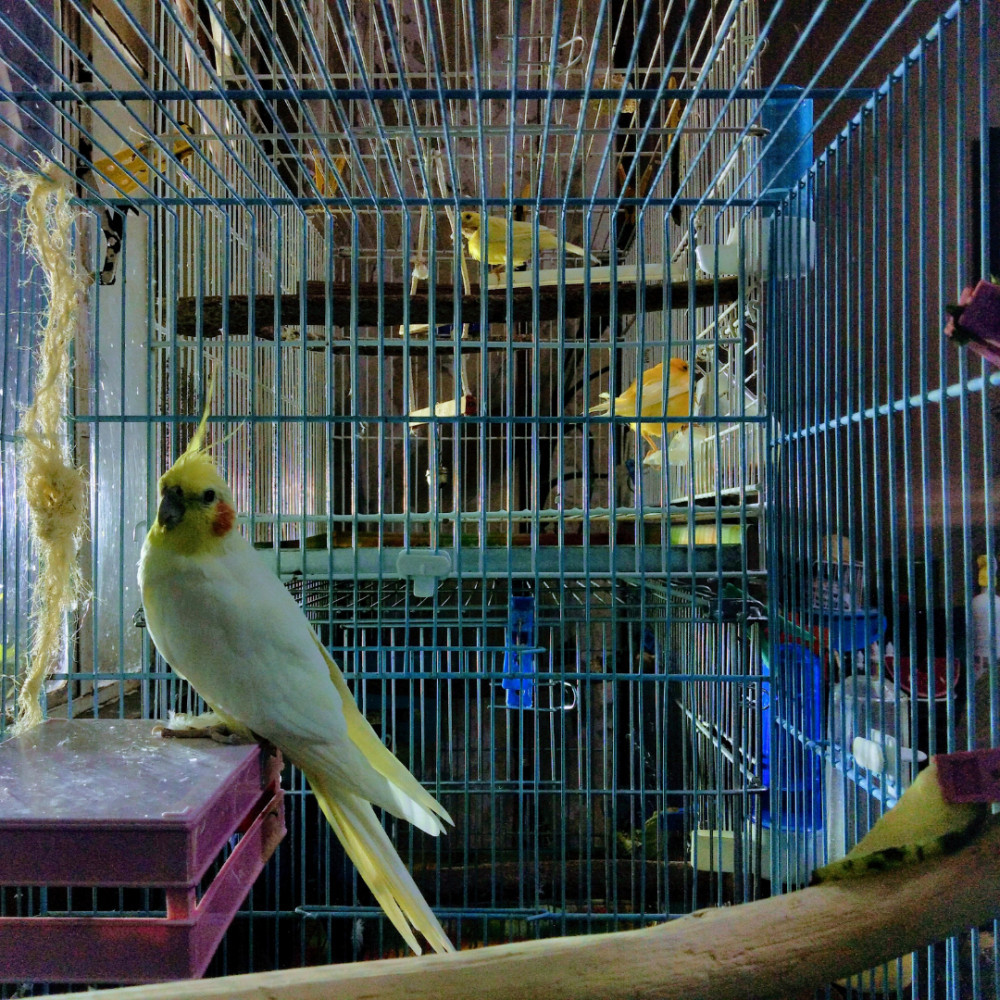
A suitable enclosure should give your bird enough space to move comfortably, stretch its wings, climb, and exercise. The appropriate size depends on the species, number of birds, and time spent outside the enclosure.
Width matters because many birds move and fly horizontally rather than vertically. Whenever possible, choose an enclosure that allows plenty of room for natural movement.
Consider your bird’s size, activity level, and particular needs when choosing the best bird cage. A suitable enclosure should provide security without unnecessarily restricting movement.
Bar spacing must also suit the species. Openings should be narrow enough to prevent the bird from putting its head through the bars or becoming trapped.
Arrange perches, food dishes, water, and toys without overcrowding the available space. Birds should still have clear areas where they can move freely.
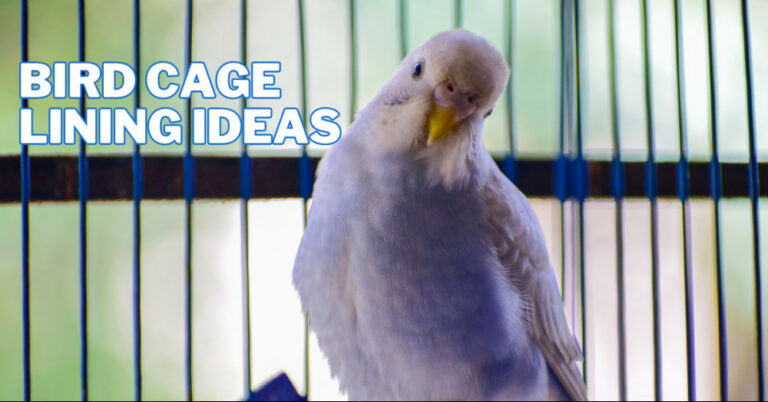
Choosing a suitable bird cage lining can make routine cleaning easier. It can also help you monitor droppings and keep the environment hygienic.
Housing more than one bird requires additional space and careful consideration of the species involved. Each bird needs room to move, feed, rest, and retreat from the others when necessary.
A larger enclosure does not replace regular exercise and enrichment outside it when appropriate. Good housing should provide security while supporting movement, exploration, and natural behaviours.
2. Feeding
A balanced diet is essential for keeping pet birds healthy, but nutritional requirements vary considerably between species. The appropriate foods and proportions therefore depend on your bird’s species.
For many companion parrots, formulated pellets can provide an important nutritional foundation. Fresh vegetables, suitable fruits, and other species-appropriate foods can add variety and encourage natural feeding behaviours.
Seeds can also be part of the diet for many birds, but an all-seed diet is generally not appropriate for parrots. Birds may selectively eat their favourite seeds while leaving others behind, which can contribute to nutritional imbalances.
Canaries, finches, doves, and other pet birds have different dietary requirements from parrots. Research the needs of your particular species and consult an avian veterinarian if you are uncertain about the most suitable diet.
Remove fresh foods before they spoil, and clean food dishes regularly. Check seed dishes carefully as well, since empty husks can sometimes make a bowl appear fuller than it actually is.
Always keep fresh, clean water available alongside a nutritious diet. Monitoring what your bird eats can also help you notice appetite changes that may indicate a health problem.
3. Give Them Fresh Water
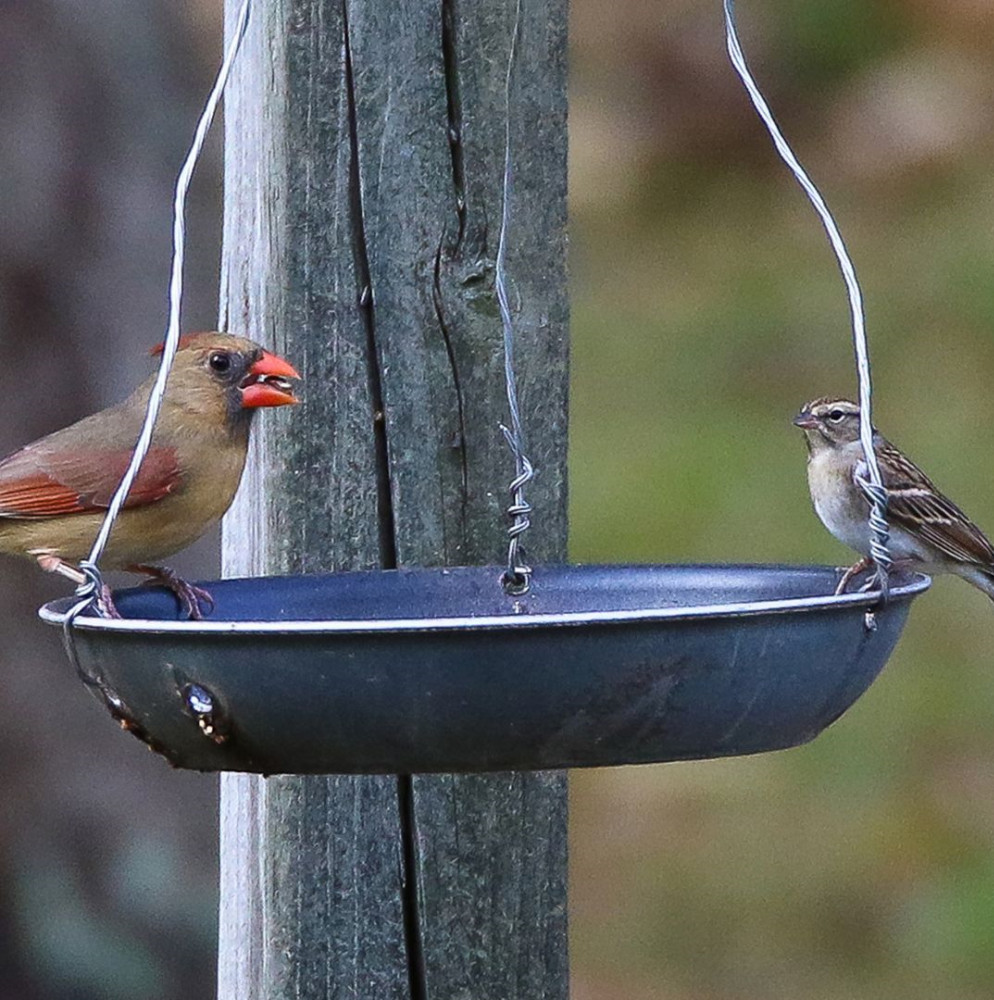
Pet birds need continuous access to fresh, clean drinking water. Replace the water at least daily and more frequently if it becomes contaminated with food, droppings, feathers, or other debris.
Choose a water dish or dispenser that is appropriate for your bird’s species and easy to keep clean. Place it where the bird can reach it comfortably, but not directly beneath a perch where droppings can contaminate the water.
Wash water containers regularly to prevent residue and microorganisms from building up. Check them throughout the day, especially if your bird enjoys bathing or dropping food into its drinking water.
Water intake can vary with diet, temperature, activity, and species. A noticeable change in how much your bird drinks can sometimes indicate a health problem and is worth paying attention to.
4. Provide Your Bird With Toys And Perches
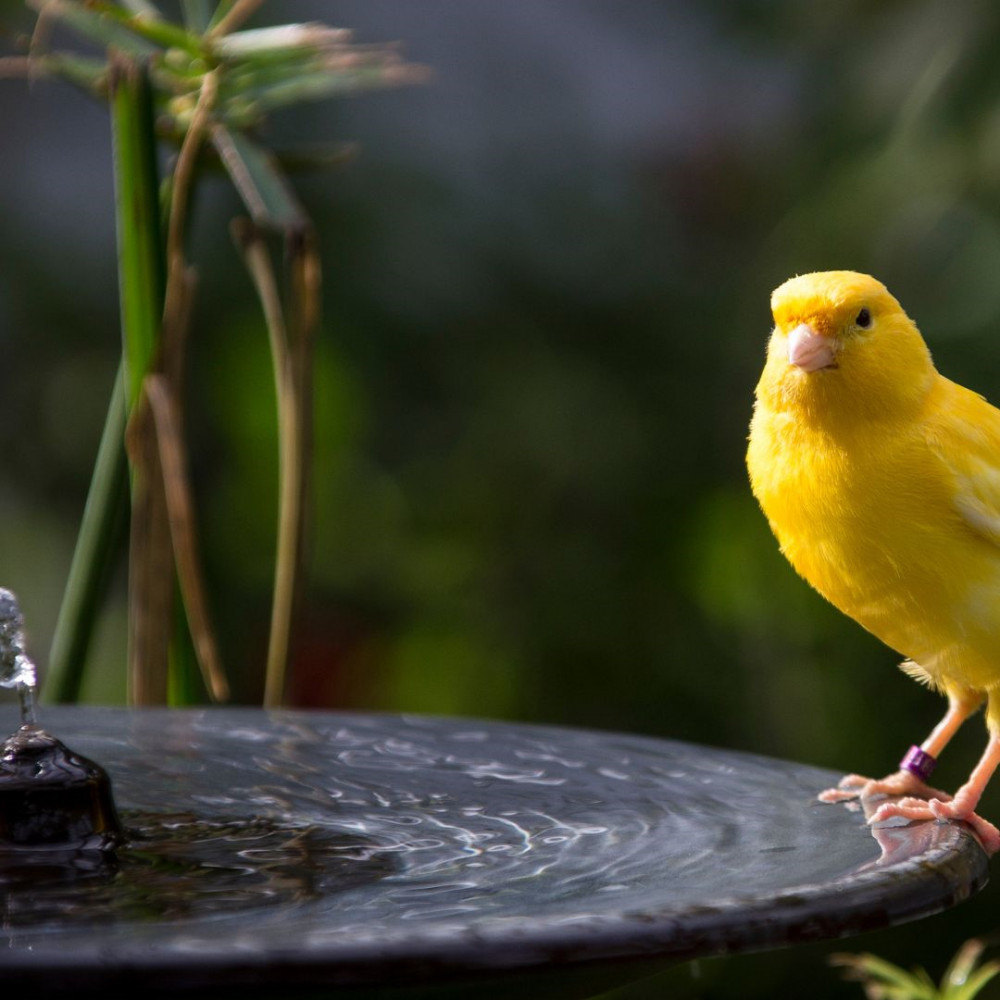
Toys and perches provide important opportunities for exercise, exploration, chewing, and mental stimulation. Choose several options appropriate for your bird’s size, species, and natural behaviours.
Inspect toys carefully for loose threads, sharp edges, small openings, or other parts that could trap toes, feet, or beaks. Remove or replace damaged or badly frayed toys before they become hazardous.
Offer different types of enrichment, such as chewable toys, foraging activities, climbing toys, and objects that encourage exploration. Rotating some toys periodically can provide variety without constantly introducing unfamiliar objects.
Perches should also vary in diameter, texture, and position to encourage natural movement and exercise. Natural branches from bird-safe trees can provide useful variation when they are properly cleaned and prepared.
Watch how your bird interacts with new toys because individual preferences vary considerably. Regular enrichment can help prevent boredom and support your bird’s emotional well-being.

5. Provide Perches With Different Textures And Shapes
Birds spend considerable time on their feet, making suitable perches an important part of their environment. Providing several perches with different diameters, shapes, and textures encourages natural foot movement and exercise.
Arrange perches at different heights and locations while leaving enough open space for your bird to move comfortably. Avoid overcrowding the enclosure or positioning perches directly above food and water dishes.
Natural branches from bird-safe trees can provide useful variations in texture and diameter. Make sure branches are free from pesticides, mould, contaminants, and toxic plant species before placing them in the enclosure.
Avoid relying on abrasive or sand-covered perches to wear down nails or beaks. Rough surfaces can irritate the feet, while overgrown nails or an abnormal beak may require attention from an avian veterinarian.
Regularly inspect perches for damage, excessive wear, or contamination and clean them using bird-safe methods. Replacing worn or difficult-to-clean perches helps maintain a healthier environment.

6. Birdproof Your Home
Birdproofing your home is essential before allowing a pet bird outside its enclosure. Even familiar rooms can contain hazards that may not be obvious until a curious bird begins exploring.
Close windows, exterior doors, and toilet lids, and cover or secure electrical cords. Turn off ceiling fans and keep birds away from hot appliances, fireplaces, candles, open flames, and other potential hazards.
Windows and mirrors may also need attention because birds can fly into reflective or transparent surfaces. Kitchens are particularly hazardous because hot cookware, boiling liquids, and cooking fumes can seriously injure birds.
Many birds benefit from supervised time outside their enclosure for exercise, exploration, and social interaction. The amount and type of activity needed will depend on the species, individual bird, and home environment.
Allow your bird to explore only areas that have been thoroughly birdproofed, and supervise these activities. A secure screened porch or outdoor aviary can also provide enrichment, but protect birds from predators, extreme temperatures, toxic plants, and escape opportunities.
Human interaction matters for many companion birds, especially highly social species. However, birds should be allowed to choose how much handling and physical contact they are comfortable with rather than being routinely held or petted.
Gentle handling and positive training can help your bird become comfortable with necessary care, such as entering a carrier or being examined. This can make everyday care and visits to an avian veterinarian less stressful.
7. Take Care Of Your Bird’s Health And Hygiene
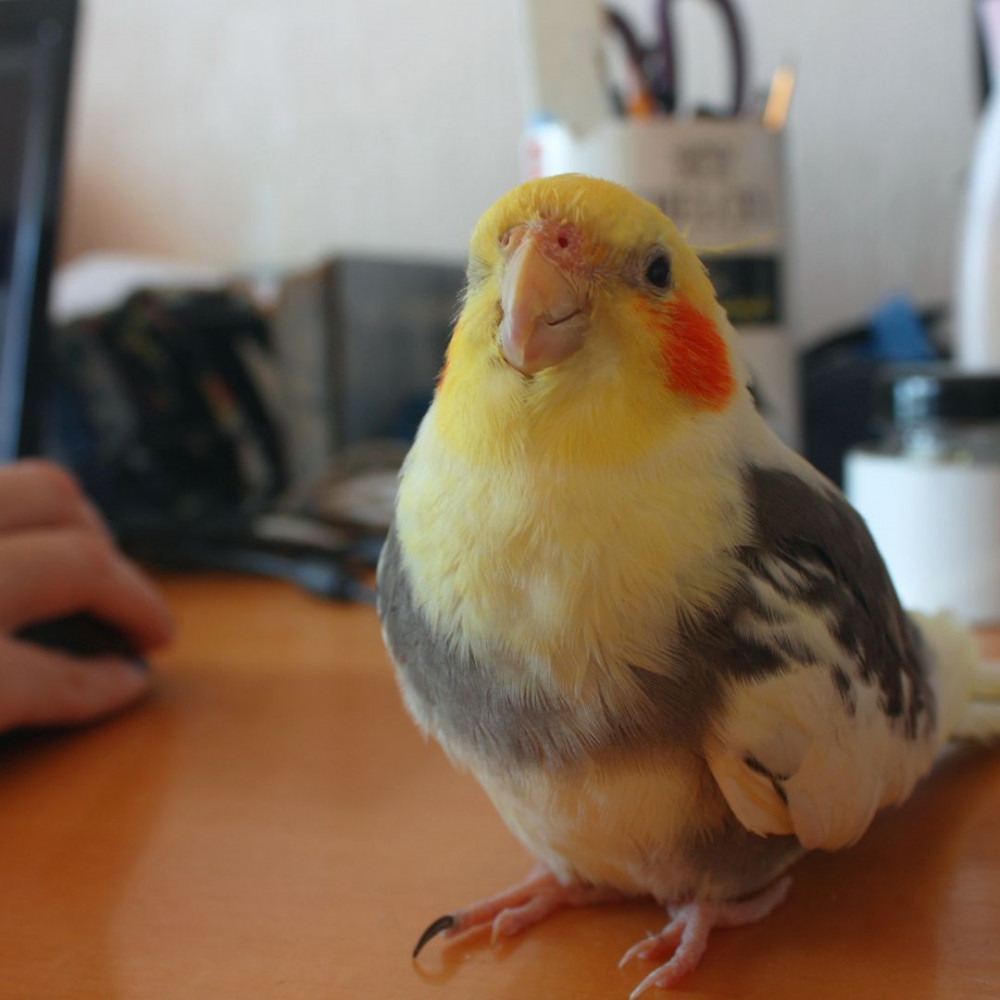
Find an avian veterinarian experienced with the species of bird you keep. An initial health examination can help establish a baseline and identify any concerns when a new bird joins your home.
Regular preventive examinations are also important because birds often hide early signs of illness. Your avian veterinarian can recommend an appropriate examination schedule based on your bird’s species, age, and individual health needs.
Watch for changes in appetite, droppings, breathing, activity, posture, vocalization, or usual behaviour. Even subtle changes can sometimes be an early indication that something is wrong.
Contact an avian veterinarian promptly if your bird shows signs of illness or injury. Birds can sometimes deteriorate quickly, so waiting to see whether significant symptoms disappear on their own may delay necessary care.
Good hygiene also supports your bird’s health. Regularly clean food and water dishes, perches, toys, and the enclosure to help prevent the buildup of waste and contaminants.
8. Know The Signs Your Bird Is Too Hot Or Too Cold
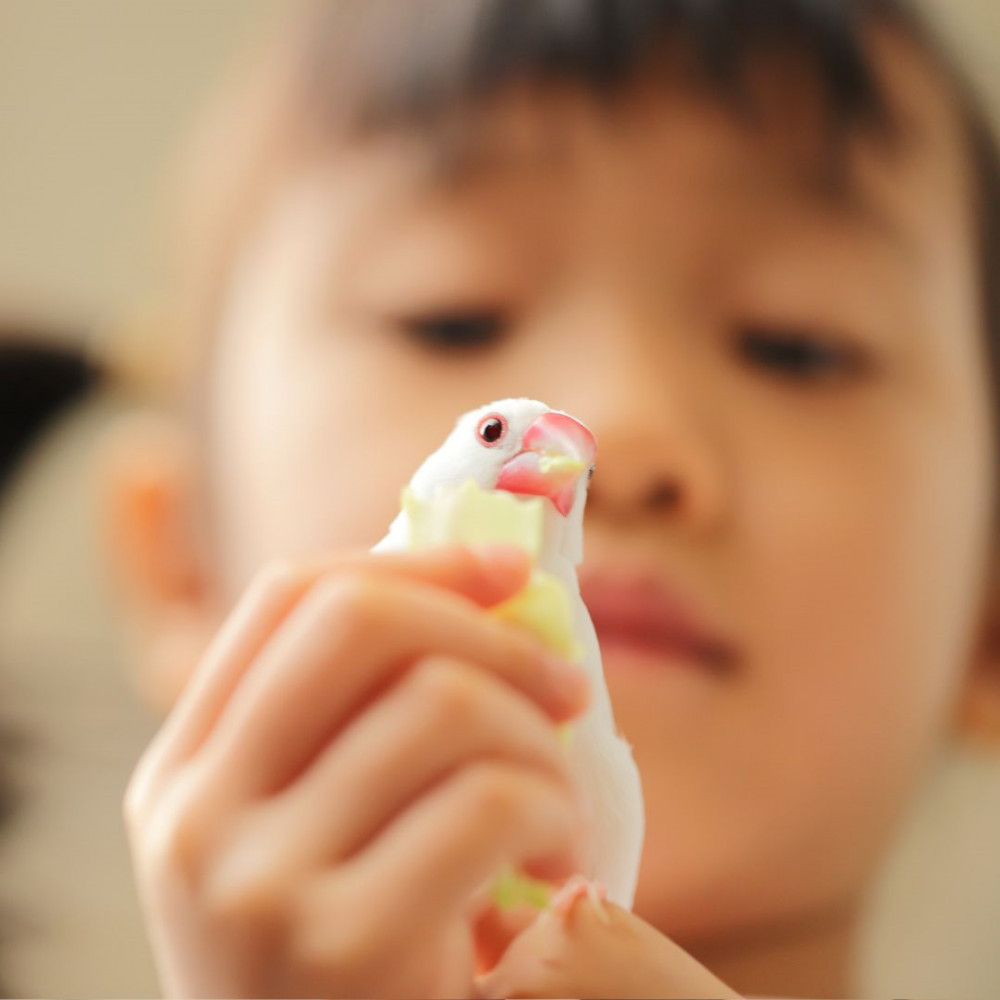
Birds can become uncomfortable or ill when exposed to excessive heat or cold. Temperature tolerance varies by species, age, health, acclimatization, and normal living conditions, so no single ideal temperature fits every pet bird.
An overheated bird may pant, hold its wings away from its body, breathe rapidly, or appear weak or unusually quiet. Move the bird away from the heat source and contact an avian veterinarian promptly if symptoms are severe or do not improve.
A cold bird may fluff its feathers, tuck its feet into its plumage, become less active, or seek a warmer location. Move the enclosure away from cold drafts and provide a comfortably warm environment without sudden temperature changes.
Watch your bird’s normal behaviour and comfort level rather than relying on one specific room temperature. Discuss persistent changes in breathing, activity, posture, or behaviour with an avian veterinarian.

Conclusion
Pet birds can be fascinating and rewarding companions, but their needs vary considerably between species. Understanding those differences is an important part of providing appropriate care throughout their lives.
Suitable housing, balanced nutrition, fresh water, regular exercise, enrichment, and good hygiene all contribute to a bird’s well-being. Social species also benefit from regular interaction that respects each bird’s individual personality and boundaries.
Learning your bird’s normal behaviour can help you recognize changes that may indicate stress, discomfort, or illness. Regular care and access to an experienced avian veterinarian provide additional support throughout your bird’s life.
Some companion birds can live for several decades, making bird ownership a significant long-term commitment. Taking time to understand their physical, behavioural, and social needs can help you create a safe, enriching life together.
I trust you enjoyed this article on the 8 Essential Bird Care Tips for Happy, Healthy Birds. Please stay tuned for more inspiring guides, helpful tips, and ideas to help you live closer to nature every day.
Take care!
— JeannetteZ🌿
💬 Your Opinion Is Important To Me
Do you have thoughts, ideas, or questions? I’d love to hear from you. Please leave your comments below or email me directly at Jeannette@Close-To-Nature.org.
📚 More Nature-Inspired Reads
Explore more ways to connect with nature, nurture your pets, and live in harmony with the world around you 🌿