Most Beautiful Birds In The World

Beautiful Birds In The World captivate us with their vibrant colours, intricate patterns, and graceful movements. From tropical rainforests to remote islands and mountain forests, these remarkable creatures showcase some of nature’s most breathtaking artistry.
Birds display an incredible diversity of shapes, sizes, and plumage, making them a favourite subject for birdwatchers, photographers, and nature enthusiasts alike. Some species dazzle with brilliant hues, while others impress with elegant feathers, unique displays, or striking features.
In this article, we’ll explore some of the most beautiful birds in the world, highlighting their stunning appearances, fascinating characteristics, and the habitats they call home. Prepare to be inspired by these extraordinary avian wonders and discover why they continue to captivate people across the globe.
Exploring The Most Beautiful Birds In The World
Birds are among nature’s most spectacular creations, displaying an incredible variety of colours, patterns, and forms. From shimmering tropical species to elegant birds with distinctive plumage, each possesses unique characteristics that make it truly remarkable.
The following birds are celebrated for their breathtaking appearance, vibrant feathers, and striking features. Whether admired for their brilliant colours, graceful displays, or unusual markings, these avian wonders continue to inspire birdwatchers and nature lovers around the globe.
1. Mandarin Duck (Aix galericulata)
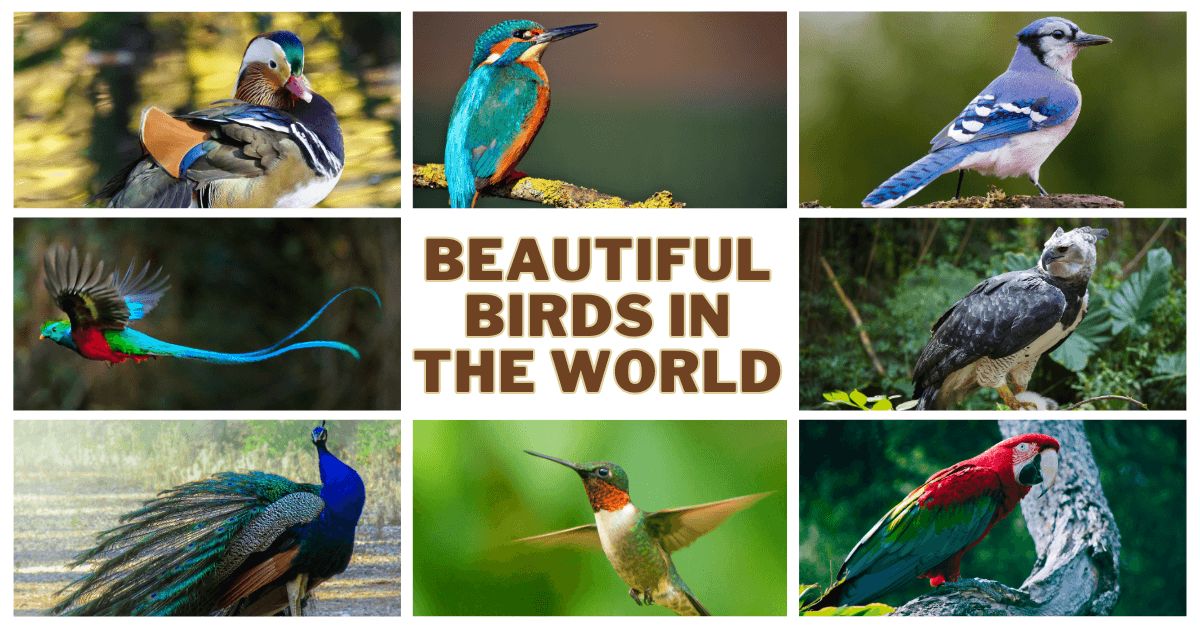
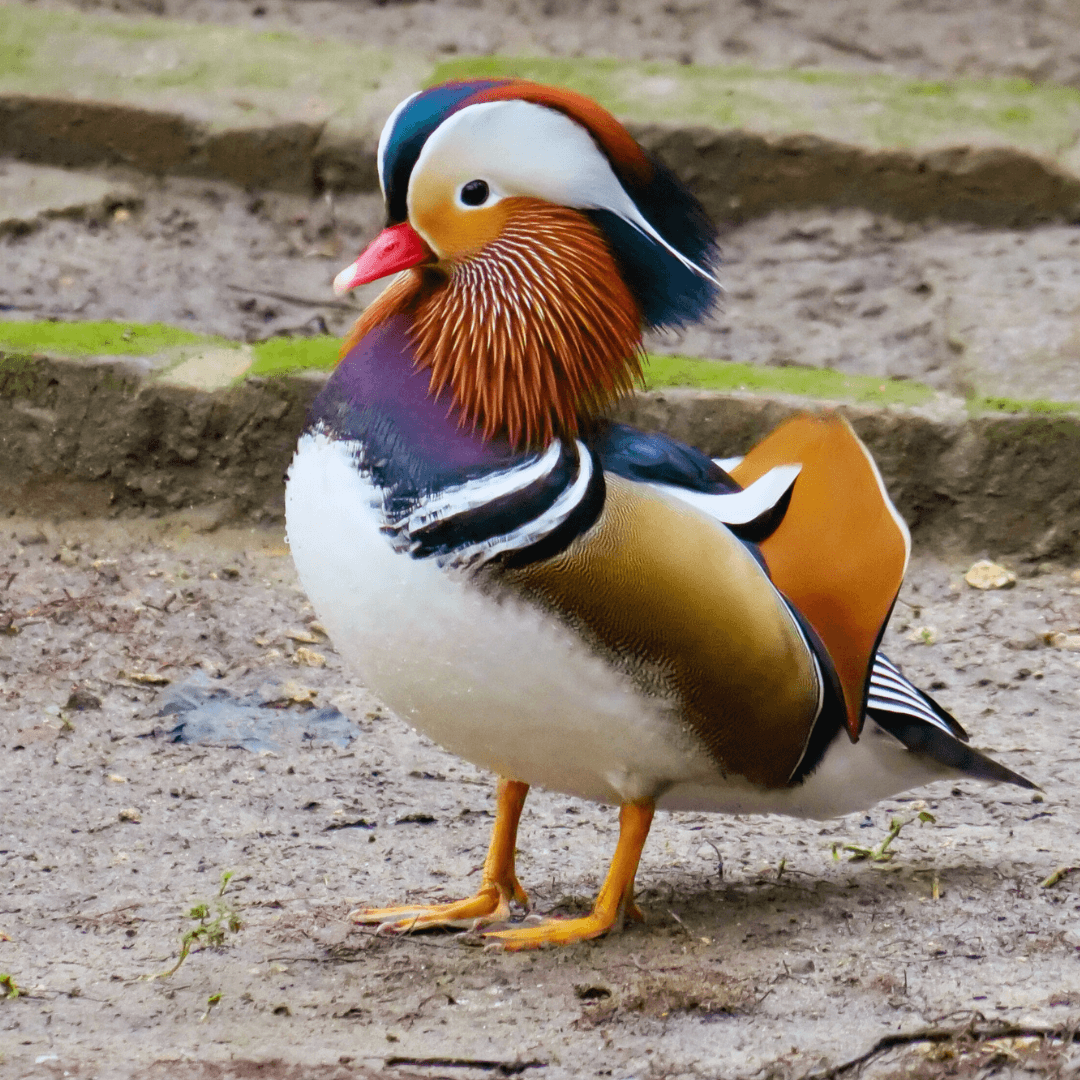
The Mandarin Duck (Aix galericulata) is renowned for its extraordinary beauty. It showcases various colours, including vibrant purples, oranges, greens, and blues. Native to East Asia, it is found primarily in China, Japan, Korea, and Russia.
Origin Of Mandarin Ducks
Mandarin Ducks are indigenous to East Asia but have been introduced to parts of Europe, where they have established small populations in parks and lakes.
How To See Mandarin Ducks
To view Mandarin Ducks in their natural habitat, visit freshwater lakes, ponds, and slow-moving rivers in their native regions.
They are often found in wooded areas near water bodies. They are commonly seen in European city parks with suitable water features.
Habitat Of Mandarin Ducks
These ducks prefer wooded, forested areas near water, such as marshes, ponds, and streams. They nest in tree cavities and are known to be elusive and shy.
Diet Of Mandarin Ducks
Mandarin Ducks have a varied diet that includes aquatic plants, seeds, insects, and small fish. Their diet changes with the seasons, focusing on plant material during breeding and more protein-rich food sources during migration and winter.
The Mandarin Duck’s vibrant plumage and unique patterns make it one of the most visually striking birds in the avian world.
2. Peacock (Pavo cristatus)
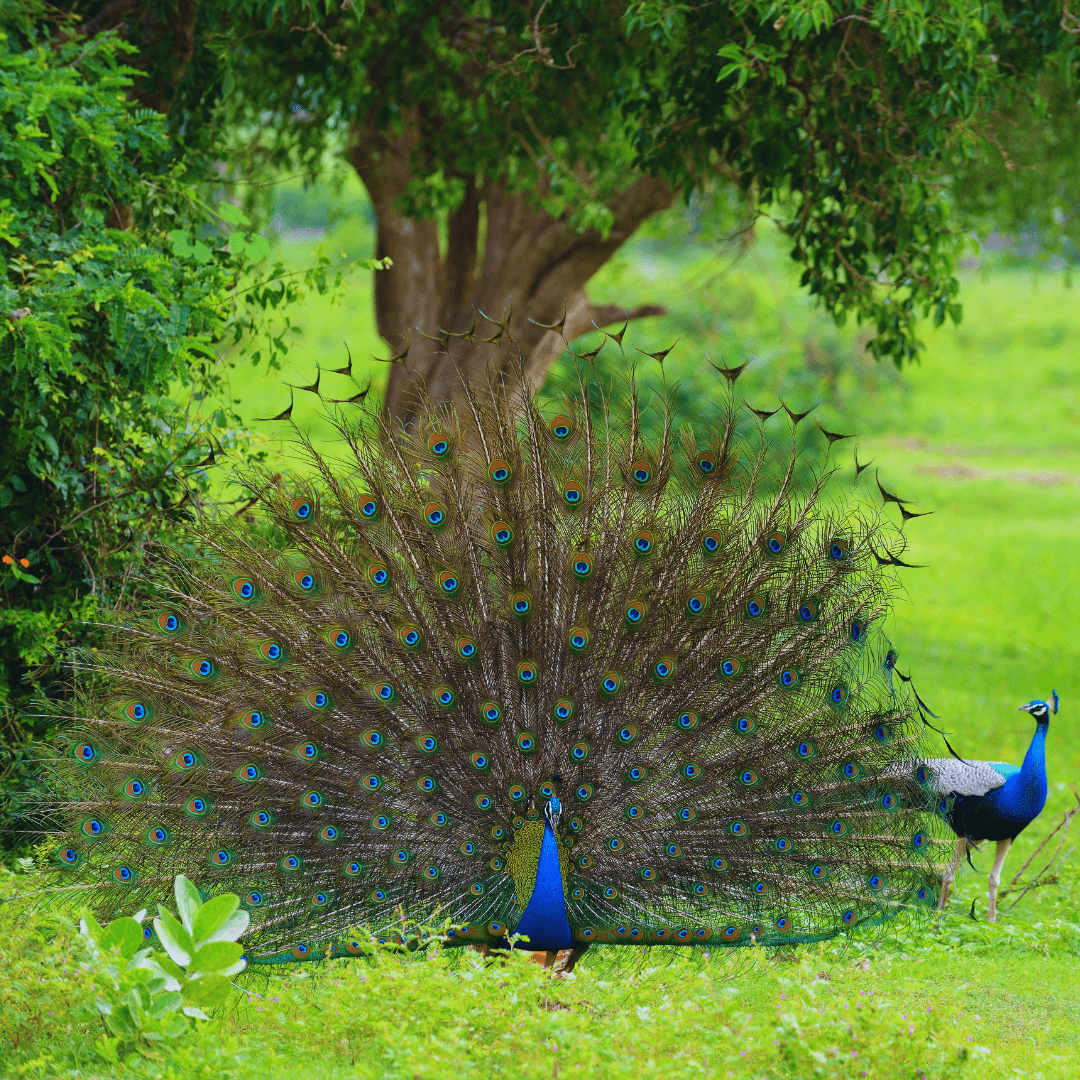
The Peacock (Pavo cristatus) is renowned for its extravagant tail feathers, which display a stunning array of iridescent blues, greens, and eye-like patterns. Originating in the Indian subcontinent, it has spread to other parts of the world due to its introduction.
Origin Of Peacocks
The Peacock is originally from India and Sri Lanka but has been introduced to various parts of the world, including Europe and the Americas.
How To See Peacocks
Peacocks are common in national parks, wildlife reserves, and large estates. During courtship rituals, they often display their magnificent tail feathers.
Habitat Of Peacocks
Peafowls prefer forested areas, open woodlands, and grasslands near water sources. They are adaptable to various environments, including urban parks and gardens.
Diet Of Peafowls
Peafowls’ diet comprises seeds, fruits, insects, small mammals, and reptiles. They forage on the ground, using their beaks to find food.
3. Scarlet Macaw (Ara macao)
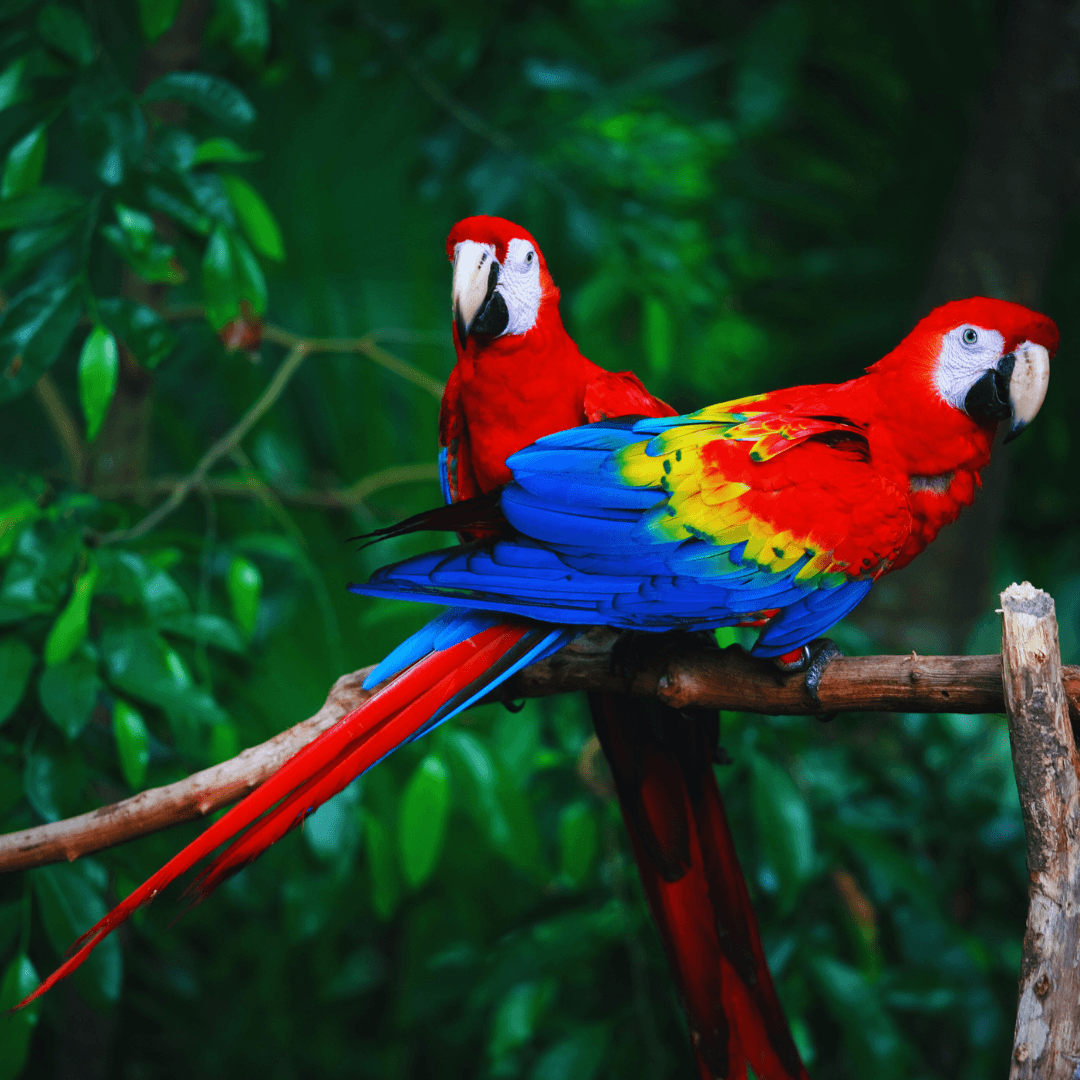
The Scarlet Macaw (Ara macao) is a large parrot with brilliant red, yellow, and blue feathers. It is one of the most colourful and recognizable birds in the Americas.
Origin Of Scarlet Macaws
Native to the tropical rainforests of Central and South America, including countries like Brazil, Peru, and Costa Rica.
How To See Scarlet Macaws
Scarlet Macaws can be observed in their natural habitat in protected rainforests and reserves. They are also popular in aviaries and wildlife parks.
Habitat Of Scarlet Macaws
They thrive in lowland rainforests, mangroves, and wooded areas near water. They nest in tree cavities and are highly social birds.
Diet Of Scarlet Macaws
Scarlet macaws eat fruits, nuts, seeds, and flowers. They use their strong beaks to crack open nuts and seeds.
4. Resplendent Quetzal (Pharomachrus mocinno)
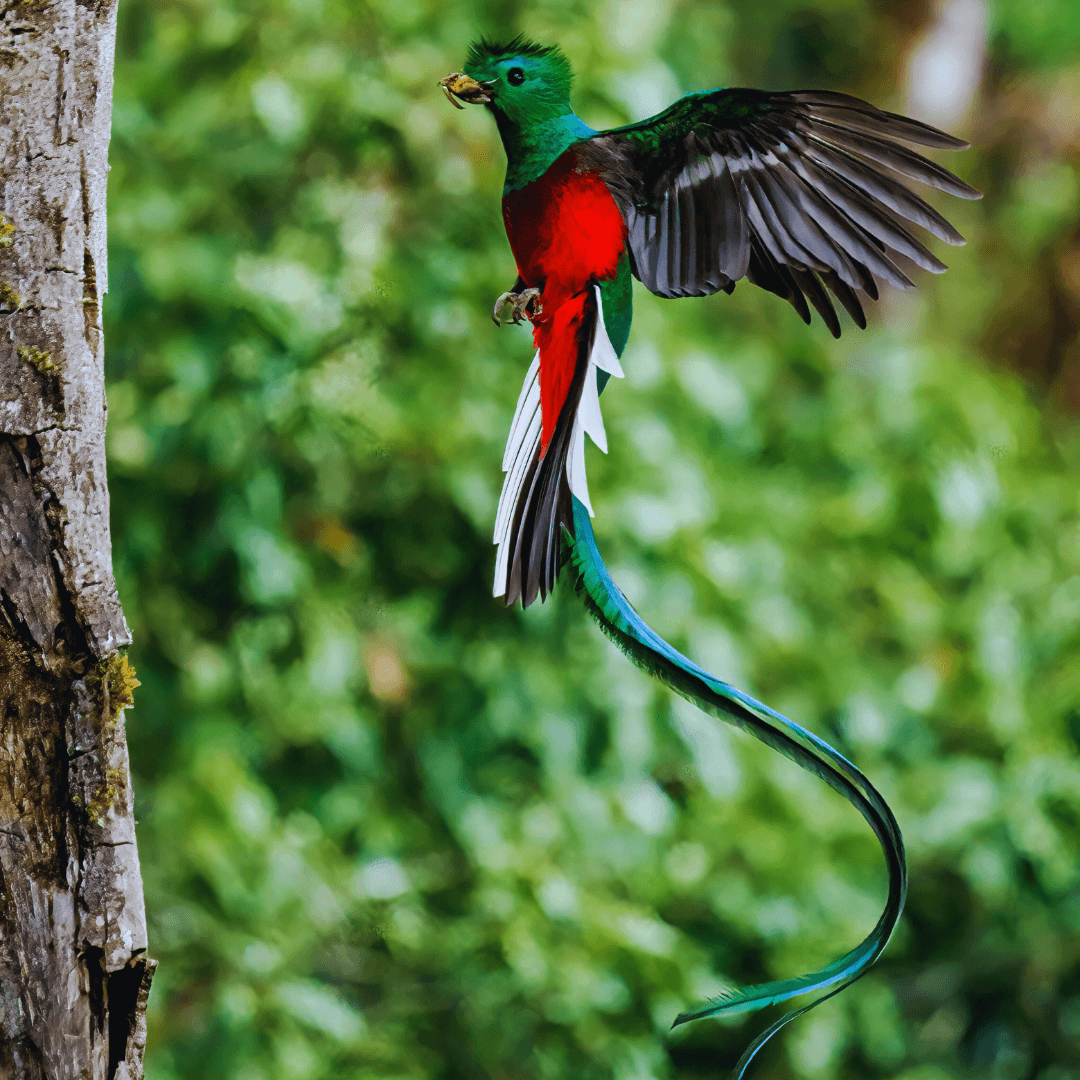
The Resplendent Quetzal (Pharomachrus mocinno) is renowned for its dazzling green and red coloration and long, flowing tail feathers. It is a symbol of beauty and freedom in Central America.
Origin Of Resplendent Quetzal
It is found in the cloud forests of Central America, including Guatemala, Costa Rica, and Panama.
How To See Resplendent Quetzal
Visit Central America’s high-altitude cloud forests and national parks to view Resplendent Quetzals. They are more easily spotted during their breeding season.
Habitat Of Resplendent Quetzal
They inhabit montane forests with dense vegetation and high humidity. They prefer secluded, high-altitude environments.
Diet Of Resplendent Quetzal
Their diet consists mainly of fruits, particularly avocados, insects, and small invertebrates.
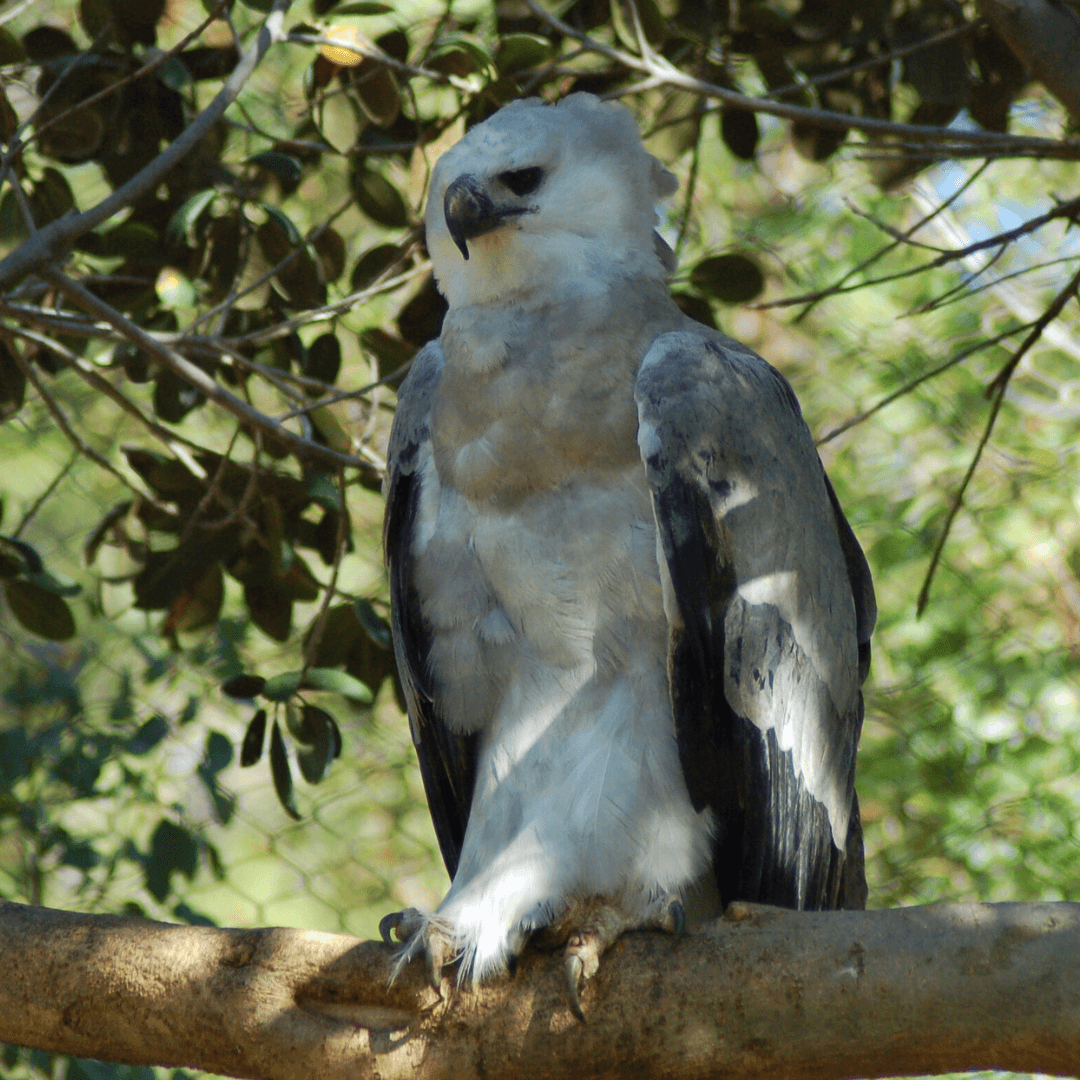
5. Harpy Eagle (Harpia harpyja)
The Harpy Eagle (Harpia harpyja) is a powerful raptor known for its impressive size and striking black and white feathers. It is one of the largest and most formidable eagles in the world.
Origin Of Harpy Eagles
Native to the tropical rainforests of Central and South America, including countries like Brazil, Colombia, and Mexico.
How To See Harpy Eagles
Harpy Eagles can be observed in large, intact rainforests and protected reserves. Due to their elusive nature, spotting them requires luck.
Habitat Of Harpy Eagles
They inhabit tropical rainforests and dense, mature forests, building large nests high in the trees.
Diet Of Harpy Eagles
Their diet mainly consists of medium-sized mammals, such as monkeys and sloths, as well as large birds and reptiles.
6. Blue Jay (Cyanocitta cristata)
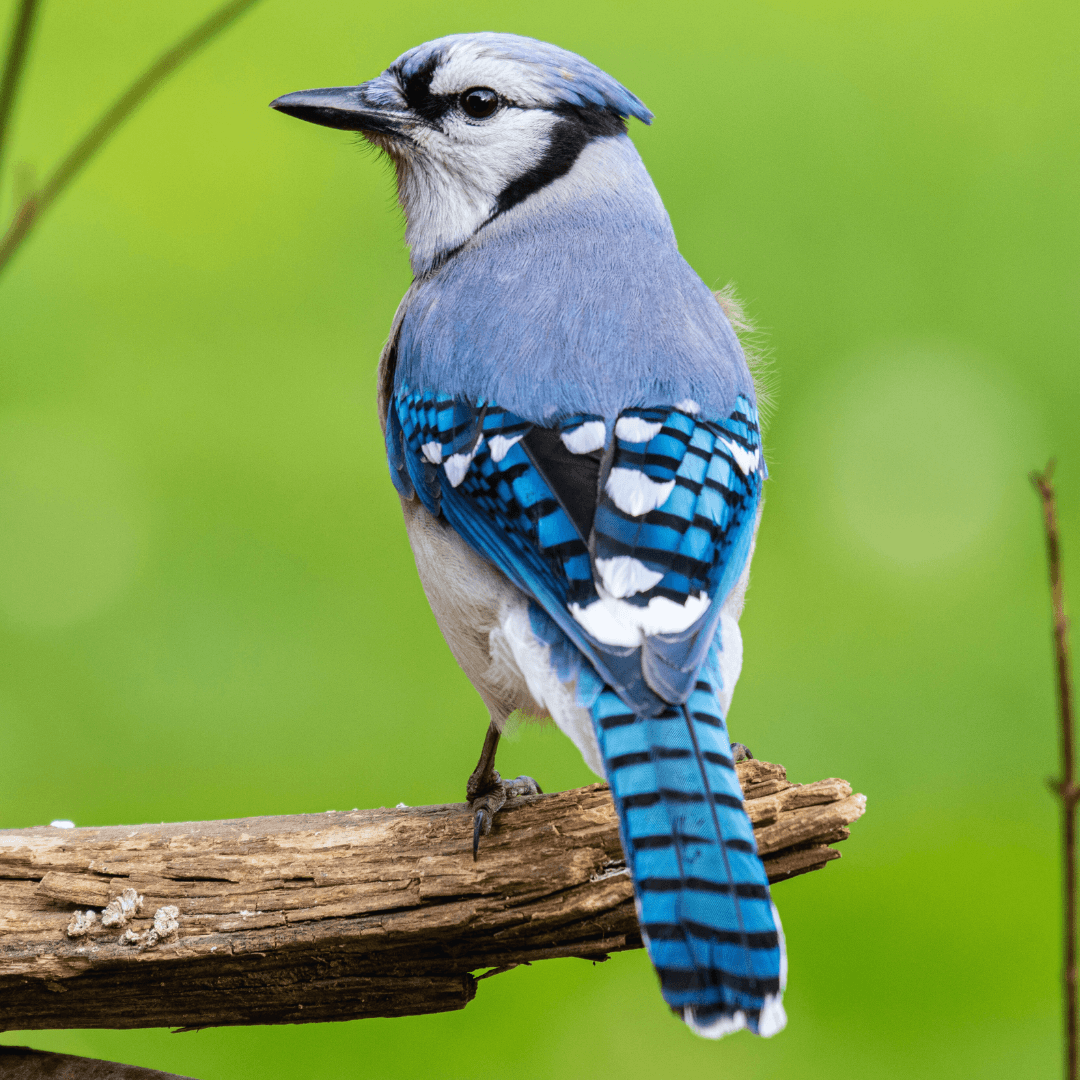
The Blue Jay (Cyanocitta cristata) is a vibrant bird known for its striking blue, white, and black plumage and distinctive crest. It is a common sight in North American woodlands.
Origin Of Blue Jays
Native to eastern and central North America, including the United States and Canada.
How To See Blue Jays
Blue Jays are often seen in wooded areas, parks, and suburban neighbourhoods. They are known for their loud calls and active behaviour.
Habitat Of Blue Jays
They prefer deciduous and mixed forests but are adaptable to urban and suburban environments.
Diet Of Blue Jays
Blue Jays eat acorns, nuts, seeds, fruits, and insects. They are known to cache food for later use.
7. Kingfisher (Family Alcedinidae)
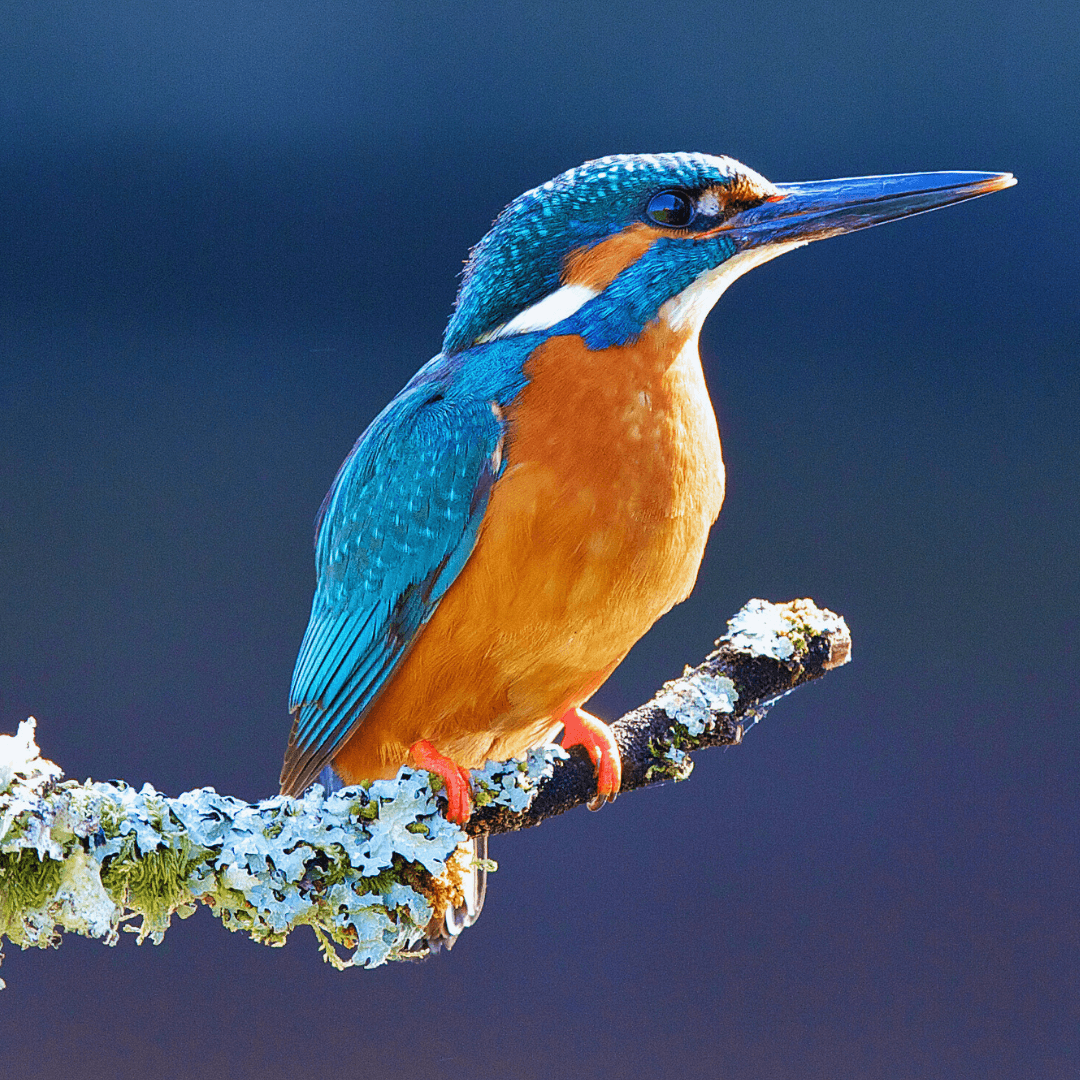
The Kingfisher is celebrated for its vivid blue and orange plumage, which glistens with an iridescent sheen. This small bird is well-known for its striking appearance and remarkable hunting skills. It is often seen diving into the water to catch fish with precision.
Origin Of Kingfishers
Kingfishers are widely distributed across Europe, Asia, Africa, and the Americas. They are found in various climates, from temperate to tropical regions.
How To See Kingfishers
To spot a Kingfisher, visit freshwater lakes, rivers, and coastal areas where they are commonly found. They can often be seen perched on branches or rocks near water, waiting for their next catch. In some regions, Kingfishers can also be observed in city parks with suitable bodies of water.
Habitat Of Kingfishers
Kingfishers prefer habitats near clear, flowing water, such as rivers, streams, ponds, and coastal areas. They are typically found in environments with abundant fish and vegetation that provide shelter and nesting sites.
Diet Of Kingfishers
Kingfishers feed on fish, which they catch with their sharp beaks. Their diet also includes insects, small amphibians, and occasionally small crustaceans. They are skilled hunters, diving from their perches to snatch prey from the water.
8. Hummingbird (Family Trochilidae)
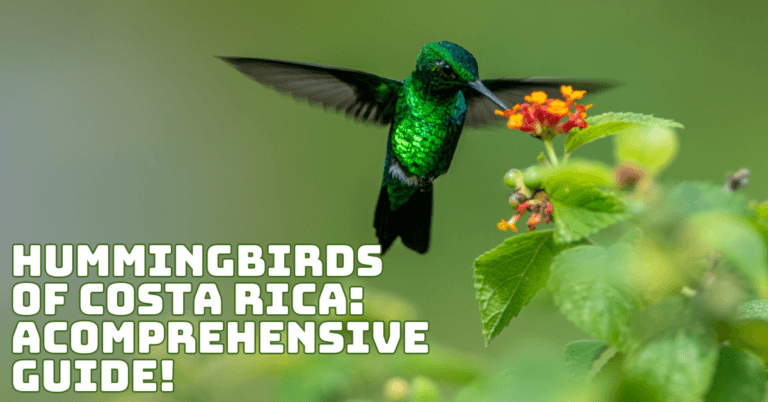
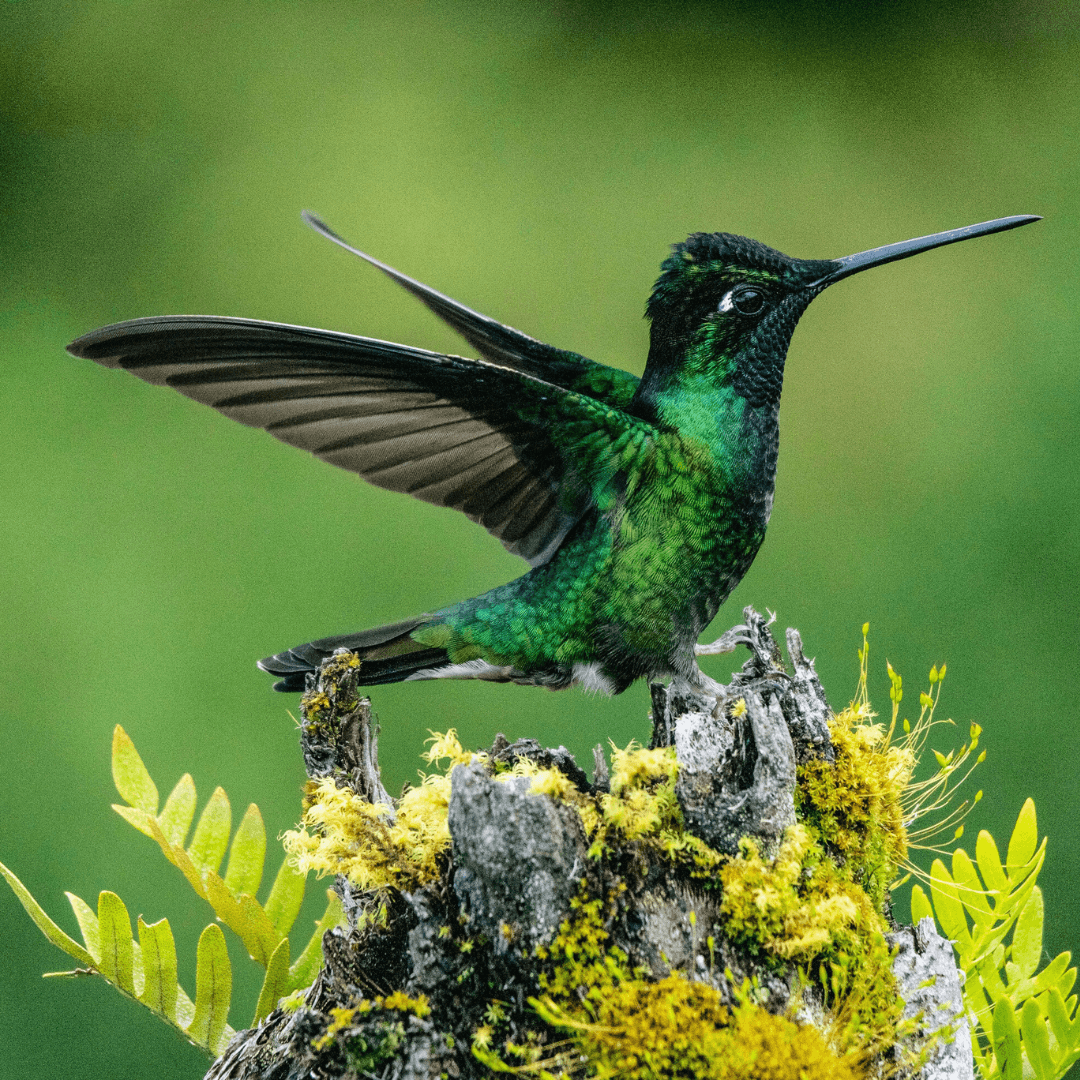
Hummingbirds are renowned for their extraordinary iridescent plumage and rapid wing beats, allowing them to hover mid-air.
They are among the smallest birds, with some species measuring 2 to 5 inches long. Their incredible flying abilities enable them to move forward, backward, and even sideways, making them a captivating sight.
Origin Of Hummingbirds
Hummingbirds are native to the Americas, and their greatest diversity is in Central and South America. They live in various habitats, including temperate woods in North America and the tropical rainforests of the Amazon Basin.
How To See Hummingbirds
To observe hummingbirds, visit areas with abundant flowering plants that provide nectar. They are commonly found in gardens, parks, and nature reserves, especially those with hummingbird feeders filled with sugar water. In their native habitats, they can often be seen darting among flowers or perched on tree branches.
Habitat Of Hummingbirds
Hummingbirds occupy various habitats, including tropical and subtropical forests, mountain meadows, and gardens. They prefer environments with ample nectar sources and dense vegetation for nesting and shelter.
Diet Of Hummingbirds
Hummingbirds feed on flower nectar, which they extract using long, slender bills. They also eat spiders and tiny insects, which provide them with vital calories and protein.
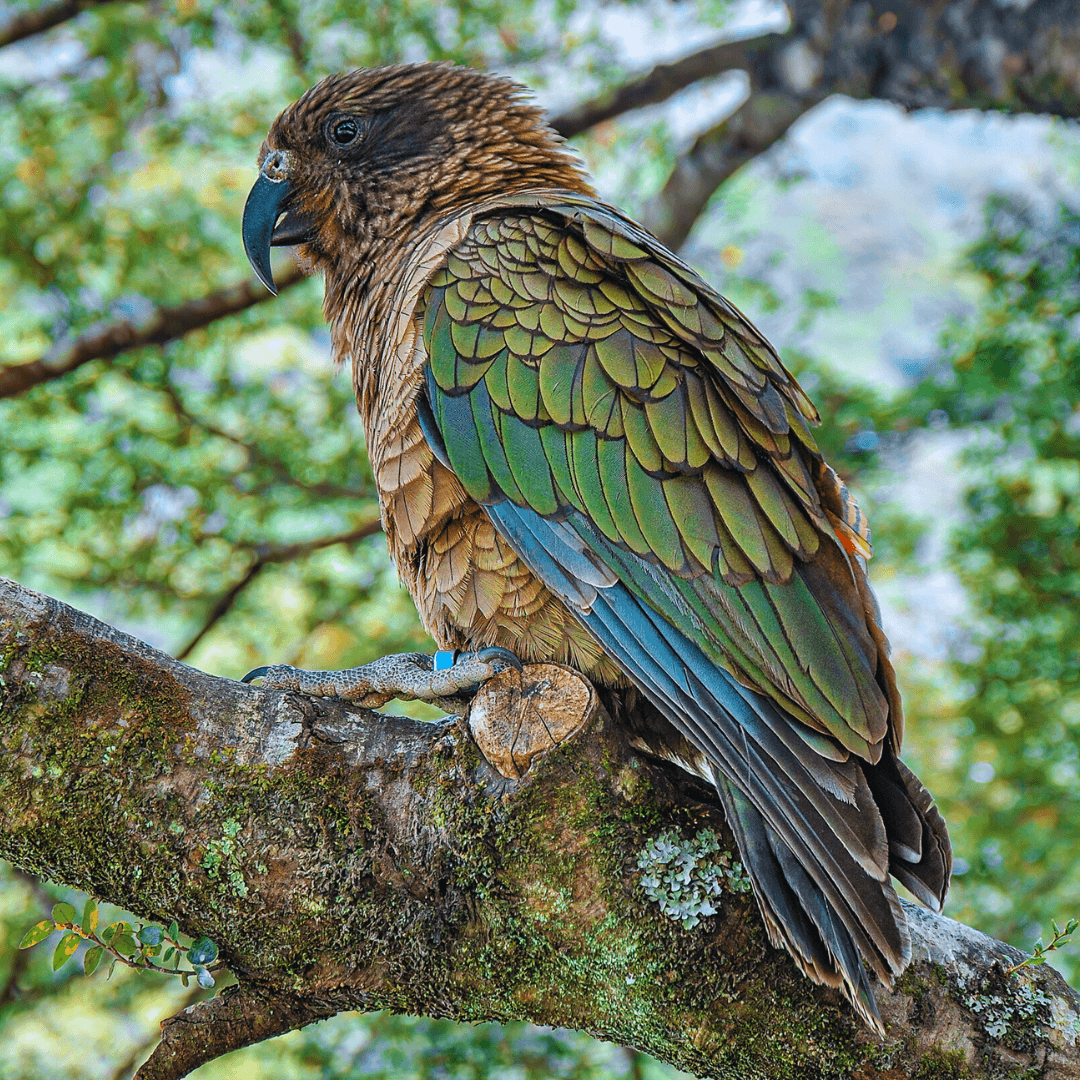
9. Kakapo (Strigops habroptilus)
The Kakapo, also known as the Night Parrot, is a large, flightless parrot with distinctive moss-green plumage and an owl-like face.
It is nocturnal and known for its ground-dwelling habits. The Kakapo’s large size and flightlessness make it one of the most unusual parrots. It uses a deep, booming call to attract mates during mating season.
Origin Of Kakapos
Native to New Zealand, the Kakapo was once found throughout both the North and South Islands. Today, it is critically endangered and lives only on predator-free offshore islands like Little Barrier Island and Codfish Island.
How To See Kakapos
Due to their rarity, Observing Kakapos in the wild is challenging. However, they can be seen in conservation programs and sanctuaries in New Zealand, where dedicated conservationists work to protect and rehabilitate the species. Access to these areas is often restricted to researchers and conservation volunteers.
Habitat Of Kakapos
Kakapos inhabit dense, subtropical, and temperate forests. They prefer abundant ground cover and foliage that provide food and shelter. They nest in tree cavities or under thick vegetation.
Diet Of Kakapos
Kakapos are herbivores that feed on various plant materials, including fruits, seeds, nuts, flowers, and leaves. Their diet varies seasonally, depending on the availability of different plant foods.
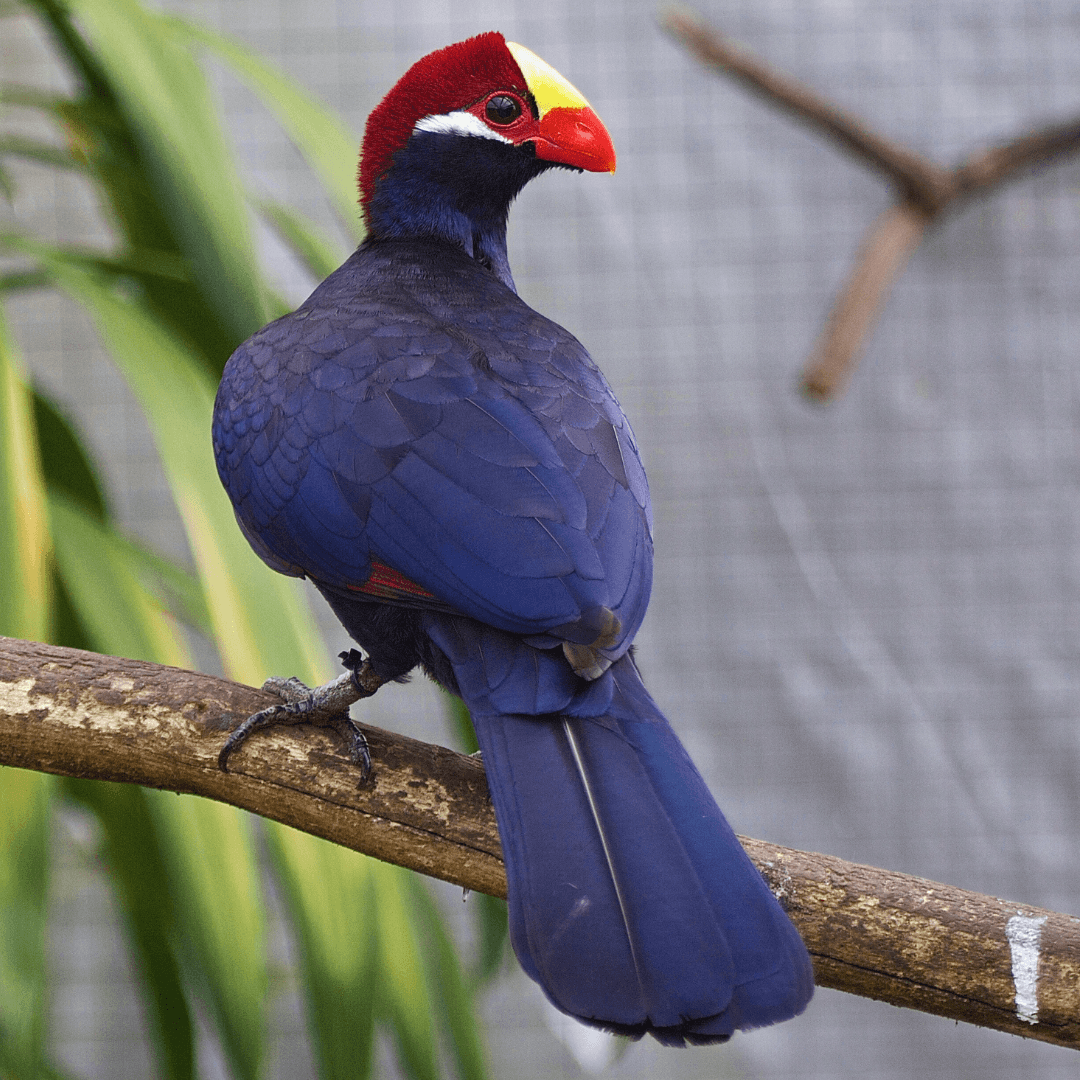
10. Golden Turaco (Tauraco eurycorys)
The golden turaco is a strikingly beautiful bird known for its vibrant yellow-green plumage, contrasting red bill and eye-ring.
Its unique call and graceful flight complement its dazzling appearance. The golden turaco’s feathers reflect light, creating a shimmering golden sheen that adds to its allure.
Origin Of Golden Turacos
Native to Central and East Africa, the Golden Turaco is found in Uganda, Kenya, and Tanzania. It thrives in tropical and subtropical forest environments, where its vivid colours blend with the lush greenery.
How To See Golden Turacos
To observe Golden Turacos, visit their natural habitats, including dense evergreen forests and forest edges. They can often be spotted in protected national parks and wildlife reserves in their range. Birdwatchers may also see them in well-maintained aviaries that house African bird species.
Habitat Of Golden Turacos
This species prefers subtropical and tropical forests, particularly areas with dense canopy cover. It is often found in the upper layers of the forest, where it forages and nests.
Diet Of Golden Turacos
Golden Turacos primarily feed on fruits, berries, and seeds. They also consume leaves and insects, which provide essential nutrients. Their diet varies with the availability of food sources in their forest environment.
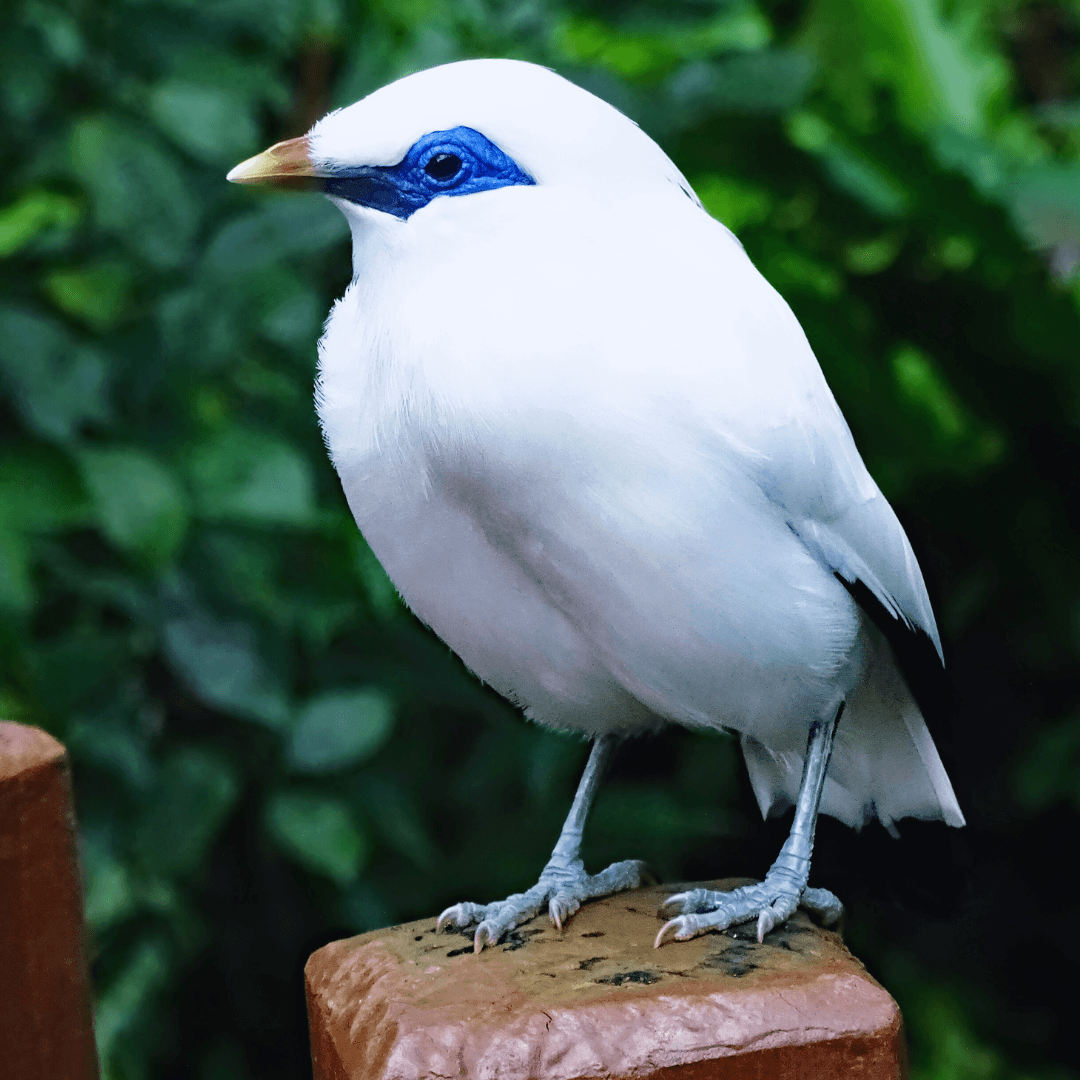
11. Bali Starling (Leucopsar rothschildi)
The Bali Starling, also known as the Rothschild’s Mynah, is a captivating bird with pristine white feathers and distinctive blue markings around its eyes.
This elegant bird also features a black wingtip and a pale yellow underside. Its striking appearance makes it a favorite among bird enthusiasts and conservationists alike.
Origin Of Bali Starlings
The Bali Starling is native to the Indonesian island of Bali, where it originally inhabited tropical forests and forest edges. The illegal pet trade and habitat destruction have put it at grave risk of extinction.
How To See Bali Starlings
Due to its endangered status, observing the Bali Starling in the wild is extremely rare.
However, it can be seen in specialized conservation programs and wildlife reserves in Bali. Efforts are underway to protect and reintroduce the species into its natural habitat.
Habitat Of Bali Starlings
This species primarily inhabits subtropical and tropical forests, forest edges, and plantations. It favours places with lots of foliage and nearby water sources.
Diet Of Bali Starlings
The Bali Starling feeds on fruits, berries, seeds, and insects. Its diet provides essential nutrients and supports its vibrant plumage. In captivity, it is given a varied diet to mimic its natural food sources and maintain its health.
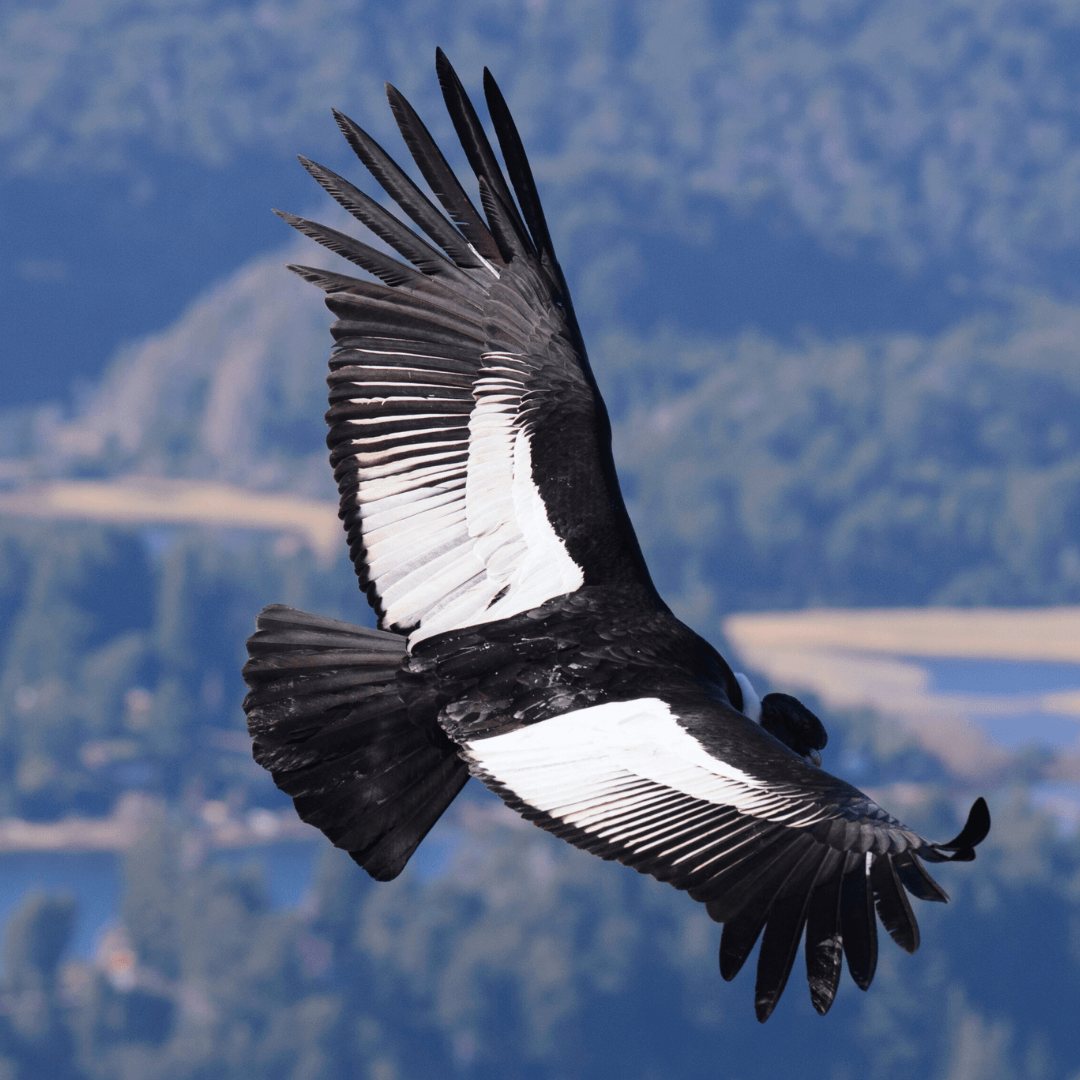
12. Andean Condor (Vultur gryphus)
The Andean condor is one of the world’s largest avian creatures. It is known for its impressive wingspan, which can exceed 10 feet.
Its dark plumage is adorned with striking white wing feathers and a distinctive bald head. This majestic bird is renowned for its soaring flight and grandeur, often seen gliding high over the Andes Mountains.
Origin Of Andean Condors
Native to South America, the Andean Condor is found in the Andean mountain range, spanning Colombia, Ecuador, Peru, Bolivia, Chile, and Argentina. It inhabits high-altitude areas and open mountain ranges.
How To See Andean Condors
To observe Andean Condors, visit the high Andes, especially national parks and protected areas such as Colca Canyon in Peru or Los Glaciares National Park in Argentina.
They can often be seen soaring at high altitudes or perched on rocky outcrops. These areas ‘ guided tours and wildlife observation platforms can offer the best viewing opportunities.
Habitat Of Andean Condors
The Andean Condor prefers mountainous and semi-desert environments, often found at 3,000 to 5,000 meters. It thrives in open, rugged terrains with ample thermals for soaring.
Diet Of Andean Condors
As a scavenger, the Andean Condor primarily feeds on carrion. Its diet helps maintain ecosystem balance by recycling nutrients. It occasionally supplements its diet with smaller animal remains.
13. Great Hornbill (Buceros bicornis)
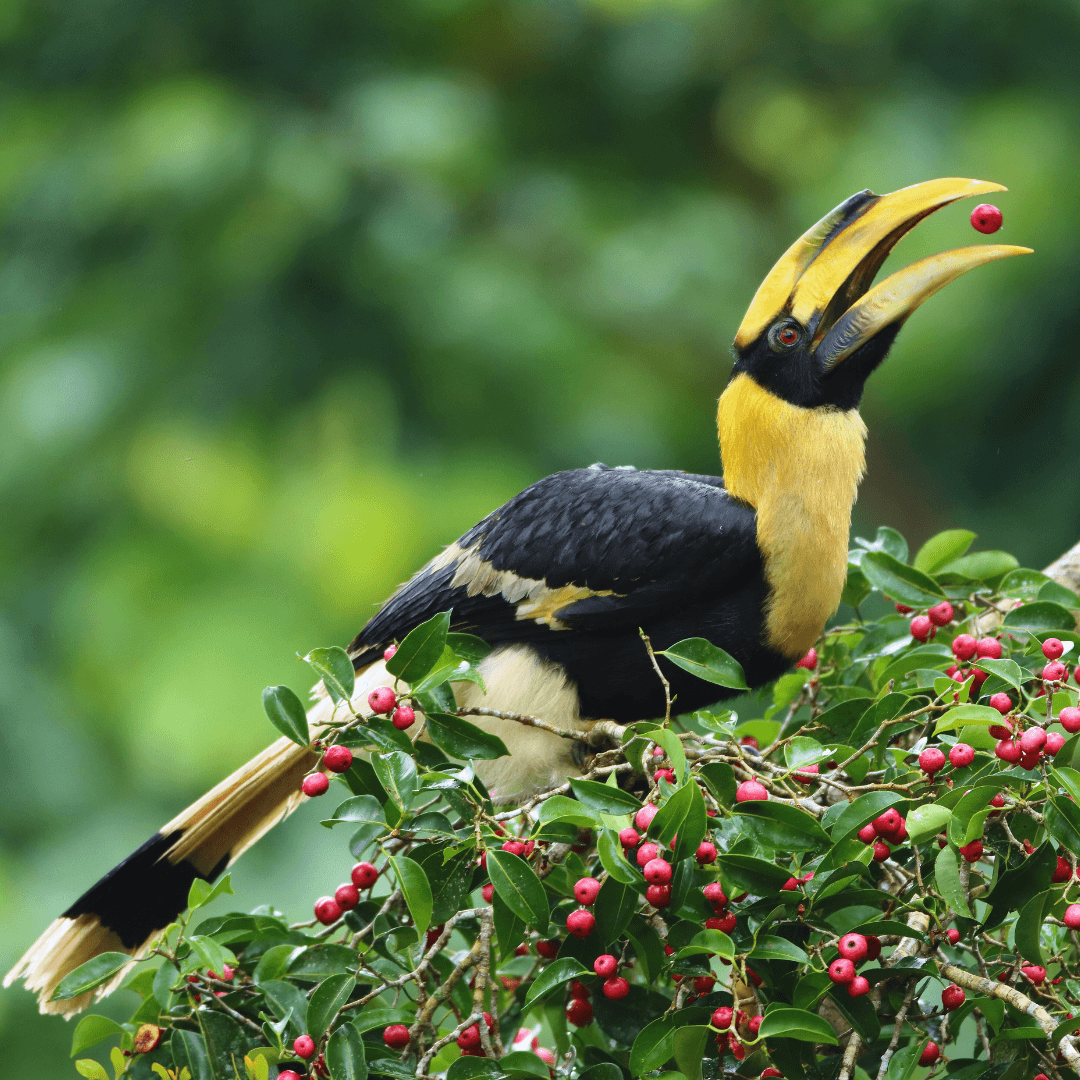
The Great Hornbill is a striking bird renowned for its impressive, curved bill, adorned with a prominent casque that extends above its beak.
Its plumage features a bold mix of yellow, black, and white, making it a visually stunning species. The bird’s large size and vibrant colours make it stand out in Southeast Asia’s avian world.
Origin Of Great Hornbills
Native to Southeast Asia, the Great Hornbill is found in India, Nepal, Bhutan, Bangladesh, Myanmar, Thailand, Malaysia, and Indonesia. It inhabits tropical and subtropical forests in these regions.
How To See Of Great Hornbills
To observe Great Hornbills, visit tropical rainforests and protected reserves in their native range. Notable locations include national parks such as Kaziranga National Park in India and Khao Yai National Park in Thailand.
Guided tours and birdwatching excursions in these areas can enhance your chances of spotting this magnificent bird.
Habitat Of Great Hornbills
The Great Hornbill prefers dense, evergreen forests and forest edges. It requires large areas of undisturbed forest for foraging, nesting, and breeding. It nests in large tree cavities, laying eggs and rearing its young.
Diet Of Great Hornbills
This hornbill primarily feeds on fruits, nuts, seeds, and small animals such as insects, reptiles, and mammals. It is essential to spread seeds within its environment to promote forest regeneration.
14. Superb Bird-of-Paradise (Lophorina superba)
The Superb Bird-of-Paradise is celebrated for its spectacular plumage and intricate courtship display. Males exhibit an extraordinary array of iridescent green and purple feathers, which they puff out during elaborate mating rituals.
Their unique display includes a dramatic transformation in body shape and an impressive dance to attract females, showcasing their vibrant colours and distinctive feather patterns.
Origin Of The Superb Bird-of-Paradise
Native to the rainforests of New Guinea, the Superb Bird-of-Paradise is found primarily in this region’s lowland and lower montane forests. It also inhabits parts of nearby islands.
How To See The Superb Bird-of-Paradise
Observing this elusive bird requires visiting its native rainforest habitat in New Guinea. Birdwatching tours and guided expeditions in protected reserves and national parks like the Tari Basin are excellent opportunities for seeing these birds. Patience and local knowledge are essential, as they are adept at blending into their surroundings.
Habitat Of The Superb Bird-of-Paradise
The Superb Bird-of-Paradise prefers dense tropical rainforests and forest edges. It resides in lower montane forests, often in areas with thick undergrowth where it can easily hide and perform its courtship displays.
Diet Of The Superb Bird-of-Paradise
This bird primarily feeds on fruits, berries, and insects. It forages in the forest canopy and undergrowth, utilizing its sharp beak to extract food from various plant materials and insects.
FAQs
Q1: Can I Keep Any Of These Beautiful Birds As Pets?
Some bird species can be kept as pets, but many of the world’s most beautiful birds are wild animals that are best appreciated in their natural habitats.
Before acquiring a pet bird, research its care requirements, lifespan, and legal status in your area. Responsible ownership is essential to ensure the bird’s health and well-being.
Q2: How Do I Photograph Beautiful Birds Effectively?
Successful bird photography requires patience, good lighting, and the right equipment. A camera with a quality zoom lens can help you capture detailed images from a safe distance.
Early morning and late afternoon often provide the best natural light, while photographing birds in their natural habitats can result in more authentic and striking images.
Q3: How Can I Contribute To The Conservation Of Beautiful Birds?
You can support bird conservation by protecting natural habitats, planting native trees and shrubs, reducing plastic waste, and supporting reputable conservation organizations.
Participating in citizen science projects, bird counts, and local conservation initiatives can also help researchers monitor bird populations and protect vulnerable species.
Q4: What Makes A Bird Beautiful?
Beauty in birds is often determined by a combination of vibrant colours, unique feather patterns, graceful movements, and distinctive physical features. However, beauty is subjective, and different people may admire different qualities.
Some birds are celebrated for their brilliant plumage, while others are appreciated for their elegant displays, songs, or fascinating behaviours.
Conclusion
Exploring the most beautiful birds in the world reveals the remarkable diversity, colour, and elegance found throughout the avian kingdom. From brilliantly coloured tropical species to birds with graceful forms and fascinating displays, each showcases nature’s creativity in a unique way.
Beyond their beauty, birds play vital roles in ecosystems as pollinators, seed dispersers, and indicators of environmental health. Their presence enriches our natural world and reminds us of the importance of protecting wildlife and the habitats they depend upon.
By appreciating and conserving these extraordinary species, we help ensure that future generations can continue to marvel at their splendour and observe their remarkable behaviours in the wild.
I trust you enjoyed this article on the Most Beautiful Birds In The World. Please stay tuned for more inspiring guides, helpful tips, and ideas to help you live closer to nature every day.
Take care!
— JeannetteZ🌿
💬 Your Opinion Is Important To Me
Do you have thoughts, ideas, or questions? I’d love to hear from you. Please leave your comments below or email me directly at Jeannette@Close-To-Nature.org.
📚 More Nature-Inspired Reads
Explore more ways to connect with nature, nurture your pets, and live in harmony with the world around you 🌿