
What Do Wild Birds Eat In Winter

Wild birds have a difficult time throughout the winter. Food becomes scarce. Insects hide. Seeds disappear under the snow. And natural water sources freeze.
That’s why your backyard can become a lifeline during the cold months. A simple feeder, a few safe foods, and a sheltered spot can help birds stay warm and healthy all season.
If you’ve ever asked yourself, what do wild birds eat in winter, this guide will help you understand their seasonal needs and how you can support them. Let’s turn your yard into a cozy winter café for our feathered visitors.
Why Birds Need Extra Help In Winter
Winter is beautiful, but for wild birds, it’s a season of survival. As temperatures drop, birds burn enormous amounts of energy just to stay warm.
Their tiny bodies must work all day—and all night—to maintain heat in freezing air. But here’s the problem: winter takes away almost everything they rely on. Insects disappear underground.
Seeds get buried under snow. Berries dry up or fall off trees. Even water sources freeze solid, making it harder for birds to hydrate or clean their feathers.
Because natural food becomes scarce, birds must travel farther and spend more energy searching for every meal. It’s a tough cycle—burn more calories, find fewer calories. Cold nights are perilous. A bird that goes to roost without enough fat reserves might not make it until morning.
That’s where you come in. A simple feeder, a suet cake, or a bowl of unfrozen water becomes a lifeline during harsh weather. Backyard feeding doesn’t replace nature; it strengthens it. It gives birds the quick, high-energy boost they need to survive another cold night.
When you help them, you’re not just feeding birds—you’re giving them warmth, safety, and a fighting chance through winter’s hardest months.
What To Feed Wild Birds In Winter
Winter feeding should focus on high-calorie, high-fat, nutrient-dense food. Birds need fuel, not filler. Here are the best foods to offer.
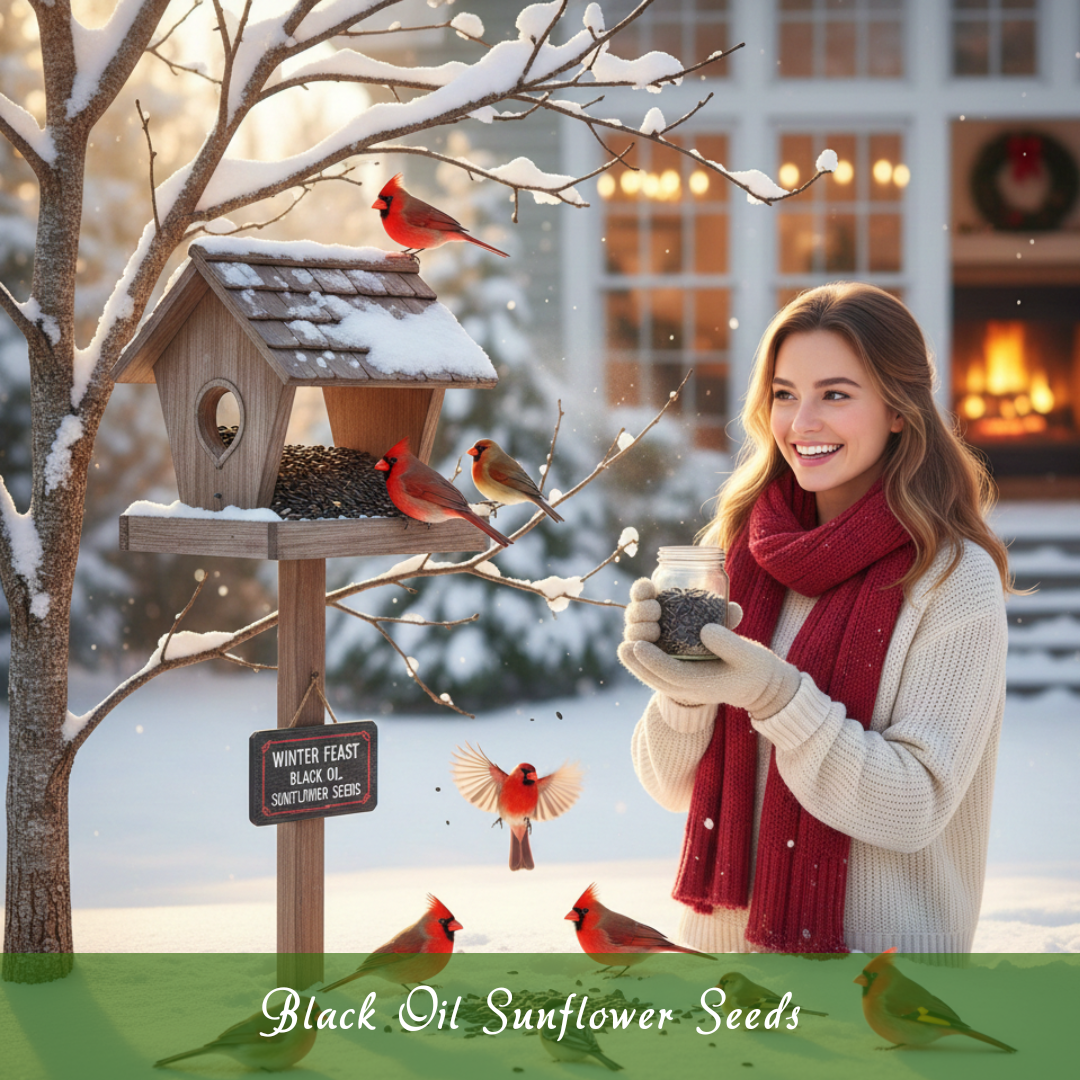
1. Black Oil Sunflower Seeds
Due to their richness, oiliness, and ease of consumption, black oil sunflower seeds are among the most reliable winter diets for wild birds.
Their thin shells require little effort to crack, and their strong scent helps birds find them quickly. They work well in almost any feeder and stay fresh even in cold weather.
Why It’s Great
These seeds provide birds with the energy they need to stay warm during long, chilly nights because of their high fat and calorie content.
They fit well in tube, hopper, platform, and window feeders, making feeding versatile and straightforward. Since birds can open them effortlessly, they save valuable energy while getting maximum nutrition.
Attracts
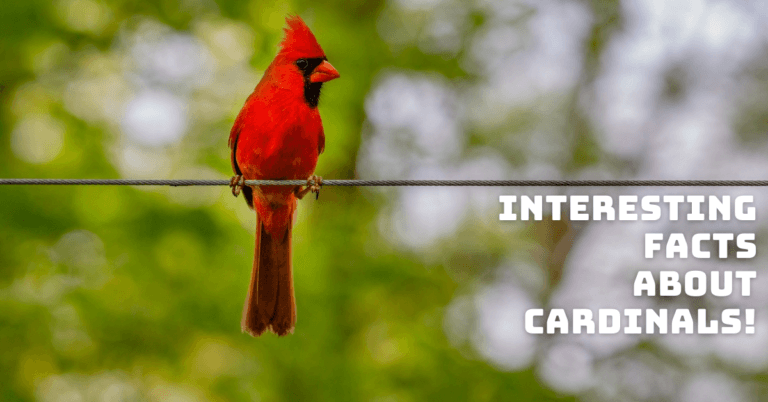
Black oil sunflower seeds bring a wide variety of birds to your yard, creating an active, colourful winter feeding station. Cardinals, finches, chickadees, titmice, sparrows, grosbeaks, nuthatches, and woodpeckers all love them. Offering these seeds helps support many species at once, especially those that depend on reliable winter food sources.
2. Suet Cakes
Suet cakes are dense, high-energy blocks made from animal fat or vegetable-based suet. They stay firm in cold weather and give birds the concentrated calories they need to survive winter’s harsh conditions. You can create your own with peanut butter, oats, nuts, seeds, or dried fruit, or you can purchase pre-made ones.
Why It’s Great
Suet provides quick, long-lasting energy that keeps birds warm, especially during freezing nights. It doesn’t freeze or spoil easily and works in simple cage feeders or homemade holders.
The fat-rich formula helps insect-eating birds thrive when bugs disappear, making suet one of the most essential winter foods you can offer.
Attracts
Suet cakes are loved by woodpeckers, nuthatches, wrens, chickadees, titmice, jays, and even creepers. These birds cling easily to suet cages and return frequently for extra fuel.
Offering suet brings more variety to your yard, especially species that rarely visit seed feeders but rely on fat-rich foods in winter.
3. Unsalted Peanuts
Unsalted peanuts are a powerful winter food because they pack protein, healthy fats, and essential energy into a small bite. Birds can eat them whole, halved, or crushed, depending on their size. Peanuts work beautifully in mesh feeders, platform feeders, or even scattered lightly on the ground.
Why It’s Great
Peanuts deliver long-lasting fuel that helps birds stay warm and active in cold weather. They’re easy to serve, don’t freeze, and attract birds that prefer richer foods over seeds.
Because peanuts offer both fat and protein, they support muscle strength, fast flight, and overall survival during the harshest winter conditions.
Attracts
Peanuts draw in blue jays, titmice, chickadees, nuthatches, wrens, woodpeckers, and even some wintering sparrows. Jays love carrying off whole peanuts, while woodpeckers peck at pieces with enthusiasm.
Offering peanuts increases activity at your feeder and brings in bold, energetic species that add excitement to winter birdwatching.
4. Nyjer (Thistle) Seeds
Nyjer seeds are tiny, lightweight seeds specially loved by small finches. They’re packed with oil and stay nutritious even in freezing temperatures.
Because the seeds are so fine, they require a special finch feeder with narrow ports that prevent waste and keep the seeds clean, dry, and easy for birds to access.
Why It’s Great
Nyjer seeds provide high energy in small amounts, perfect for birds with quick metabolisms. They don’t attract rodents, and their lightweight nature reduces mess.
These seeds stay fresh longer in winter and encourage flock-feeding behaviour, bringing groups of finches to your yard and creating lively, colourful activity even in snow.
Attracts
Nyjer seeds attract goldfinches, pine siskins, redpolls, and other small finches that rely on fine seeds for winter survival. These birds feed gently and peacefully, often gathering in cheerful groups around feeders.
Offering Nyjer creates a vibrant, fluttering scene and supports species that depend on high-oil seeds during the coldest months.
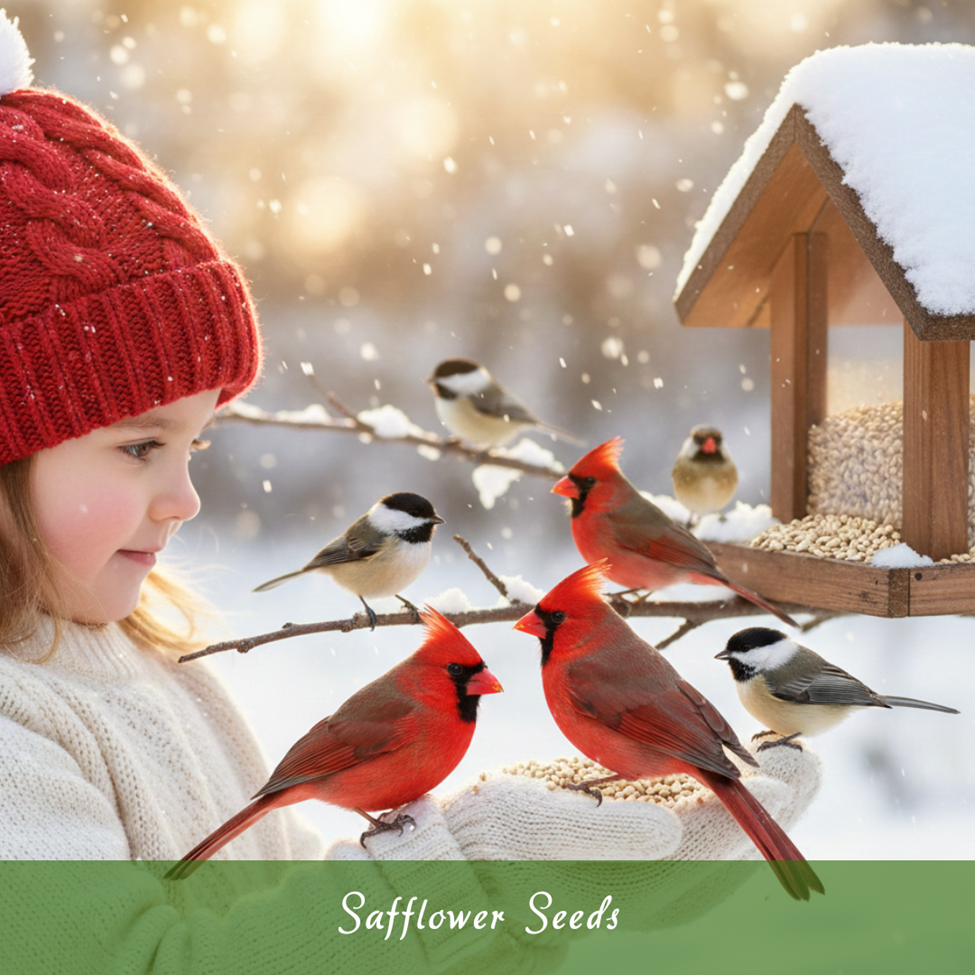
5. Safflower Seeds
Safflower seeds are white, slightly bitter seeds that many favorite backyard birds enjoy. Their tough shells make them harder for pests like squirrels and bully birds to crack, but cardinals and other strong-beaked species love them. They work well in hopper, tube, or platform feeders throughout winter.
Why It’s Great
Safflower seeds are rich in fat and protein, giving birds a steady energy source during cold months. Their bitterness naturally discourages squirrels, grackles, and starlings, helping keep feeders peaceful.
They stay fresh and dry longer in freezing weather, making them a low-maintenance, bird-friendly choice for winter feeding.
Attracts
Safflower seeds attract cardinals, chickadees, titmice, grosbeaks, nuthatches, and house finches. Because many nuisance birds avoid them, your desired species can feed without competition.
Offering safflower creates a calm, steady feeding environment and supports the birds that truly benefit from your winter feeding efforts.
6. Cracked Corn
Cracked corn consists of dried corn kernels broken into smaller pieces, making them easy for many birds to eat. It’s affordable, widely available, and perfect for mixed feeding setups. You can offer it on platform feeders, scatter it on the ground, or mix it with other winter seeds for added nutrition.
Why It’s Great
Cracked corn provides carbohydrates that give birds quick bursts of energy in cold weather. It’s budget-friendly and works well for feeding larger flocks.
Because it’s easy to digest and doesn’t freeze into hard clumps, it stays accessible even during harsh winter conditions. It also helps diversify feeding stations.
Attracts
Cracked corn attracts a variety of ground-feeding birds such as doves, sparrows, juncos, blackbirds, quail, and wild turkeys. It also appeals to starlings and jays.
Offering cracked corn boosts activity around your yard and supports species that prefer low feeders or open ground instead of elevated seed stations.
7. White Millet
White millet is a small, round seed loved by many ground-feeding birds. It’s lightweight, easy to digest, and perfect for winter when natural grass seeds are scarce.
You can offer it in platform feeders, scatter it on the ground, or mix it with other seed blends to attract a wider variety of birds.
Why It’s Great
Millet provides quick energy and is gentle on small beaks, making it ideal for sparrows and other winter visitors. It doesn’t freeze or spoil easily, even in damp weather.
Because it’s inexpensive and versatile, millet is a simple way to boost your winter feeding station without increasing cost or maintenance.
Attracts
White millet attracts sparrows, juncos, towhees, doves, buntings, and native finches that naturally forage on the ground. These birds flock to areas where millet is offered, creating lively feeding activity throughout winter. Adding millet can also draw shy species that avoid crowded feeders but thrive on open ground food sources.
8. Dried Mealworms
Dried mealworms are a protein-rich winter food that helps insect-eating birds survive when bugs disappear. They’re lightweight, easy to store, and simple to serve in small dishes, platform feeders, or mixed with seeds. Birds recognize them quickly and return often for the satisfying, nutrient-dense boost they provide.
Why It’s Great
Mealworms supply essential protein and fat that birds need for muscle strength, warmth, and daily survival in cold weather. They don’t freeze, spoil, or attract pests like live insects might. Their versatility makes them perfect for mixing into seed blends or offering on their own for an irresistible winter treat.
Attracts
Dried mealworms attract bluebirds, robins, chickadees, wrens, nuthatches, woodpeckers, titmice, and even wintering warblers. These birds rely heavily on insects year-round, so mealworms keep them active and healthy when natural food sources vanish. Offering mealworms can draw rare or shy insect-eaters closer to your yard during winter.
9. Fresh Or Dried Fruit
For birds who are accustomed to eating berries and soft fruits in the winter, fruit is an important winter food source. Offer slices of apple, orange halves, raisins, cranberries, or dried cherries.
You can place them on platform feeders, skewer them on branches, or mix dried pieces into seed blends for extra nutrition.
Why It’s Great
Fruit provides natural sugars, vitamins, and moisture—key nutrients birds need when other food sources disappear. It keeps energy levels high, especially during freezing mornings.
Fresh fruit brightens your feeder setup, while dried fruit lasts longer in snow and ice. It’s an easy, low-effort way to support fruit-loving species in winter.
Attracts
Fruit attracts robins, bluebirds, waxwings, mockingbirds, thrushes, woodpeckers, orioles (in milder climates), and even cardinals. These birds eagerly seek out colourful, sweet foods when winter eliminates natural berries.
Offering fruit encourages species that don’t typically visit seed feeders, adding variety and more beautiful activity to your backyard in winter.
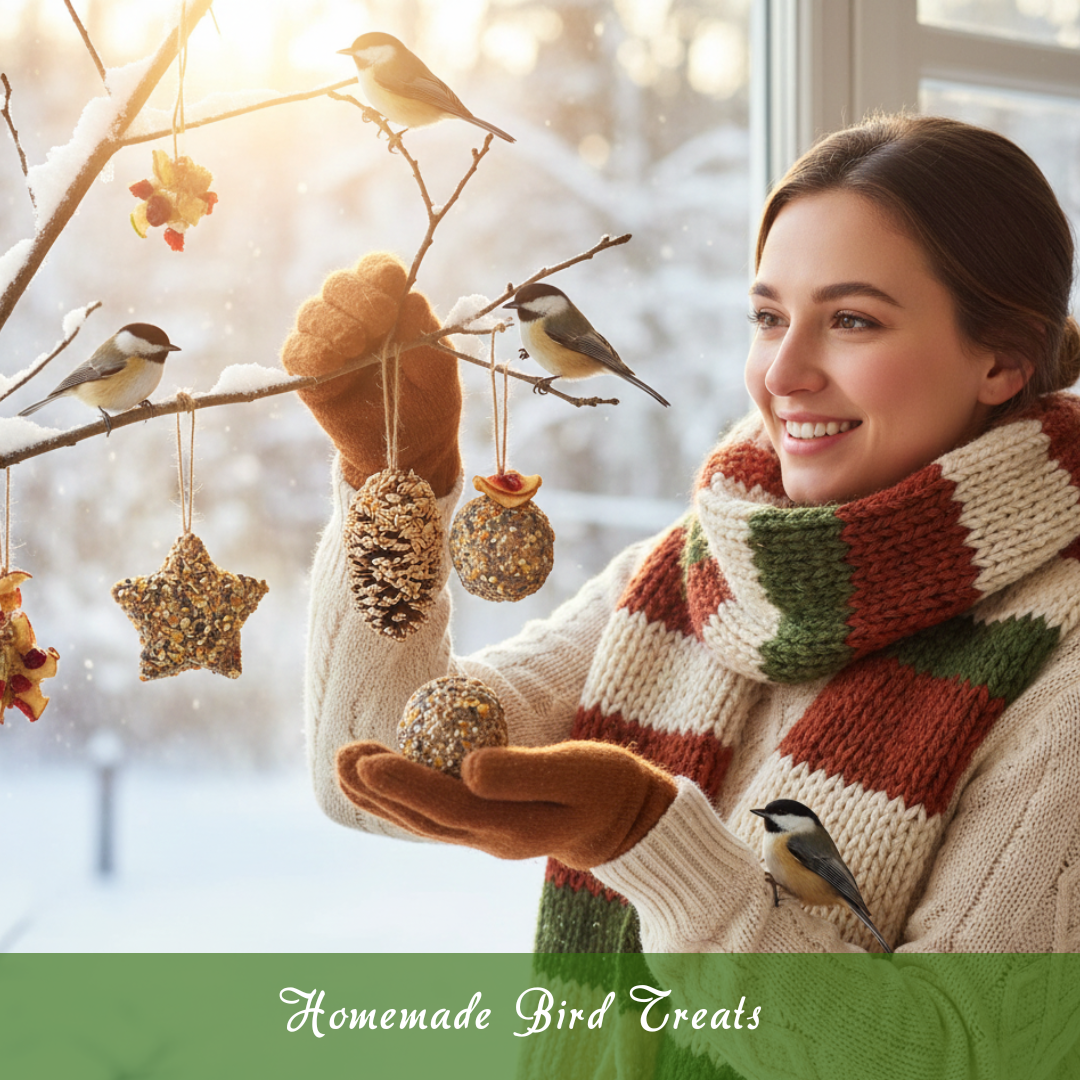
10. Homemade Bird Treats
Homemade bird treats are simple, customizable winter snacks you can create using pantry ingredients like oats, peanut butter, nuts, seeds, and dried fruit.
You can shape them into balls, press them into moulds, or spread them onto pinecones. These treats give birds an easy, high-energy boost during the toughest months.
Why It’s Great
Homemade treats let you control ingredients, avoid fillers, and pack in the fat and calories birds truly need. They’re fun to make, freeze well, and work in any feeder style.
These handcrafted snacks stay firm in cold weather and offer a nutritious mix of fats, proteins, and natural sugars for winter survival.
Attracts
Homemade treats attract chickadees, titmice, wrens, woodpeckers, nuthatches, jays, and even cardinals. The mix of textures—seeds, nuts, and soft binders—appeals to many species at once. Offering these treats can bring more curious birds to your yard and keep them returning for your special winter creations.
Where To Place Bird Feeders In Winter
Placement affects how many birds visit and how safe they feel.
1. Near Shelter
Place feeders close to shrubs, trees, or hedges so birds have instant cover when danger appears. Natural shelter provides safe perching spots, warmth, and escape routes from hawks or neighbourhood cats. When birds feel protected, they visit more often and stay longer, making your feeder a reliable winter stop.
2. Out Of Strong Wind
Cold north winds make feeding difficult and uncomfortable for birds. Positioning feeders on the south or east side of your home offers natural protection from harsh gusts.
A calmer spot helps birds conserve energy, prevents seed from blowing away, and keeps feeding stations more inviting during freezing weather.
3. In A Visible Spot
Birds must spot your feeder easily from above as they fly. Choose an area with a clear, open view so they can locate food quickly without searching.
Good visibility increases activity, reduces competition, and helps birds feel safer while landing, feeding, and taking off again during busy winter days.
4. Safe From Predators
Place feeders about 8–10 feet from bushes or corners where cats may hide, and keep them at least 5 feet off the ground. This distance gives birds warning time and reduces ambush risk—also avoids busy foot traffic areas so birds can feed comfortably without sudden stress or disturbances.
5. Spread Out Stations
Multiple feeders in different areas prevent crowding and territorial fights, especially during winter when food becomes limited. Spacing them apart allows shy species to feed peacefully without competition from aggressive birds.
A spread-out setup increases overall activity, welcomes more species, and creates a calmer, more balanced feeding environment.
Turn Your Passion for Nature Into Income
🌿 Whether you love gardening, caring for animals, or exploring holistic living,
You can share your knowledge online and earn from it.
Discover how nature lovers are growing their passions into meaningful, income-generating blogs. 👇
How To Feed Birds Fruit In Winter
Fruit gives birds natural sugars and hydration. Here are easy winter fruit setups.
1. Fruit Spikes
Fruit spikes are an easy way to offer fresh fruit in winter. Push apple rings, orange halves, or pear chunks onto a skewer and hang it from a branch or pole.
The bright colours attract birds quickly, and species like robins and waxwings love feeding from these simple, natural displays.
2. Fruit Garland
A fruit garland turns your yard into a colourful winter buffet. Thread soft fruits like grapes, cranberries, or berries onto a string and hang them across branches.
Birds move along the garland, nibbling as they go. It’s both decorative and functional, offering steady nutrition while adding charm to your outdoor space.
3. Fruit & Suet Mix
Mixing chopped fruit into melted suet creates a decadent winter treat that combines fat, sweetness, and natural nutrients. Once poured into moulds or silicone cups and cooled, it forms firm blocks birds can cling to and peck at. This blend gives high energy and moisture, perfect for harsh winter days.
4. Fruit-Filled Coconut Feeder
A hollowed-out coconut half makes a natural-looking feeder that withstands snow and cold weather. Fill it with berries, seeds, or diced fruit, then hang it using sturdy twine.
The bowl shape protects food from moisture and attracts species that enjoy sheltered, elevated feeding spots during the winter season.
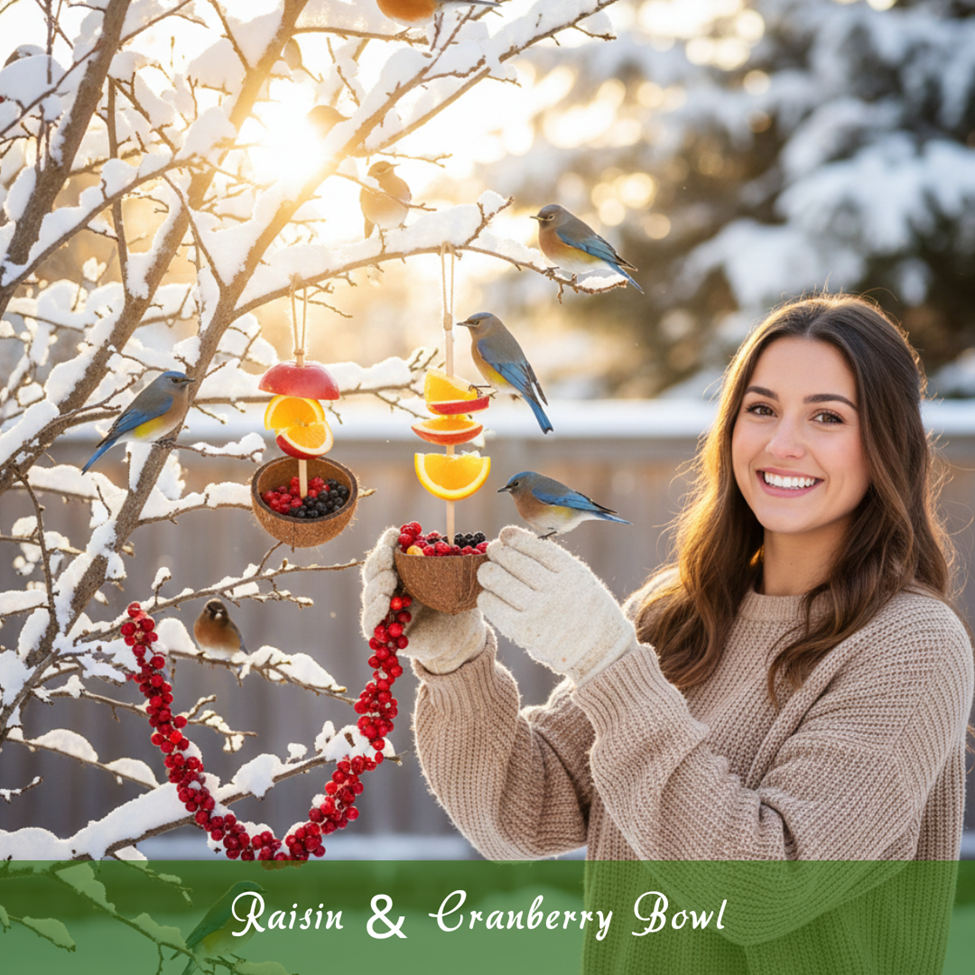
5. Raisin & Cranberry Bowl
Soaking raisins overnight softens them for easier eating, especially in freezing weather. Mixing them with cranberries adds colour and extra nutrients.
Place the blend in a small bowl or platform feeder, and birds like bluebirds, robins, and thrushes will eagerly visit for this sweet, energy-rich winter treat.
Conclusion
Choosing the right place for your bird feeders makes a big difference in how many birds visit and how safe they feel, especially when considering what do wild birds eat in winter and how they find food.
A well-placed feeder provides natural shelter, reduces exposure to harsh winter winds, and offers clear visibility so birds can stay alert to predators.
Keeping feeders away from threats like cats helps create a secure feeding space. Spacing out feeding stations also reduces competition and stress while encouraging peaceful feeding among different species.
With thoughtful placement and planning, your backyard can become a dependable winter food source and a thriving, year-round bird sanctuary.
I trust you enjoyed this article on What Do Wild Birds Eat In Winter?. Please stay tuned for more inspiring guides, helpful tips, and ideas to help you live closer to nature every day.
Take care!
— JeannetteZ🌿
💬 Your Opinion Is Important To Me
Do you have thoughts, ideas, or questions? I’d love to hear from you. Please leave your comments below or email me directly at Jeannette@Close-To-Nature.org.
📚 More Nature-Inspired Reads
Explore more ways to connect with nature, nurture your pets, and live in harmony with the world around you 🌿