12 Easy Steps To Grow Peace Lily In Containers

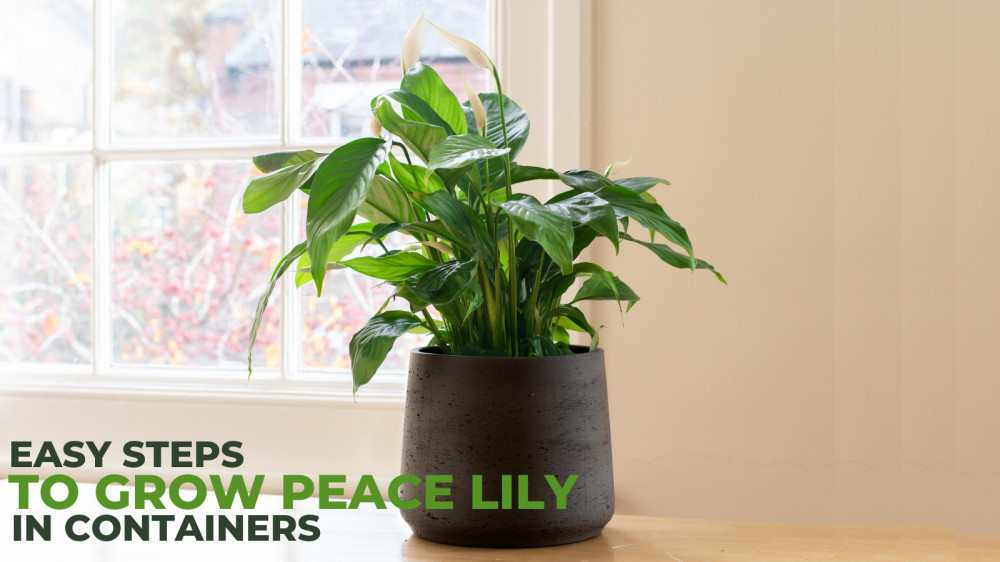
Learning how to Grow Peace Lily In Containers makes it easy to enjoy these elegant tropical plants in your home or a sheltered outdoor space. Their glossy green leaves and distinctive white blooms bring a fresh, peaceful touch to almost any setting.
Peace lilies are popular houseplants because they adapt well to indoor conditions and generally require only moderate care. Although they can sometimes be particular about watering, light, and humidity, understanding their basic needs makes them much easier to maintain.
Growing peace lilies in containers also gives you greater control over soil, drainage, moisture, and placement. With suitable growing conditions, these beautiful plants can remain healthy and produce their characteristic blooms for years.
This guide covers everything from choosing suitable containers and soil to watering, fertilizing, repotting, and encouraging flowering. You’ll also find practical tips for keeping your peace lilies healthy and attractive throughout the year.
Origin & History
Peace lilies belong to the Spathiphyllum genus and the Araceae family. Their botanical name comes from Greek words referring to the plant’s distinctive spathe and leaf-like appearance.
Native to the tropical regions of the Americas, peace lilies naturally grow beneath rainforest canopies. These warm, humid environments provide the filtered light and consistent moisture the plants prefer.
Peace lilies were introduced to European horticulture during the nineteenth century. Over time, they became popular houseplants because of their glossy green foliage, elegant white spathes, and ability to adapt to indoor conditions.
Today, people grow numerous species and cultivars worldwide. Their sizes and characteristics vary, but most are easily recognized by their lush foliage and distinctive white blooms.
Peace lilies also gained attention following NASA research into plants and certain airborne pollutants. While this research helped create their air-purifying reputation, individual houseplants have a much smaller effect on indoor air than was once widely suggested.

Benefits Of Growing Peace Lilies
Peace lilies offer more than attractive foliage and elegant white blooms. Their manageable care needs, adaptability, and decorative qualities make them popular choices for homes and workspaces.
1. Add Natural Beauty Indoors
Peace lilies bring lush green foliage and graceful white blooms to indoor spaces. Their simple, elegant appearance works well with many decorating styles and adds a natural element to almost any room.
Even when the plants are not flowering, their glossy leaves provide year-round colour. Larger varieties can become striking floor plants, while compact varieties work beautifully on tables and shelves.
2. Adapt Well To Indoor Conditions
Peace lilies adapt to a range of indoor environments and can tolerate lower light levels than many flowering houseplants. This flexibility makes them suitable for rooms where other flowering plants may struggle.
They also grow well in containers, allowing you to move them as lighting and seasonal conditions change. Their adaptability makes it easier to find a comfortable spot in the home.
3. Help Create A Calming Atmosphere
Indoor plants can make living and working spaces feel softer, greener, and more connected to nature. The lush foliage of peace lilies can create a peaceful, welcoming atmosphere.
Their elegant appearance makes them particularly appealing in bedrooms, living areas, home offices, and quiet relaxation spaces. Even a single plant can introduce a refreshing natural element to a room.
4. Offer Many Sizes And Varieties
Peace lilies range from compact varieties suitable for small containers to impressive plants such as Sensation. This variety makes it easier to choose a plant that suits the available space.
Different cultivars also offer foliage variations, including beautiful variegated leaves. Gardeners can enjoy several peace lily varieties without every plant looking exactly the same.
5. Carry Symbolic Meaning
Like many plants, peace lilies also carry symbolic meaning. Often associated with peace, purity, hope, and renewal, they can bring a deeper personal significance to homes and workspaces beyond their natural beauty.
Their symbolism also makes peace lilies meaningful gifts for special occasions. Their graceful white blooms naturally complement the qualities their name has come to represent.
Different Types Of Peace Lilies
Despite their name, peace lilies are not true lilies. They belong to the Araceae family and are related to other familiar plants, including calla lilies.
Many peace lily varieties look quite similar at first glance. However, differences in plant size, leaf shape, colouring, and flower size give each variety its own distinctive characteristics.
From compact varieties suited to smaller spaces to larger plants with dramatic foliage, a peace lily fits almost every indoor setting. Here are some beautiful varieties to consider for your container garden.
1. Sensation Peace Lily (Spathiphyllum ‘Sensation’)
Sensation Peace Lily is one of the largest peace lily varieties, reaching approximately 4 to 6 feet tall with a similar spread. Its impressive size makes it particularly suitable as a statement floor plant.
The large, deeply ribbed leaves have a rich, glossy green appearance that adds texture and colour. White spathes rise above the foliage, creating an elegant contrast against the dark leaves.
Because of its size, Sensation needs a spacious container and enough room for its foliage to spread. It can create a beautiful tropical focal point in a bright indoor space.

2. Patricia Peace Lily (Spathiphyllum ‘Patricia’)
Patricia Peace Lily sits at the opposite end of the size spectrum from the much larger Sensation variety. Its compact growth makes it an attractive choice for smaller rooms, shelves, tables, and other spaces where a large houseplant may be impractical.
This variety features rich green foliage complemented by elegant white flowers. Its smaller size offers the classic beauty of a peace lily without requiring the space needed for larger varieties.
Patricia grows well in containers when provided with suitable light, moisture, and drainage. Its manageable size also makes it a lovely option for gardeners who want to add greenery to smaller indoor spaces.

3. Piccolino Peace Lily (Spathiphyllum ‘Piccolino’)
Piccolino Peace Lily is a dwarf, compact variety that works beautifully in smaller indoor spaces. Its modest size makes it particularly suitable for tabletops, shelves, and container displays.
The plant features glossy, dark green foliage that creates an attractive backdrop for its pure white flowers. Its upright growth gives Piccolino a neat appearance without requiring the space of larger peace lily varieties.
Piccolino also flowers relatively early compared with some other varieties. With suitable light, moisture, and drainage, it can provide attractive foliage and delicate blooms in a compact container.

4. Little Angel Peace Lily (Spathiphyllum ‘Little Angel’)
Little Angel Peace Lily is another compact variety with glossy, deep green foliage and elegant white flowers. Its smaller growth habit makes it well suited to containers and space-limited areas.
One of its most attractive features is the way the flowers appear just above the foliage. When several blooms are present at once, the plant can resemble a naturally arranged bouquet.
Its compact growth, lush foliage, and abundant blooms make Little Angel an appealing indoor plant. It can add a fresh tropical touch to tabletops, shelves, and other smaller spaces.

5. White Stripe Peace Lily (Spathiphyllum ‘White Stripe’)
White Stripe Peace Lily stands apart from other varieties because of its distinctive variegated foliage. Each green leaf features a prominent creamy-white stripe running along the centre.
The leaves have a softer, matte finish rather than the glossy appearance commonly associated with peace lilies. This combination of green and white gives the plant an attractive appearance even when it isn’t flowering.
White Stripe is a compact variety, making it well suited to growing in containers indoors. Its unusual foliage can add colour and visual interest to shelves, tables, and other smaller spaces.
6. Domino Peace Lily (Spathiphyllum ‘Domino’)
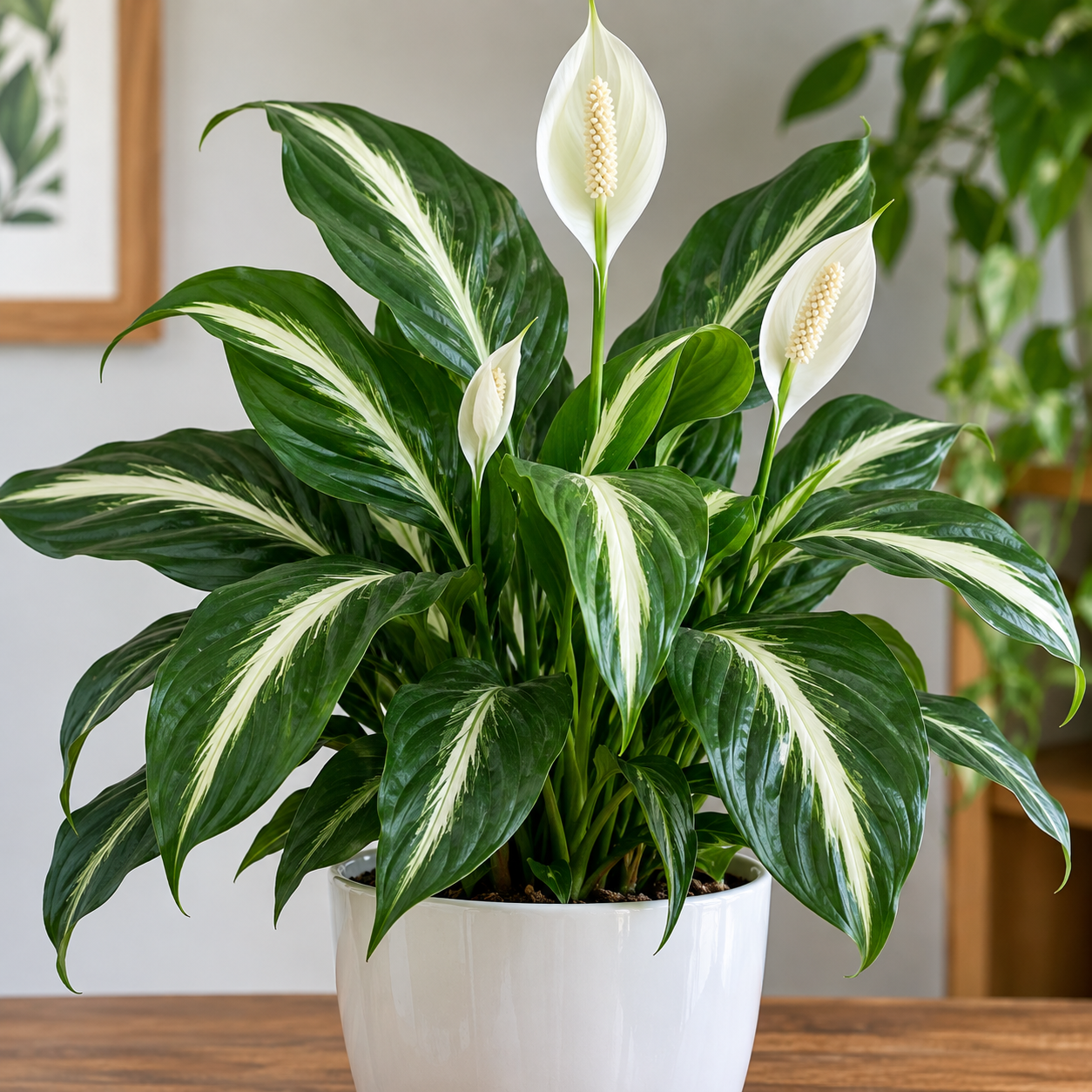
Domino Peace Lily is a striking variegated variety known for its deep green leaves covered with irregular white streaks and splashes. No two leaves look exactly alike, giving the plant plenty of visual interest even when it isn’t blooming.
Its broad, slightly ruffled leaves create a lush appearance, while elegant white flowers rise above the foliage. The combination of variegated leaves and delicate blooms makes Domino particularly attractive as an indoor container plant.
Domino prefers similar growing conditions to other peace lilies, including indirect light and consistently moist, well-draining soil. Brighter indirect light can also help maintain its distinctive variegation.

7. Jetty Peace Lily (Spathiphyllum ‘Jetty’)
Jetty Peace Lily is an attractive variety known for its lush, full growth and glossy green foliage. Its elegant white flowers rise above the leaves and can remain attractive for an extended period.
The combination of dense foliage and graceful blooms makes Jetty a lovely choice for indoor containers. It provides plenty of greenery without requiring the space of the largest peace lily varieties.
Place Jetty where it receives bright, indirect light rather than strong direct sunlight. A location near a window with filtered light can provide the brightness it needs while protecting its foliage.

How To Grow Peace Lily In Containers
Growing peace lilies in containers allows you to create the conditions these tropical plants need to thrive. The right combination of container size, soil, light, moisture, and humidity can encourage healthy foliage and beautiful blooms.
Peace lilies are relatively easy to maintain once their basic needs are understood. With consistent care and attention to changing conditions, they can remain attractive indoor plants for many years.
The following steps will help you grow healthy peace lilies in containers and create a suitable environment for long-term growth. Each step focuses on one important part of their care, making the process easy to follow.
1. Choose The Right Container
Choose a container only 1 to 2 inches wider than your peace lily’s current pot. Peace lilies generally prefer being slightly snug rather than surrounded by a large amount of unused potting soil.
An oversized container can hold excess moisture around the roots, increasing the risk of root rot. Moving your peace lily into progressively larger containers as it grows is a safer approach.
Good drainage is equally important, so always choose a container with adequate drainage holes. This allows excess water to escape while helping maintain the moist conditions peace lilies prefer.

2. Choose The Right Location
Peace lilies naturally grow beneath tropical rainforest canopies, where conditions are warm, humid, and shaded. Indoors, they thrive in locations that provide similar protection from intense sunlight and temperature extremes.
Place your peace lilies near a window where they receive plenty of bright, indirect light. Avoid strong direct sunlight, which can scorch the leaves and cause discolouration.
North- or east-facing windows can provide suitable light, depending on your home’s conditions. Keep the plants away from cold drafts, heating vents, and sudden temperature changes that can stress the foliage.

3. Choose The Right Soil
Peace lilies grow best in a rich, loose potting mix that retains some moisture while allowing excess water to drain freely. The goal is to keep the roots consistently moist without waterlogging them.
A quality indoor potting mix provides a good foundation for container-grown peace lilies. Choosing the best soil to use for flowering plants can help provide suitable drainage, aeration, and moisture retention.
Adding materials such as perlite or orchid bark can improve drainage and aeration while keeping the mixture light around the roots.
Organic matter can also help recreate some of the rich growing conditions found on the tropical forest floor. A balanced mixture gives the roots access to moisture, nutrients, and oxygen without becoming overly compacted.
Whatever mixture you choose, avoid heavy garden soil or anything that remains soggy for long periods. Good drainage and aeration are essential for healthy roots and can help reduce the risk of root rot.

4. Provide The Right Sunlight
Peace lilies thrive in bright, indirect light, which supports healthy foliage and encourages flowering. Their ability to adapt to lower-light conditions also makes them versatile indoor plants.
An east-facing window can provide gentle morning sunlight followed by indirect light throughout the day. A north-facing window is another good option, especially when the plant receives consistent natural light.
Peace lilies can also adapt to offices and other spaces with fluorescent or artificial lighting. This makes them attractive choices for desks and rooms with limited access to natural light.
Filtered light near a brighter window can also work beautifully. Sheer curtains protect against intense direct sunlight while letting plenty of brightness reach the leaves.

5. Maintain Warm Temperatures And Humidity
Peace lilies appreciate the warm, stable conditions found in their tropical native habitats. Indoor temperatures between 65 and 80°F (18 and 27°C) generally provide a comfortable environment for healthy growth.
Consistent temperatures are especially helpful during the colder months. A warm location away from chilly drafts and sudden temperature changes helps keep the foliage healthy and vibrant.
Peace lilies also enjoy moderate to high humidity, so kitchens and bathrooms with suitable light are excellent locations. Grouping plants together or using a pebble tray can help increase humidity around the foliage.
A humidifier can provide additional moisture when indoor air becomes particularly dry. Maintaining comfortable warmth and humidity helps recreate the tropical conditions these beautiful plants naturally enjoy.
Turn Your Passion for Nature Into Income
🌿 Whether you love gardening, caring for animals, or exploring holistic living,
You can share your knowledge online and earn from it.
Discover how nature lovers are growing their passions into meaningful, income-generating blogs. 👇
6. Water Consistently
Peace lilies prefer consistently moist soil but benefit from slight drying between waterings. Check the top inch of soil with your finger, and water when it feels dry.
Water thoroughly until excess moisture drains from the bottom of the container. This helps evenly moisten the root zone while preventing water from accumulating around the roots.
Peace lilies often signal their need for water by letting their leaves droop slightly. Checking the soil regularly can help you recognize when watering is needed before the plant becomes noticeably wilted.
Room-temperature filtered water or rainwater can be a good choice when available, particularly if your tap water contains high levels of minerals. Consistent watering helps maintain lush, green foliage and supports healthy growth year-round.

7. Fertilize During Active Growth
Peace lilies can benefit from light feeding during their active growing season. A balanced approach provides additional nutrients without overwhelming their sensitive roots.
During spring and summer, apply a balanced houseplant fertilizer at a diluted strength according to the product directions. Feeding lightly is generally preferable to applying too much fertilizer at once.
Gardeners who prefer organic options can also explore natural fertilizers for flowers to support healthy growth and blooming. Always choose a product suitable for container-grown or indoor plants.
Reduce feeding when growth naturally slows during fall and winter. Adjusting your fertilizing routine with the seasons helps support healthy foliage and beautiful blooms throughout the plant’s growing cycle.
8. Ensure Proper Drainage
Proper drainage helps peace lilies maintain consistently moist soil without leaving their roots sitting in excess water. Choose a container with adequate drainage holes so water can drain freely after watering.
Place a saucer beneath the container to protect surrounding surfaces, but empty any collected water rather than allowing the pot to sit in it. A well-draining potting mix also helps balance moisture retention with healthy airflow around the roots.
If your peace lily begins to wilt despite having moist soil, check the roots for signs of trouble. Healthy roots should feel firm, while soft or mushy roots can indicate excess moisture and possible root rot.
9. Repot When Needed
Peace lilies eventually outgrow their containers and need additional room for their roots. Signs that repotting may be necessary include roots emerging from the drainage holes, crowded roots, or soil that dries much more quickly than usual.
When repotting, choose a container about 1 to 2 inches wider than the current pot. Gradual increases give the plant more space without burying the roots in too much moist soil.
Gently remove the peace lily from its container, inspect the roots, and place it in fresh potting mix. Position the plant at about the same depth as before, then water thoroughly to help the soil settle around the roots.
Repotting is best based on the plant’s growth rather than a strict schedule. Checking the roots and watching for changes in watering needs will help you decide when your peace lily is ready for a larger home.
10. Prune When Needed
Peace lilies require very little pruning to maintain their attractive appearance. Removing yellow, brown, damaged, or dying leaves keeps the plant tidy and lets healthy foliage stay the focus.
Use clean, sharp pruning shears or scissors and cut damaged leaves near the base of the plant. Spent flower stalks can also be removed once the blooms begin to fade.
Occasional yellowing or browning can occur naturally as older leaves age. However, frequent changes in the foliage may indicate that you need to adjust watering, light, humidity, or another growing condition.
Regularly checking your peace lily makes it easier to spot these changes early. Light pruning combined with consistent care will help maintain lush, healthy growth.
11. Encourage Peace Lilies To Flower
Peace lilies need adequate light to produce their distinctive white blooms. Although they tolerate lower-light conditions, plants growing in bright, indirect light are generally more likely to flower.
If your peace lily produces healthy foliage but few flowers, consider moving it to a brighter location. An east-facing window or another spot with plenty of filtered natural light can provide suitable conditions without exposing the leaves to intense direct sunlight.
Light feeding during spring and summer can also support healthy growth and flowering. Use a balanced fertilizer at a diluted strength, as too much fertilizer can encourage excessive foliage or affect bloom appearance.
Patience also matters, especially with young or recently repotted plants. Once your peace lily has the right light, moisture, warmth, and nutrition, it may flower naturally as it matures.
12. Watch For Pests And Plant Problems
Peace lilies are generally resilient, but common houseplant pests can occasionally cause problems. Spider mites, aphids, mealybugs, and scale may appear on the leaves, stems, or undersides of the foliage.
Inspect your plants regularly, especially new growth and the undersides of the leaves. You can often manage small infestations by wiping the foliage clean, while insecticidal soap can help control more persistent pests.
Brown leaf tips may develop when humidity is low, watering is inconsistent, or fertilizer salts accumulate in the soil. Too much direct sunlight can also cause browning or scorched areas on the foliage.
Yellow leaves have several possible causes, including natural ageing, excess moisture, insufficient water, or crowded roots. Checking the soil, roots, light, and overall condition of the plant can help you identify the most likely cause.
Healthy growing conditions are one of the best ways to keep peace lilies resilient. Proper watering, good drainage, suitable light, and regular inspection can prevent many common problems before they become serious.

Conclusion
Learning to grow peace lilies in containers can bring beautiful tropical greenery and elegant white blooms into your home. With suitable light, consistent moisture, good drainage, and occasional feeding, these plants can remain attractive for many years.
Container growing also makes it easier to manage soil, moisture, placement, and root growth as your peace lilies mature. Paying attention to changes in their leaves and growth can help you adjust their care when needed.
From compact varieties such as Piccolino to the impressive Sensation, peace lilies offer options for rooms and spaces of many different sizes. Their lush foliage makes them attractive even when they are not flowering.
I trust you enjoyed this article on the Easy Steps to Grow Peace Lily in Containers. Please stay tuned for more inspiring guides, helpful tips, and ideas to help you live closer to nature every day.
Take care!
— JeannetteZ🌿
💬 Your Opinion Is Important To Me
Do you have thoughts, ideas, or questions? I’d love to hear from you. Please leave your comments below or email me directly at Jeannette@Close-To-Nature.org.
📚 More Nature-Inspired Reads
Explore more ways to connect with nature, nurture your pets, and live in harmony with the world around you 🌿