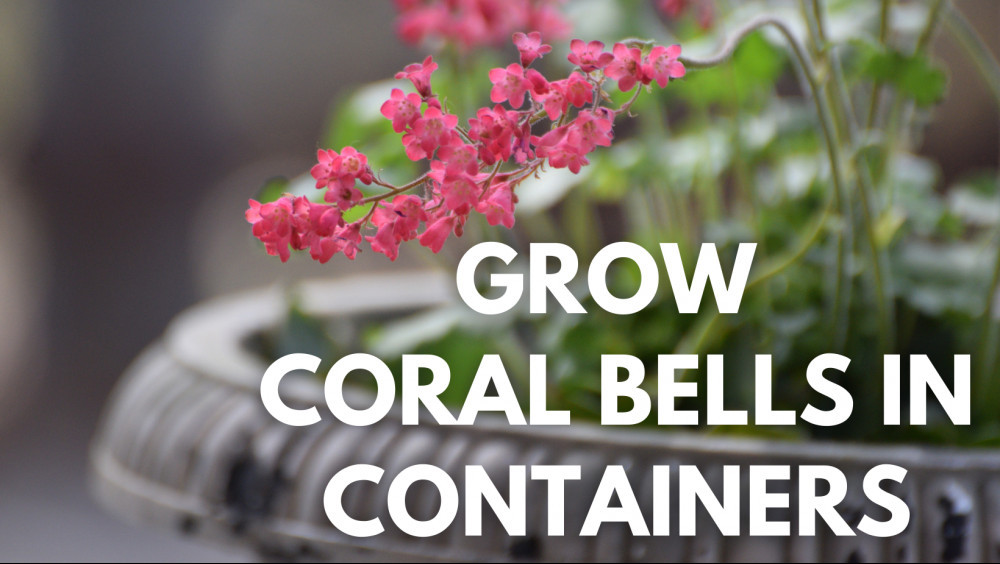
Best Steps To Grow Coral Bells In Containers

Many gardeners choose to grow Coral Bells in containers to add vibrant colour and texture to patios, balconies, and small outdoor spaces.
These adaptable perennials thrive in pots, making them ideal for limited garden areas. Coral bells, also known as Heuchera or alumroot, are beloved for their striking foliage and wide range of varieties.
Native to North America, they form neat, rounded mounds with leaves in shades of green, purple, rose, lime, gold, and more.
In spring and early summer, delicate bell-shaped flowers rise above the foliage on slender stems, attracting hummingbirds and butterflies.
Whether planted along borders, in woodland gardens, or in containers, coral bells provide lasting beauty throughout the growing season.
Planting Conditions For Coral Bells
Many difficulties with coral bells can be avoided or exacerbated by how they are cared for. Bacterial infections are common in humidified environments with poor air circulation, soil drainage, and stressed plants.
Plant coral bells in a location with well-draining soil and water them in the morning to keep the plants from becoming overly damp.
If the plants are exposed to direct sunlight during the day, they may become sunburned, so find a location with morning sun and afternoon shade.
Avoid plants that are too dense, as this restricts air circulation. Keep the soil around your plants clean of debris to avoid insect and disease concerns.
Colours And Characteristics Of Coral Bells
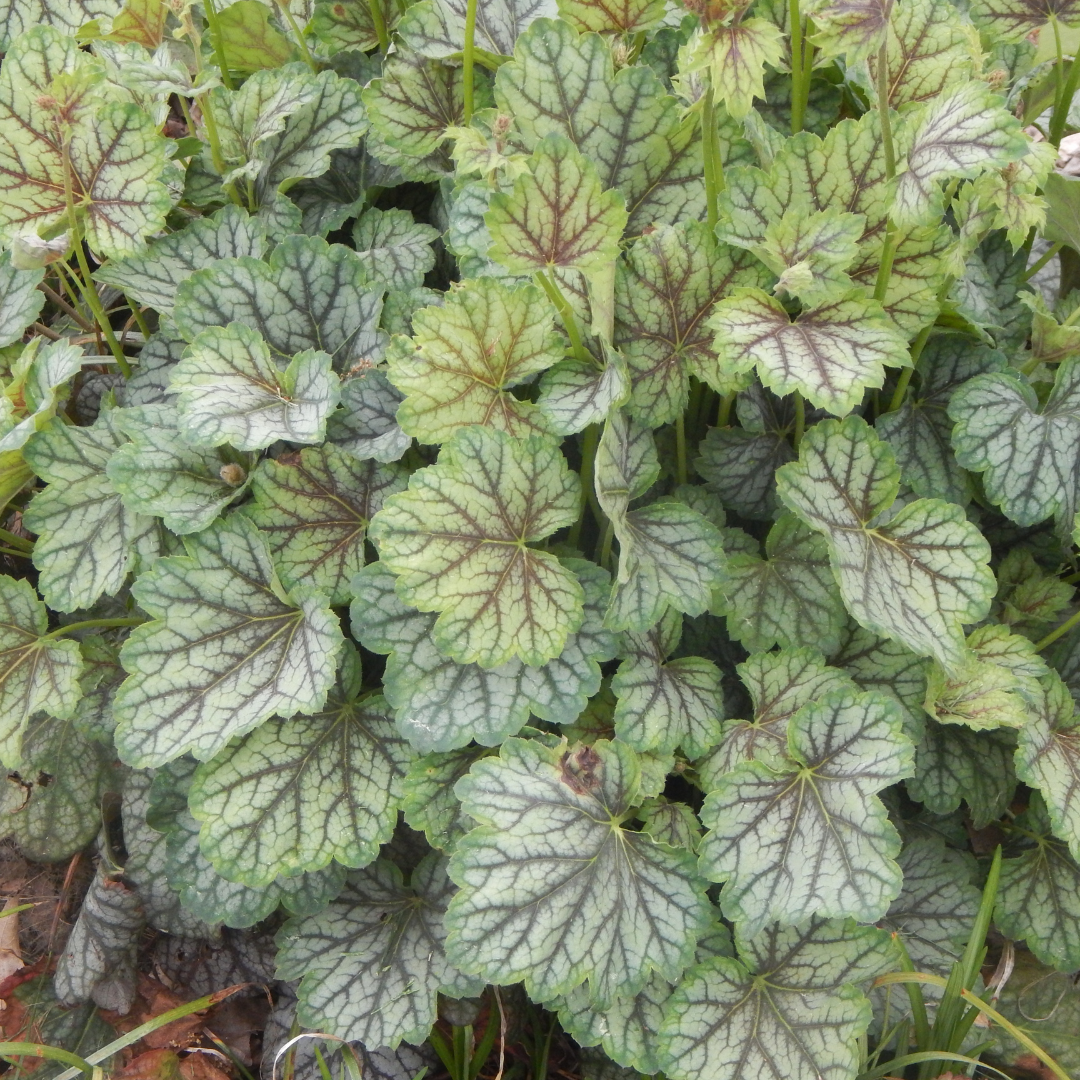
Today's garden hybrids come in a wide range of colours, with some featuring marbled patterns, dramatic veining, silvery overlays, and ruffled edges. Tiny bell-shaped flowers sway on tall, wispy stems that peak above the greenery.
The nectar-rich blossoms are a good source of food for butterflies and hummingbirds. Many cultivars are highly tolerant of heat, drought, and humidity.
The foliage changes colour throughout the growing season and retains its colour throughout the winter, providing year-round interest. Some cultivars even offer an “extra side” by displaying contrasting colours on the top and bottom of the leaves.
Best Coral Bells To Grow In Containers
Before growing coral bells in containers, we must know about some popular varieties.
1. Blackberry Ice Coral Bells
The famous heat-tolerant Dolce line includes this reddish-purple variation. If you look closely, you can see black veining in the leaves.
While some heucheras bloom in the spring, these bloom in the summer and have lovely white blossoms. They are perfect for zones 4-9.

2. Gold Zebra Coral Bells
The Gold Zebra Coral Bells are perfect for zones 4-9. You get two stunning foliage colours for the price of one with this whimsically titled heuchera.
Its beautiful yellow leaves have dark crimson cores and are scalloped at the margins. During testing in hot, humid Oklahoma summers, Gold Zebra fared admirably. When you plant it, make sure it gets at least some shade.
3. Berry Smoothie Coral Bells
The leaf begins rose-pink but darkens to a purplish hue as the summer progresses. The light pink blossoms appear in late spring; if you keep deadheading them throughout the summer, you should have flowers all summer.
Plants should be thoroughly hydrated in partial shade, especially when first grown. They are perfect for zones 4-8.

4. Citronelle Coral Bells
If your plants must be tolerant of heat, this is one of the best coral bells. The lime-green foliage alone is eye-catching. For optimal results, grow this one in moderate shade. They are perfect for zones 4-8.

5. Caramel Coral Bells
Perfect for zones 4-9. Here's another one that can take the heat in the summer! It can withstand direct sunlight but will thrive with shaded relief and adequate watering, especially in the afternoon. Look for beautiful pink blossoms from the rich caramel foliage around midsummer.

6. Peppermint Spice Coral Bells
With its stunning rose-pink blossoms and silvery-green foliage, many gardeners consider Peppermint Spice the ideal coral bell variety. Flowers will bloom in the summer, and plants will reach a height of 8-10 inches. Perfect for zones 4-9.
7. Midnight Rose Coral Bells
The variety is also perfect for zones 4-9. Are you a fan of dramatic foliage? You can't go wrong with this one's black foliage.
They start dark, with little pink dots that grow larger and whiter as the season progresses. This cultivar has a low, mounding growth habit at only 10 inches tall.

8. Can-Can Coral Bells
The Can-Can type can pique your interest if you're still undecided about which Heuchera variety to choose. With the help of the ruffled leaves, this one has a mystic effect thanks to its dark purple foliage, which adds a gratifying amount of texture.
The Heuchera Can Can is best suited to somewhat shaded regions of your garden. When the leaves are exposed to light, they appear even more dazzling, but they still require shelter from the hot afternoon sun.
9. Green Spice Coral Bells
Another heuchera with incredibly interesting veined leaves and silvery flashes. The veins take on a purple hue in colder conditions. Late spring or early summer will see the appearance of the little white flowers. Perfect for zones 4-9.

10. Apple Crisp Coral Bells
There are a few Heuchera dwarf types out there that are well worth your time. Apple Crisp is among them, making a dramatic visual impression in small urban gardens.
Although it lacks the flashy leaves you anticipate from a Heuchera plant, the little green foliage contrasts nicely with the many white flower wands. The green leaves have a little silver tinge, which reminds me of larger Heucheras.
There are a few Heuchera dwarf types out there that are well worth your time. Apple Crisp is among them, making a dramatic visual impression in small urban gardens.
Although it lacks the flashy leaves you anticipate from a Heuchera plant, the little green foliage contrasts nicely with the many white flower wands. The green leaves have a little silver tinge, which reminds me of larger Heucheras.

11. Amber Waves Coral Bells
This one is a prizewinner, having won an award for “best new plant” in 2001, and it's easy to understand why. Copper foliage, ruffled leaves, pink buds, and cream-coloured blossoms are all present. They are perfect for zones 3-8.

12. Hollywood Coral Bells
Most people grow heuchera for the leaves, but Hollywood proves the flowers are also praiseworthy. Coral bells attract hummingbirds, and the brilliant red flowers of this one will attract them to your yard. The foliage is attractive, with dark green leaves with a hint of silver and scalloped edges. Perfect for zones 3-9.
13. Mint Julep Coral Bells
Mint Julep can be a good choice if you want a Heuchera variety that doesn't stand out too much in the garden. It doesn't have spectacular foliage, but it has a great texture that may be used to highlight any zone in the garden.
The Heuchera Mint Julep's lime-green foliage can add a splash of colour, especially with the white blooms that appear in summer. As the decorative plant ages, it develops more pronounced veining, a characteristic of Heuchera plants.
This Heuchera is best suited to fully shaded parts of your garden. It's a versatile species that can be grown in dense clusters for aesthetic purposes.
Turn Your Passion for Nature Into Income
🌿 Whether you love gardening, caring for animals, or exploring holistic living,
You can share your knowledge online and earn from it.
Discover how nature lovers are growing their passions into meaningful, income-generating blogs. 👇
14. Bronze Wave Coral Bells
With its bronze-green foliage type, the Heuchera Bronze Wave can enhance the appearance of any gloomy garden location, as its name suggests. This cultivar has a wonderful colour blend, with purple-brown tones beneath the leaves.
This Heuchera is very diverse compared to other Heucheras. Once established in ideal, flourishing conditions, the Heuchera Bronze Wave can grow strongly, with thick, glossy leaves.
While the small white blooms produced by this ornamental plant aren't particularly attractive on their own, when many of them bloom, they gain in aesthetic value.
The full floral arrangement can serve as a strong visual accent to the foliage's stiff construction. If you keep this kind in direct sunlight, it can bleach and burn. To appreciate the full splendour of this Heuchera's coppery leaves, put it in a shady location.

Grow Coral Bells In Containers
Let’s start to grow coral bells in containers:
1. Soil To Grow Coral Bells
Coral Bells thrive in soil rich in organic matter and high organic matter content. To make healthy soil, add compost or manure.
Coral Bells prefer to dry out between waterings; therefore, well-draining soil is required. You can also use good quality all-purpose potting soil for container-grown coral bells.
When planting them, add a half-inch layer of compost to the soil. Do not cover the plant's crown with soil or compost.

2. Containers To Grow Coral Bells
Coral bells thrive in containers. Simply ensure that the bottom of the container has a hole through which the extra water may drain.
If you want them to grow back the next year, put them in the landscape in the early fall. If you garden in zones 6b or warmer, you can overwinter them in containers.

3. Grow Coral Bells From Seeds
Coral bells can be grown from seed. However, hybrids must be produced from divisions if you want plants that resemble the parent.
When starting the seed, sprinkle it on the soil's surface in late fall or early spring, but don't cover it because seeds require light to germinate.
You can also start seeds indoors for a few months before transplanting them. It takes 2 to 8 weeks for coral bells seeds to germinate.
Harden off the plants for 10 days after they've been established, then transplant the seedlings outside once all risk of frost has passed.
After the risk of frost has passed, you can plant container-grown coral bells at any time. Other than some relief from the intense heat and rich, well-draining soil, keep them well-watered the first year.
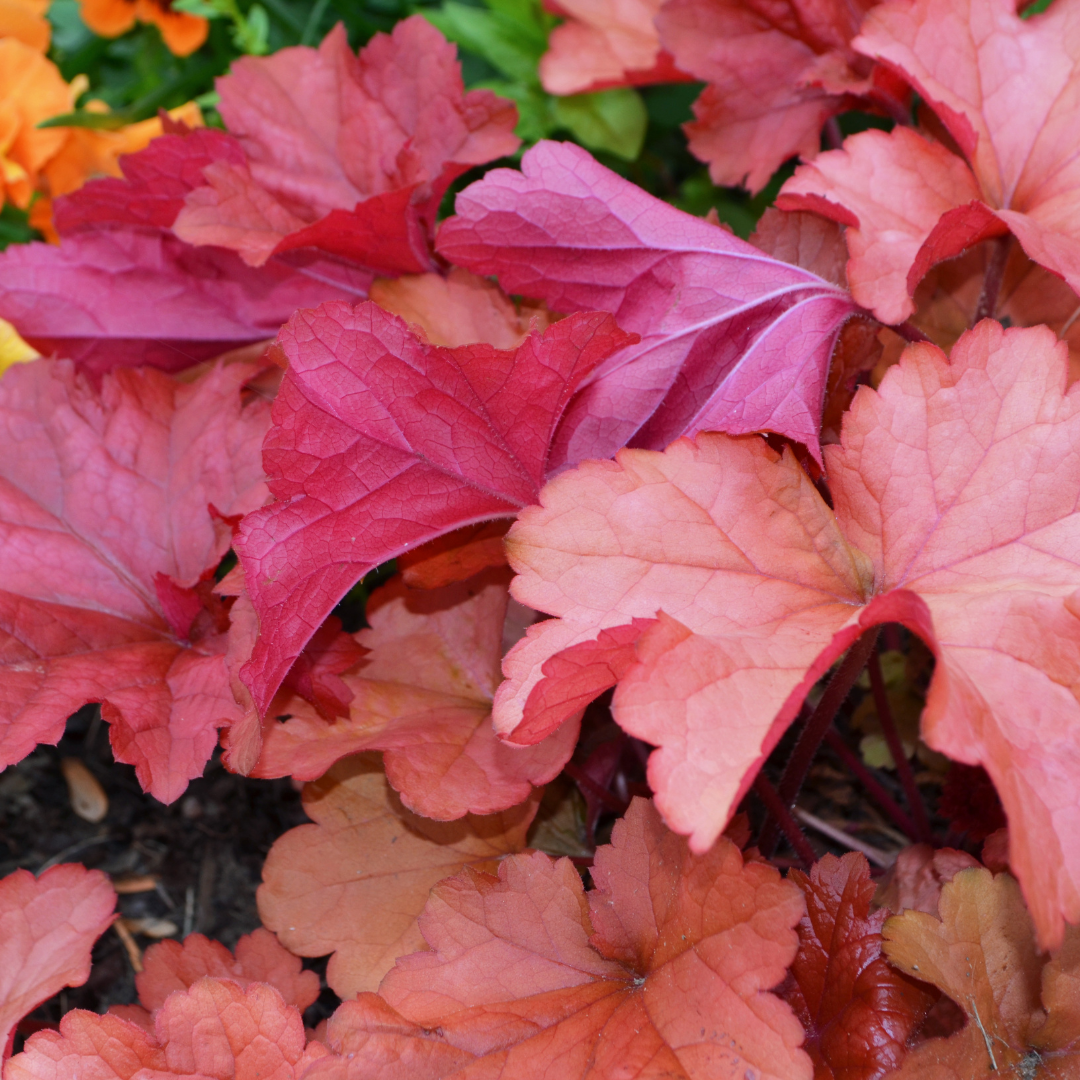
4. Sunlight Requirements To Grow Coral Bells
Coral bells thrive in partial shade, which is especially beneficial in hotter areas. If they're kept in direct sunlight, their colour will fade, and too much light will cause their leaves to sear.
Remember that coral bells planted in moist shade are susceptible to fungal diseases; if your plants develop difficulties, it's advisable to relocate them to a drier location.

5. Watering Coral Bells
Water Coral Bells in planters more frequently than plants in the ground, but otherwise, they require the same care. Coral bells prefer soil that is continuously moist but not wet.
As do most plants, they thrive when given an inch of water each week from rainfall and hand watering. If your container is unglazed or in a sunny place, the pot may heat up and dry out the soil; it'll need additional water.
Drench the soil until water runs through the drainage holes and until the top few inches are dry. Rain and dryness will affect the watering schedule, so keep an eye on it and adjust as needed.

6. Fertilizer Choice For Coral Bells
Slow-release fertilizer, such as compost, is the best choice because coral bells aren't heavy feeders. Apply a half-strength solution of a water-soluble fertilizer every six weeks throughout the growing season.
Conversely, plants grown in containers require more frequent fertilization because constant soaking leaches nutrients from the soil.
If you prefer, apply a water-soluble fertilizer every other week during the growing season to keep your Coral Bells looking their best. Fertilizing Coral Bells is unnecessary while the plant is dormant in winter.
7. Humidity & Temperature Requirements To Grow Coral Bells
Most coral bells are hardy in USDA hardiness zones 4 through 8, though specific hardiness varies by variety. Coral bells can crown above the soil line in chilly places during the winter.
Winter mulching will help prevent the plants from being pushed up by the freezing/thawing cycle, and you should check for exposed roots regularly.
8. Pruning Coral Bells
Coral bells are low-maintenance plants. However, you can cut back the flower stems after flowering to redirect the plant's energy to develop more leaves.
Coral bells are short-lived perennials that must be divided every three to five years in the early spring or fall to stay healthy. Cut back the leaves if they become ragged-looking, especially after winter, and new growth should fill in fast.
9. Winter Care Of Coral Bells
Coral Bells are perennials that can survive the winter with some support. If a potted plant is left outside, the roots will not have enough protection and will succumb to cold damage. Planting the plant and mulching it will protect the roots over the winter.
If you live in a region where temperatures often drop below freezing, you can bring your container inside for the winter to avoid cracking. The plant will overwinter safely if the pot is moved indoors.
The potted Coral Bells can be relocated into a garage or shed and left to fall dormant for the winter, or you can bring them into your home and cultivate them as houseplants.
Because most coral bells are evergreen, they will require some light throughout the year for photosynthesis. Put your pots in a shed with a window or an unheated garage.
The plants will go dormant, but still require watering once a month to avoid drying out. If the container is too large to move, wrap it with insulation in the fall to keep the temperature stable and lessen the chances of cracking.
If you don't have access to a garage or shed, dig deep enough for the container's top to be level with the earth, then backfill it. Your coral bell in a pot will thrive as if planted in your garden rather than in a container.
10. Pests & Diseases Of Coral Bells
Powdery mildew, which appears as a white, powdery growth on the leaves, shoots, and occasionally the flowers, is a common problem for coral bells.
Bacterial infections can cause brown stains on the foliage of coral bells. Pseudomonas causes leaves to become irregularly shaped and show reddish-brown patches.
Yellow rings, or halos, form around little brown dots on the leaves of Xanthomonas. Botrytis causes larger brown patches.
Coral bells can also develop rust spots but are not always harmful. Dark patches on the upper surfaces of the leaves with orange splotches on the undersides can be ugly.
Strawberry and black vine weevils are the most prevalent pests of coral bells. Adult weevils eat plant leaves and leave little holes in them. Although this damage isn't always harmful to the plant, it can be ugly.
Female weevils lay their eggs in plant debris around coral bells. The weevil's larval stage is off-white in appearance. It feeds on the roots of coral bells, which can kill the plant's above-ground components.
Design Ideas With Coral Bells
- Coral bells can be used in woodland and rock gardens, as well as semi-shaded borders. Because of their shade tolerance, they make excellent shrub understory plants.
- Plant in huge clusters to create an eye-catching evergreen ground cover and to bring the leaf's colour to life on a larger scale. Mass plantings further improve the visibility of the floral arrangements.
- Mix them with contrasting lacy-leaved, shade-loving plants like ferns and astilbes to provide textural interest.
- Use it as a bright accent in container arrangements or as an interesting houseplant. Purple-leaved cultivars are a superb substitute for beautiful cabbage and kale in fall container designs.
- Start your plants in containers and move them around the garden until you discover the sun-shade combination that gives them the optimum foliage colour and performance.

Conclusion
In conclusion, growing coral bells in containers is an easy and rewarding way to enhance your garden or patio with vibrant colours.
You can grow coral bells year-round by selecting the right pot, using well-draining soil, properly watering, and placing them in partial shade. With regular care, your coral bells will thrive and become a beautiful feature in your container garden.
I trust you enjoyed this article on the Best Steps To Grow Coral Bells In Containers. Please stay tuned for more inspiring guides, helpful tips, and ideas to help you live closer to nature every day.
Take care!
— JeannetteZ🌿
💬 Your Opinion Is Important To Me
Do you have thoughts, ideas, or questions? I’d love to hear from you. Please leave your comments below or email me directly at Jeannette@Close-To-Nature.org.
📚 More Nature-Inspired Reads
Explore more ways to connect with nature, nurture your pets, and live in harmony with the world around you 🌿