
11 Incredible DIY Bird Feeders You’ll Be Proud To Display

Winter can be a challenging season for wild birds. Natural food sources become scarce. Insects disappear. Seeds are hidden under snow or frozen ground.
This is where backyard bird feeding makes a real difference. With simple DIY bird feeders and the right food choices, you can support local birds while enjoying their presence all winter long.
This guide is designed to be practical, friendly, and easy to follow. You’ll learn what to feed birds in winter, what foods to avoid, creative DIY feeder ideas, how to offer fruits and other natural foods, and where to place feeders for safety and success.
Why Feeding Birds In Winter Matters
Feeding birds in winter matters because cold weather makes survival much harder for them. Snow, ice, and frozen ground make natural food sources like insects, berries, and seeds rare or unavailable.
At the same time, birds need more energy to keep their bodies warm. This creates a dangerous imbalance between energy intake and energy loss.
Providing food helps birds maintain their body temperature and strength during long, cold nights. High-energy foods like seeds, suet, and nuts give them the calories they need to survive harsh conditions.
When birds can find reliable food, they spend less time searching and more time conserving energy, which increases their chances of making it through winter.
Feeding birds also supports local ecosystems. Healthy bird populations help control insect pests, spread plant seeds, and maintain natural balance. In winter, even a single feeder can support multiple species in your area.
Beyond survival, feeding birds creates a meaningful connection with nature. Watching birds visit your feeder brings calm, joy, and awareness during the quiet winter months. A small effort from humans can make a life-saving difference for wild birds when they need it most.
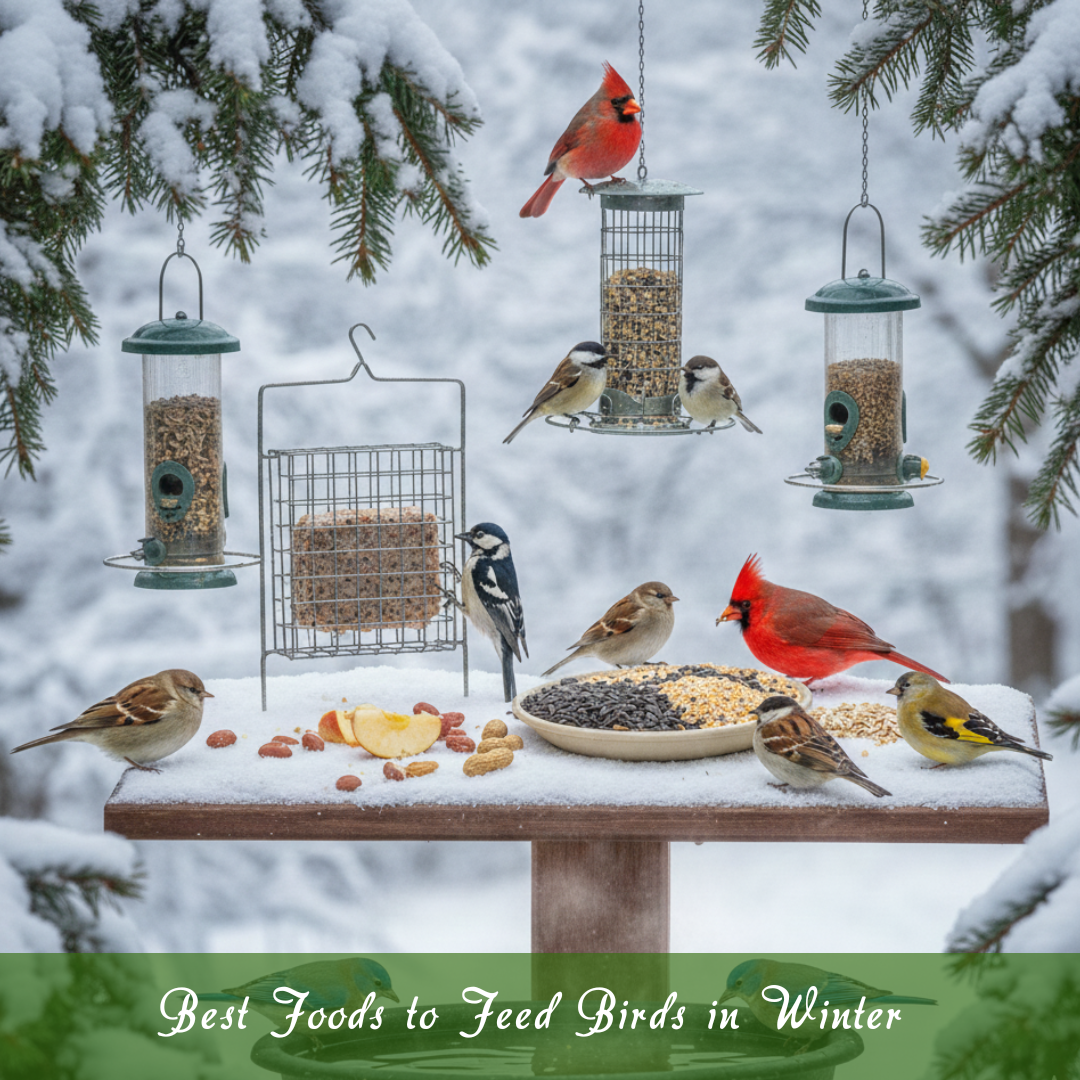
Best Foods To Feed Birds In Winter
1. Black Oil Sunflower Seeds
Due to their high fat and calorie content, black oil sunflower seeds are perfect for winter. Finches, chickadees, cardinals, sparrows, and many other cold-weather birds may easily split their thin shells to get them.
2. Suet And Fat-Based Foods
Suet is one of the most valuable winter foods for birds. It provides concentrated energy that helps birds maintain body heat. Woodpeckers, nuthatches, chickadees, and wrens depend on suet during freezing temperatures and snowy conditions.
3. Peanuts And Nuts (Unsalted)
Raw, unsalted peanuts and nuts offer high levels of protein and healthy fats. They support muscle strength and energy needs during winter. Crushed or shelled nuts are easier for smaller birds and safer to consume.
4. Fruit
Fruit supplies natural sugars that provide quick energy in winter. Apples, oranges, grapes, and soaked raisins attract robins, bluebirds, mockingbirds, and waxwings. Fresh fruit should be replaced often to prevent freezing or spoilage.
5. Millet And High-Quality Mixed Seeds
White millet is especially helpful for sparrows, juncos, and other ground-feeding birds. High-quality seed mixes with minimal fillers ensure birds receive proper nutrition instead of wasting energy discarding unwanted seeds.
6. Plain Grains
Uncooked oats and plain rice are safe and filling winter foods. They provide carbohydrates that help birds sustain energy during cold days. Always serve grains plain, without salt, butter, or seasoning of any kind.
7. Mealworms
Dried or live mealworms are excellent protein sources, especially when insects are scarce. They support feather health and strength. Bluebirds, robins, wrens, and chickadees benefit greatly from mealworms during harsh winter months.
8. Fresh Water
Although not food, water is essential in winter. Birds need it for drinking and feather maintenance. Heated bird baths or shallow bowls refreshed daily help birds survive when natural water sources freeze.
DIY Bird Feeder Ideas—Easy And Affordable
You don’t need fancy equipment. Many great feeders can be made from items you already have.
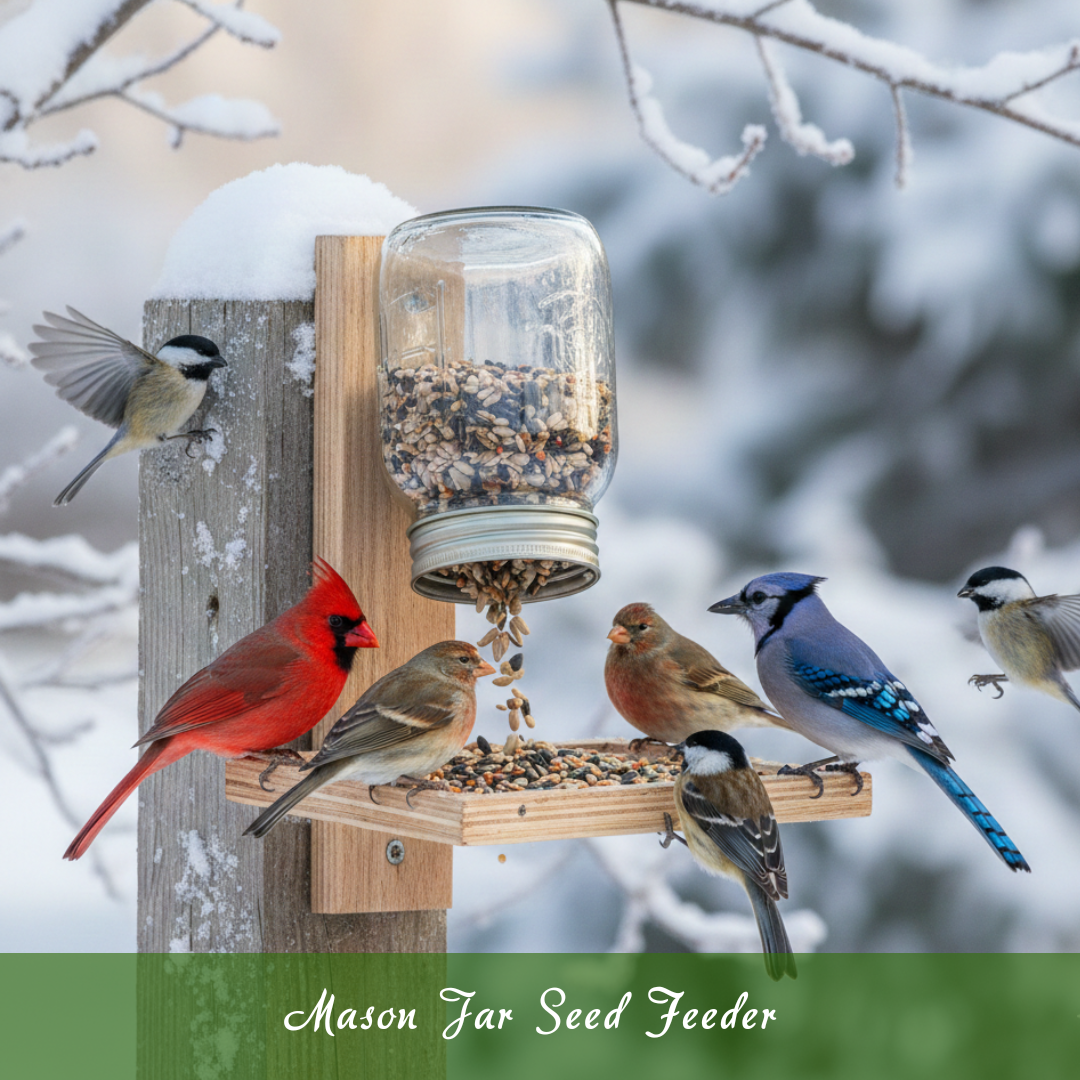
1. Mason Jar Seed Feeder
DIY bird feeders like this mason jar design provide a sturdy, weather-resistant feeding solution that keeps seeds dry, attracts birds consistently, and offers a reusable option that lasts through many winter seasons.
A shallow tray or feeder base and a clean mason jar should be the first steps. Attach the jar upside down so seeds slowly fall onto the tray. Make sure the jar is secure and doesn’t wobble. Fill it with sunflower seeds or mixed seeds.
Tighten the lid properly. Hang or mount it at eye level. The glass keeps seeds dry and visible. Birds learn quickly. Refilling is easy. This feeder lasts for years. It’s perfect if you want something simple, reusable, and reliable all winter.
Best Birds Attracted
- Northern cardinals are bright winter favourites
- The house finch is a frequent seed feeder
- Blue Jays are bold, intelligent backyard birds
- Chickadees are fast-moving small birds
2. Wooden Platform Feeder
This feeder is open and inviting. Many birds prefer it. You can build one easily using scrap wood or buy a simple tray. Raise it slightly off the ground. This keeps food cleaner and safer—Spread seeds, fruit, or grains across the surface.
Birds appreciate the space. They can land comfortably and feed together. Platform feeders attract more species at once. Clean it often to prevent disease.
Place it near shrubs for cover. In winter, it’s ideal for birds that don’t use hanging feeders. This feeder turns your yard into a busy, lively bird gathering spot.
Best Birds Attracted
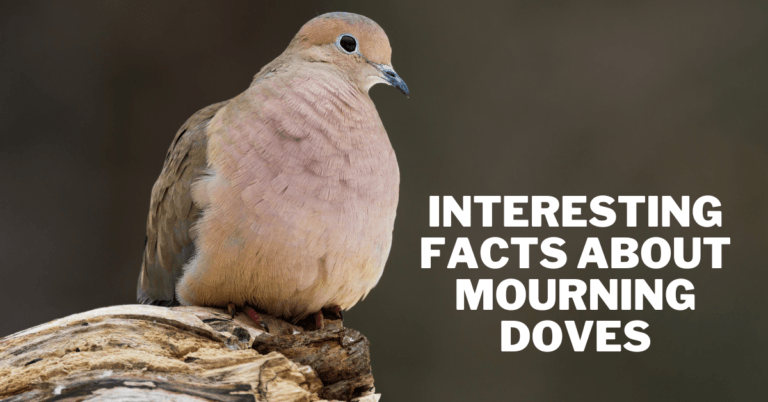
- Mourning doves are gentle ground feeders
- Dark-eyed juncos are winter snow birds
- Blue jays are bold open feeder users
- Sparrows are ordinary backyard feeding birds
3. Orange Peel Feeder
This feeder is quick to make and earth-friendly. It smells fresh. Birds notice it fast. Cut an orange in half. Scoop out the fruit carefully. You can eat it or save it for later. Poke small holes near the peel edges.
Thread string or twine through the holes. Tie securely. Fill the orange cup with birdseed, suet, or soaked raisins. Hang it from a branch or hook.
The bright colourattracts attention. It's perfect for winter fruit lovers. Replace it when it dries or moulds. When finished, compost the peel naturally.
Best Birds Attracted
- Northern orioles seasonal fruit feeders
- American robins are winter fruit seekers
- Cedar waxwing, flock-loving berry birds
- Mockingbirds are rds bold backyard fruit eaters
4. Hanging Suet Cage Feeder
DIY bird feeders like this suet cage provide essential high-energy food during freezing winter days, helping birds stay warm, safe, and well-fed with minimal effort and maintenance.
Use a simple wire suet cage or make one from coated mesh. Fill it with a suet cake or homemade fat mix. Hang it from a sturdy branch or pole. Keep it away from direct sunlight.
This prevents melting. Place it high enough to deter predators. Birds cling easily while feeding. They return again and again. Suet provides long-lasting energy.
It helps birds stay warm overnight. This feeder works best during freezing temperatures. It’s low effort, low mess, and highly effective for winter survival.
Best Birds Attracted
- Downy woodpeckers are winter suet lovers
- Nuthatches are headfirst tree climbers
- Chickadees quick grab and go feeders
- Wrens are small, energetic, cold-season birds
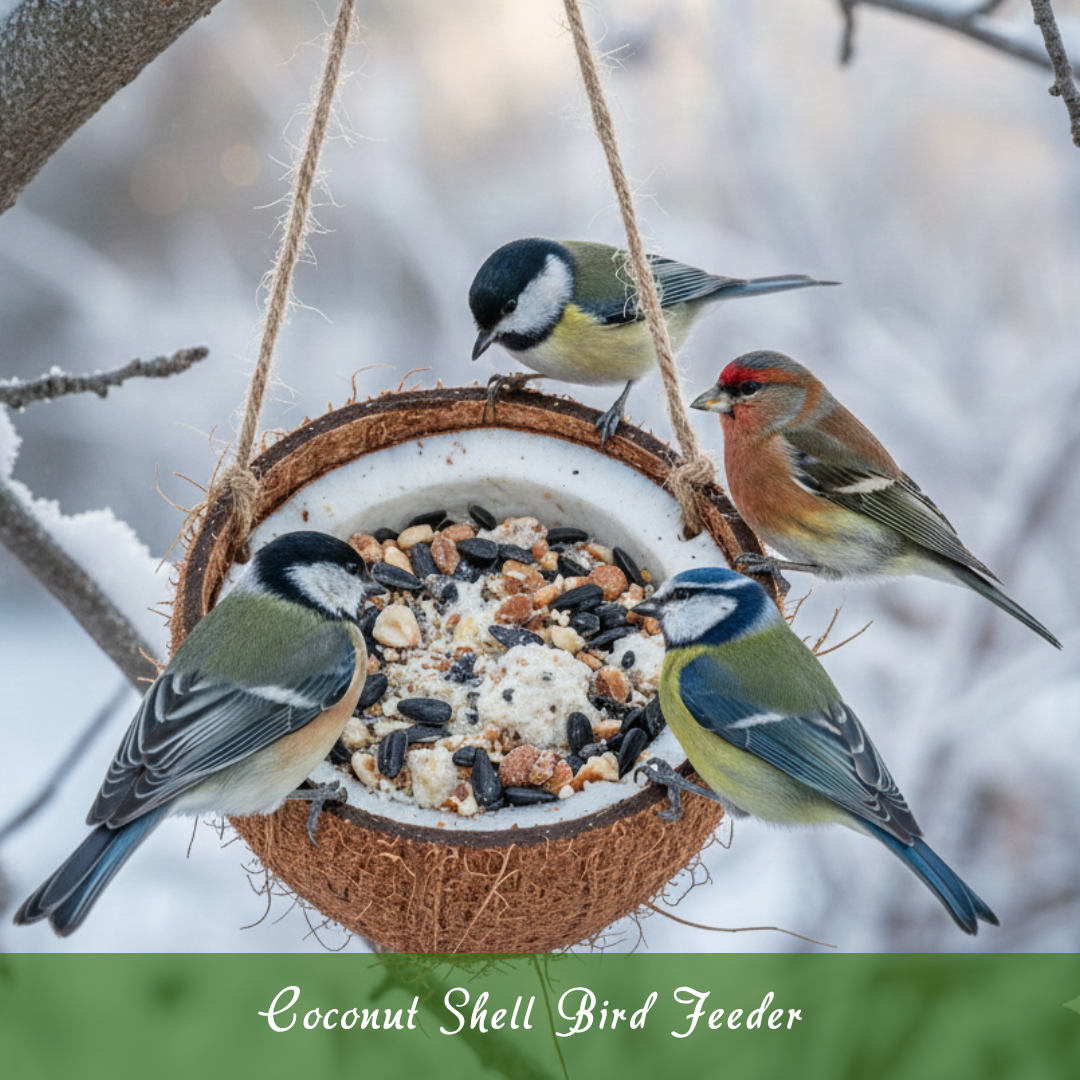
5. Coconut Shell Bird Feeder
This feeder is natural and long-lasting. It looks beautiful, too. Start with a dried coconut shell. Cut it in half carefully. Clean out all remaining coconut meat. Drill or poke three small holes near the rim.
Thread sturdy string or twine through the holes. Tie a knot to balance it evenly. Fill the shell with seeds, nuts, or suet pieces. Hang it from a tree branch. The rough texture gives birds a good grip.
It handles winter weather well. Birds feel secure feeding from it. This feeder blends into nature and supports sustainable bird feeding all season.
Best Birds Attracted
- Chickadees are agile winter feeding birds
- Nuthatches are tree-loving seed eaters
- Finches are small social backyard birds
- Tits are curious, quick-visit birds
6. Tea Cup And Saucer Feeder
DIY bird feeders like this teacup and saucer design combine beauty and function, turning reused household items into a charming and easy winter feeding spot for birds. Glue the teacup onto the saucer at a slight angle.
Let it dry thoroughly. Attach a strong string or wire to the saucer. Fill the cup with seeds, nuts, or soaked fruit. Hang it from a tree or hook. Birds enjoy the open access. The shallow design makes feeding easy.
It works best in sheltered spots. This feeder is ideal for calm winter days. It brings beauty, reuse, and nature together in a straightforward project.
Best Birds Attracted
- Robins curious open feeder visitors
- Sparrows are frequent small seed eaters
- Finches are gentle, colourful winter birds
- Chickadees are quick, confident feeders
7. Grapefruit Half Feeder
This feeder is bright, fresh, and simple. Birds notice it quickly. Cut a grapefruit in half. Scoop out the fruit carefully. Save the fruit or compost it. Poke three small holes near the rim. Thread twine through the holes and tie securely.
Fill the hollow with birdseed, suet crumbs, or soaked raisins. Hang it from a sturdy branch. The citrus colour attracts fruit-loving birds. It also provides moisture in winter.
Replace it every few days. When finished, compost the peel. This feeder is perfect for short-term winter feeding and natural backyard support.
Best Birds Attracted
- American robins winter fruit feeders
- Cedar waxwings are social berry lovers
- Northern mockingbirds are bold fruit hunters
- Bluebirds are gentle seasonal visitors
8. Pinecone Peanut Butter Feeder
This pinecone feeder is perfect for beginners. It costs almost nothing. It is fun to make. Kids love it. DIY bird feeders like this simple pinecone project offer an easy, affordable, and joyful way to help birds survive winter while creating a meaningful connection with nature for both kids and adults.
Cover every space well. Roll the pinecone in birdseed until coated. Press gently so the seeds stick. Hang it from a tree branch. Choose a quiet spot. Birds feel safer there.
This feeder offers quick energy in winter. It also teaches patience. You will soon notice birds returning daily. Simple projects like this create joy and connection with nature outside.
Best Birds Attracted
- Black-capped chickadees and titmice
- Downy woodpeckers are small winter visitors
- House sparrows, backyard feeding regulars
- Nuthatches are agile tree-climbing birds
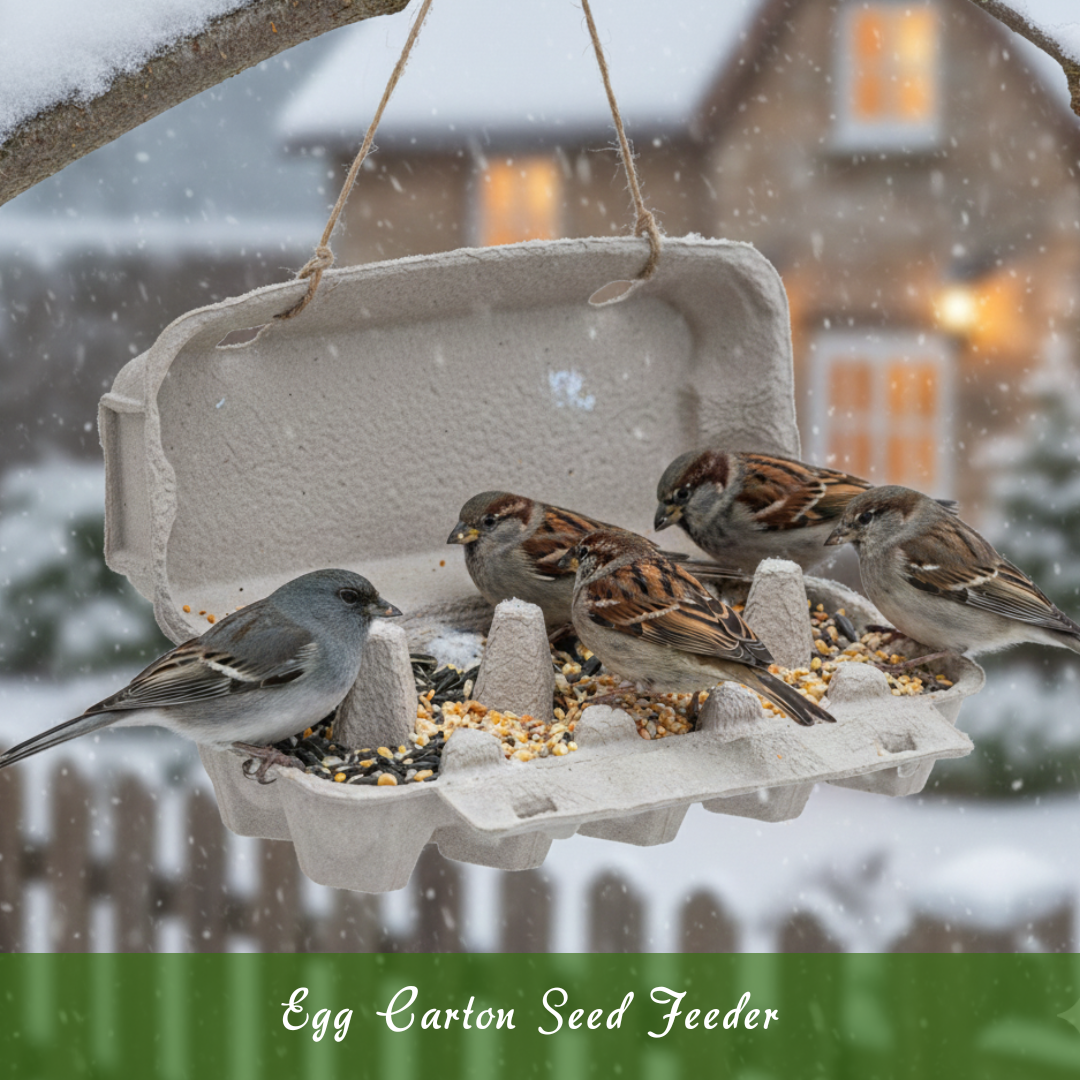
9. Egg Carton Seed Feeder
DIY bird feeders like this egg carton design offer a quick, biodegradable way to provide winter food for birds using simple materials while keeping the process eco-friendly and easy.
Use a cardboard egg carton, not plastic. Cut off the lid. Poke small holes in each corner. Thread the string through and tie knots. Fill each cup with seeds or grains.
You can mix different foods to attract more birds. Hang it from a low tree branch or hook. Cardboard absorbs moisture, so place it under shelter.
This feeder works best for short periods. Birds enjoy hopping from cup to cup. When it wears out, compost it. Simple, biodegradable, and perfect for gentle winter days.
Best Birds Attracted
- Sparrows are active small flock feeders
- Chickadees are quick, curious seed eaters
- Finches are light, gentle feeding birds
- Juncos are winter ground-feeding birds
10. Recycled Plastic Bottle Feeder
This feeder is practical and eco-friendly. It reuses what you already have. Start with a clean plastic bottle. Cut two small holes on opposite sides. Slide wooden spoons through to create perches.
Make the holes slightly above the spoon bowls. Fill the bottle with birdseed. Screw the cap on tightly. Hang it using a string or a wire. Place it where it won’t swing too much. Birds need stability.
This feeder protects seeds from snow and rain. It lasts all winter. You can easily refill it. Simple design. Big impact. Birds quickly learn to trust it and return often.
Best Birds Attracted
- House finches are colourful winter visitors
- American goldfinches are seed-loving birds
- Chickadees are curious, quick-feeding birds
- Sparrows are standard backyard ground feeders
11. Apple Cup Feeder
This feeder is simple and completely natural. No tools needed. Cut an apple in half. Scoop out some of the center to form a small cup. Push a sturdy stick or fork through the apple for support. You can also tie a string around it.
Fill the hollow with seeds or soaked raisins. Hang it from a tree branch or place it on a platform feeder. Birds are drawn to the bright colour.
The apple provides moisture and energy. Replace it every day or two. This feeder is perfect for winter fruit lovers and composts easily afterward.
Best Birds Attracted
- The American robin is a rare winter fruit seeker
- Cedar waxwings flock feeding specialists
- Northern mockingbirds are bold fruit lovers
- Bluebirds, gentle cold-season visitors
How To Feed Birds Fruit Safely In Winter
1. Choose Bird-Safe Fruits
Select fruits that birds naturally eat in the wild. Apples, oranges, grapes, pears, berries, and melons provide natural sugars and moisture. These fruits are easy to digest and supply quick energy, especially in times of duress.
2. Cut Fruit Into Small Pieces
Cut fruit into slices, halves, or small chunks before offering it. Birds are better equipped to grasp and consume smaller parts. Removing hard pits and large seeds also prevents choking and reduces mess around feeding areas.
3. Use Simple Feeders Or Skewers
Fruit can be placed on platform feeders, tree stumps, or metal skewers. Hanging fruit keeps it clean and visible. Using simple holders allows birds to feed comfortably while reducing waste and spoilage in winter conditions.
4. Soak Dried Fruit First
Dried fruits like raisins or currants should be soaked in warm water before feeding. This softens them and restores moisture. Soaked fruit helps prevent dehydration and makes digestion easier for birds in cold weather.
5. Replace Fruit Regularly
Fresh fruit can freeze, rot, or grow mouldquickly. Check fruimouldeders daily and remove uneaten portions. Regular replacement keeps birds safe from illness and ensures they receive clean, nutritious food throughout winter.
6. Keep Fruit Feeders Clean
Clean fruit feeders frequently using warm water. Removing sticky residue prevents bacteria andmould growthh. Clean feedmoulddareas protect birds from disease, which spreads more easily when birds gather closely during winter feeding.
What To Avoid Feeding Birds In Winter
1. Bread
Bread fills birds’ stomachs without providing real nutrition. It lacks the fats and proteins birds need in winter. Regularly feeding bread can weaken birds, reduce survival rates, and lead to health problems, especially during cold weather.
2. Salted Foods
Salted snacks, chips, and processed foods are dangerous for birds. Excess salt disrupts fluid balance and can cause dehydration or poisoning. Birds are susceptible to sodium, making salty foods especially harmful in winter conditions.
3. Sugary Foods
Cookies, candy, sweet pastries, and sugary cereals offer no nutritional value for birds. Sugar weakens birds over time and lessens their capacity to remain warm and active by causing rapid energy spikes followed by crashes.
4. Mouldy Spoiled Food
Seeds, bread, or fruit can cause severe respiratory and digestive illnesses in birds. Even small amounts of mould can be fatal. Cold weather does not prevent mould growth, especially in damp feeders.
5. Milk And Dairy Products
Birds cannot properly digest dairy. Milk, cheese, and yogurt can cause digestive distress and dehydration. Feeding dairy weakens birds during winter when their bodies need efficient energy and proper nutrient absorption.
6. Chocolate And Caffeinated Items
Chocolate, coffee grounds, and caffeinated drinks are toxic to birds. These substances affect the nervous system and heart, often leading to fatal outcomes. Even small amounts can be hazardous in winter.
7. Raw Meat Or Seasoned Leftovers
Raw meat can spoil quickly, even in cold temperatures. Seasoned leftovers contain salt, spices, and preservatives that birds cannot tolerate. These foods increase the risk of illness and contamination at feeding areas.
8. Cheap Seed Mixes With Fillers
Low-quality seed mixes often contain filler seeds that birds refuse to eat. Birds waste energy discarding them, leaving food uneaten. This reduces nutritional intake and increases exposure to mould and bacteria in winter feeders.
Conclusion
Feeding birds during winter is a simple yet powerful way to support nature when it needs help most. With thoughtful food choices, safe DIY feeders, and proper placement, you create a reliable refuge for birds in harsh weather.
DIY bird feeders play a meaningful role in supporting winter bird survival, allowing simple, consistent efforts to create a safe, nourishing refuge while strengthening your connection with the natural world.
By feeding responsibly and consistently, you not only help birds survive winter but also deepen your connection with the natural world right outside your window.
I trust you enjoyed this article on the Incredible DIY Bird Feeders You'll Be Proud To Display. Please stay tuned for more inspiring guides, helpful tips, and ideas to help you live closer to nature every day.
Take care!
— JeannetteZ🌿
💬 Your Opinion Is Important To Me
Do you have thoughts, ideas, or questions? I’d love to hear from you. Please leave your comments below or email me directly at Jeannette@Close-To-Nature.org.
📚 More Nature-Inspired Reads
Explore more ways to connect with nature, nurture your pets, and live in harmony with the world around you 🌿